
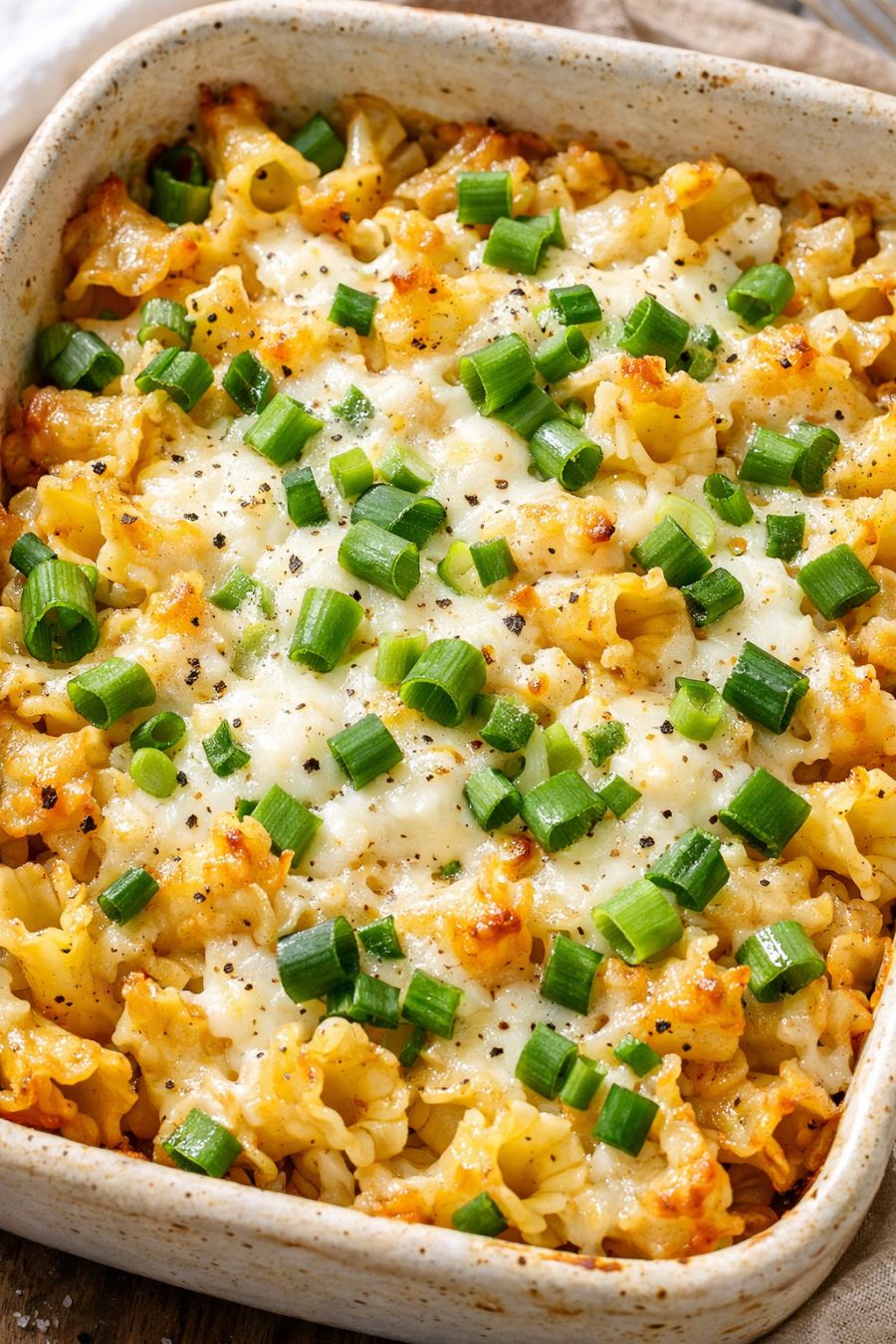
This simple baked spring onion pasta is the kind of dish I lean on when the day has gotten away from me and I still want something warm and comforting on the table. It’s just four ingredients, all scattered straight into a ceramic baking dish—dry campanelle, plenty of sliced raw spring onions, and two pantry staples that melt together into a cozy, Amish-style creaminess. The method reminds me of the old Midwestern casseroles I grew up with, where you trust the oven to do most of the work while you tidy the kitchen or step outside to listen to the birds. It’s a gentle, no-fuss recipe that lets the sweetness of spring onions shine and turns a handful of basics into a meal that feels like home.
Serve this spring onion pasta straight from the ceramic baking dish, with a big spoon for scooping. A simple side of buttered peas or green beans fits its farmhouse spirit, and a crisp lettuce salad with a light vinaigrette keeps the meal from feeling too heavy. Warm dinner rolls or slices of crusty bread are perfect for mopping up the creamy sauce at the bottom of the dish. If you like, offer black pepper at the table so folks can season their own bowls to taste.
Oven-Baked Amish Spring Onion Pasta
Servings: 4
Ingredients
12 oz dry campanelle pasta
4 cups whole milk
2 cups shredded mild white cheese (such as Monterey Jack or young white cheddar)
1 large bunch spring onions (about 1 1/2 to 2 cups sliced)
Directions
Preheat your oven to 375°F (190°C). Place a medium-sized ceramic baking dish (about 9x13 inches or similar) on the counter so it’s ready to fill.
Pour the dry campanelle pasta evenly into the bottom of the ceramic baking dish, spreading it out so it’s in a fairly even layer. This dry pasta will soften as it bakes in the milk.
Rinse and trim the spring onions, cutting off any wilted tips and the root ends. Slice the white and green parts into thin rounds. With clean hands, scatter the sliced raw spring onions evenly over the dry campanelle pasta, letting some fall down between the pieces of pasta.
Sprinkle the shredded mild white cheese evenly over the pasta and spring onions, making sure most of the top is lightly covered. The cheese will melt into the milk to form a simple sauce.
Slowly pour the whole milk over everything in the baking dish, moving the stream of milk around so it seeps down into the pasta. The milk should just about cover the pasta; if your dish is very large and the pasta isn’t mostly submerged, add a little more milk until it is.
Gently shake the baking dish or nudge the pasta with a spoon to help the milk settle in around the noodles and onions, but do not stir too vigorously. You want the layers roughly in place so the onions stay scattered throughout.
Cover the ceramic baking dish tightly with foil to keep the moisture in, then place it on the center rack of the preheated oven. Bake, covered, for 35 to 40 minutes, until the pasta is mostly tender when you test a piece from the center.
Carefully remove the foil, watching for hot steam, and return the dish to the oven. Bake uncovered for another 10 to 15 minutes, until the top is lightly golden in spots and the milk and cheese have thickened into a creamy sauce. The pasta should be fully tender.
Let the dish rest on the counter for about 5 to 10 minutes before serving. This short rest helps the sauce thicken a bit more so it clings to the campanelle. Spoon into warm bowls and enjoy while it’s still cozy and hot.
Variations & Tips
For a bit more richness, you can replace 1 cup of the whole milk with heavy cream or half-and-half, keeping the total liquid at 4 cups. If you prefer a sharper flavor, swap part of the mild cheese for shredded sharp white cheddar or Swiss, but remember that stronger cheeses can brown more quickly, so keep an eye on the top once you remove the foil. To add a little color and smokiness, scatter a small handful of diced cooked ham or crisp bacon over the pasta along with the spring onions; this keeps the recipe simple while making it heartier. If you need to use a different pasta, choose another short, sturdy shape like penne or fusilli and keep the total amount close to 12 ounces so the milk-to-pasta balance stays right. For a slightly lighter version, you can use 2% milk, though the sauce will be a bit thinner and less creamy. Food safety tips: Always use pasteurized milk and keep it refrigerated until you’re ready to bake. Make sure any added meats (like ham or bacon) are fully cooked before scattering them over the dry pasta. Handle the hot ceramic dish and the foil carefully when uncovering, as steam can burn; use oven mitts and open the foil away from your face. Leftovers should be cooled, covered, and refrigerated within two hours, then reheated thoroughly until steaming hot before eating.
