
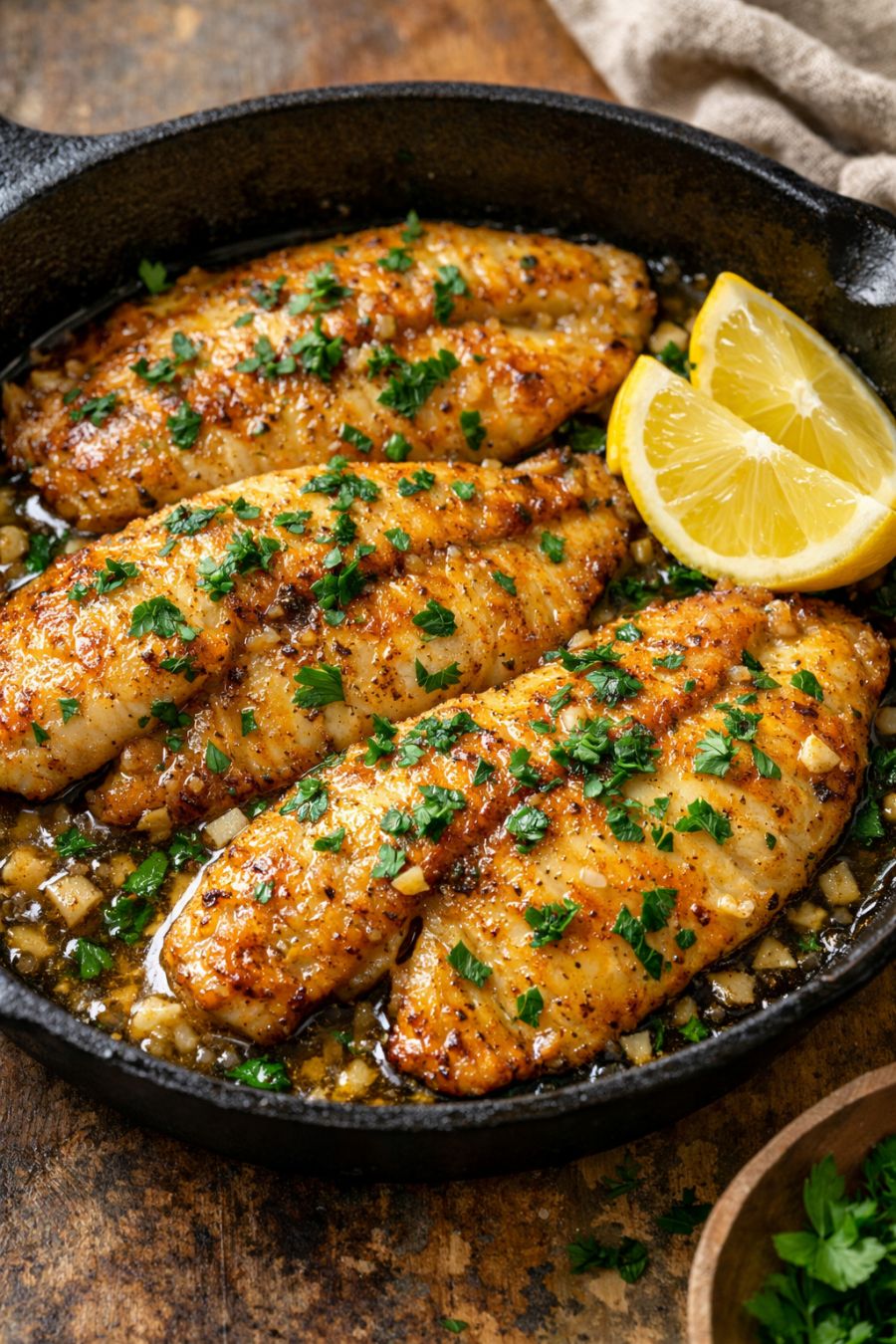
This four-ingredient, low-carb skillet dinner is built for those nights when the tilapia is still rock-solid in the freezer and everyone is somehow already hungry. We’re leaning into a classic Midwestern move here: cast iron, pantry staples, and no-fuss technique. Starting with solid frozen fillets in a hot skillet lets the fish gently steam in its own moisture before it sears, creating tender, flaky tilapia with a buttery, garlicky pan sauce that tastes far more indulgent than it is. It’s a practical, weeknight-friendly method that feels comforting and familiar, the kind of supper that invites everyone to drag a fork (or a piece of veg) through the last drops in the pan.
Keep the sides as simple and low-carb as the main: spoon the saucy tilapia over a bed of steamed broccoli, green beans, or garlicky sautéed spinach so they can soak up the buttery juices. A crisp green salad with a sharp vinaigrette balances the richness nicely. If you’re cooking for mixed eaters, you can add a pot of rice, cauliflower rice, or mashed potatoes on the side without changing the core recipe. A squeeze of extra lemon at the table and a grind of black pepper right before serving help wake up the flavors.
4-Ingredient Skillet Tilapia (From Frozen)
Servings: 4
Ingredients
4 solid frozen tilapia fillets (about 4–6 ounces each, no need to thaw)
3 tablespoons unsalted butter
1 teaspoon garlic powder
1 teaspoon kosher salt, plus more to taste
Directions
Place a large cast iron skillet on the stove over medium heat and let it preheat for about 3–4 minutes. You want the pan hot but not smoking, so the frozen fish can start to release moisture and gently steam before it browns.
While the skillet heats, quickly rinse any surface frost off the solid frozen tilapia fillets under cold running water and pat them dry with paper towels. This helps reduce excess ice so the fish cooks more evenly and doesn’t waterlog the pan.
Add 2 tablespoons of the butter to the hot cast iron skillet. As soon as it melts and starts to foam, lay the frozen tilapia fillets in a single layer in the skillet, leaving a bit of space between each piece. If they’re stuck together, gently pry them apart with a butter knife before adding.
Immediately sprinkle the tops of the frozen fillets evenly with the kosher salt and garlic powder. Cover the skillet with a lid (or a sheet of foil if you don’t have a lid) to trap steam, and cook undisturbed for 7–9 minutes. During this time, the tilapia will release liquid, gently steam, and start to turn opaque around the edges.
After 7–9 minutes, remove the lid. The fillets should be mostly opaque on top but still a bit frosty or firm in the very center. Carefully flip each fillet using a thin spatula, taking care not to splash the hot buttery juices.
Add the remaining 1 tablespoon butter to the skillet, dotting it around the fish so it melts into the cooking juices. Tilt the pan slightly and use a spoon to baste the tops of the fillets with the buttery, garlicky liquid. Continue cooking uncovered for another 5–7 minutes, basting once or twice more, until the fish is fully opaque, flakes easily with a fork, and any thickest part reaches 145°F on an instant-read thermometer.
Once the tilapia is cooked through, taste a bit of the pan juices and add a pinch more salt if needed. Turn off the heat and let the fish rest in the skillet for 1–2 minutes so the juices settle slightly, which helps keep the fillets moist.
Serve the tilapia straight from the cast iron skillet, spooning the buttery, garlicky pan juices over each portion. Encourage everyone to drag their vegetables or sides through the remaining sauce in the pan—that’s where all the comforting flavor lives.
Variations & Tips
To keep the recipe true to its four-ingredient promise, think of variations as optional add-ons rather than required ingredients. For a brighter finish, add a squeeze of lemon juice over the fish right before serving or scatter a handful of chopped fresh parsley or chives on top—both keep the dish low carb while lifting the richness of the butter. If you like a little heat, a pinch of crushed red pepper flakes or a light dusting of smoked paprika can be sprinkled on with the garlic powder for a gentle kick and a touch of color. You can also nestle low-carb vegetables, such as halved cherry tomatoes, thinly sliced zucchini, or baby spinach, around the fish during the last few minutes of cooking so they soften in the pan juices. For a slightly creamier sauce, whisk a spoonful of full-fat sour cream or cream cheese into the hot pan juices off the heat until smooth, then spoon over the fish. Food safety tips: Always start with commercially frozen tilapia that has been kept at a safe freezer temperature (0°F or below). Do not thaw tilapia at room temperature; this method is specifically designed to cook from solid frozen in a hot pan. Make sure the thickest part of each fillet reaches 145°F, measured with an instant-read thermometer inserted into the center. Avoid overcrowding the skillet; if your pan is smaller, cook the fish in batches so it cooks evenly and the center doesn’t stay underdone while the edges overcook. Discard any leftover pan juices if they’ve sat out at room temperature for more than 2 hours, and refrigerate leftover fish promptly in a shallow container.
