
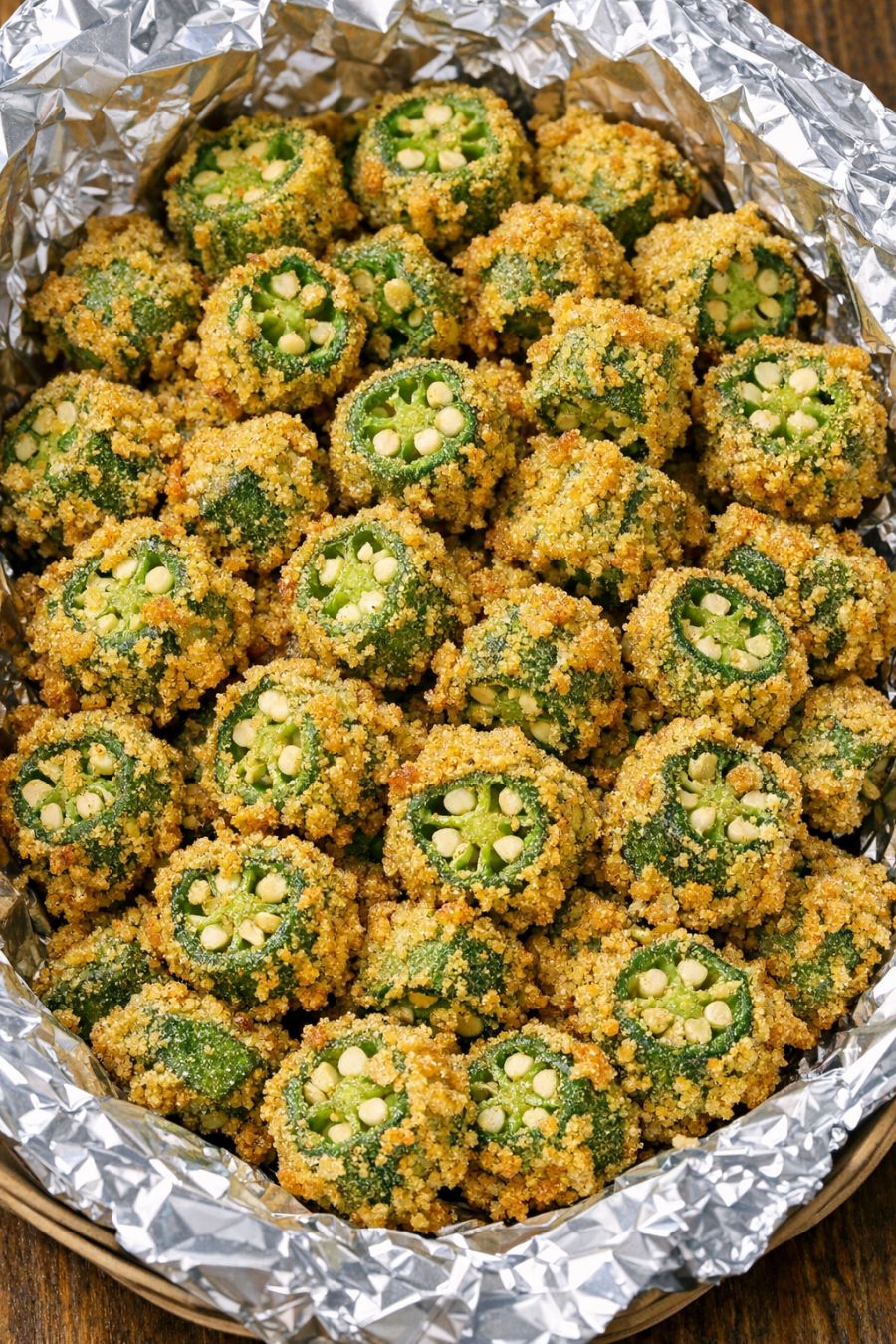
This southern 3-ingredient fried okra is my weeknight answer to a crunchy, salty snack that tastes like it came from a country fish fry. The method comes from my aunt, who grew up in Arkansas and swears by one simple trick for extra crispiness: tossing fresh okra in beaten egg, then shaking it in plain cornmeal—no flour, no buttermilk, no fancy seasonings required. The high-heat fry locks in the bright green color while the cornmeal forms a golden, shatter-crisp crust you’d never guess came from just three ingredients.
Serve this fried okra hot in a foil-lined basket to keep the pieces crisp and easy to grab. It’s a natural side for fried catfish, barbecue ribs, or grilled chicken, and it pairs nicely with a simple sliced tomato salad or coleslaw to balance the richness. Set out a small bowl of kosher salt and black pepper so everyone can season to taste at the table, and if you like dipping, offer hot sauce or a quick mix of mayonnaise and lemon juice on the side.
Southern 3-Ingredient Fried Okra
Servings: 4
Ingredients
1 pound fresh okra pods, rinsed, dried, and cut into 1/2-inch rounds
2 large eggs, beaten
1 1/2 cups plain yellow cornmeal
Neutral frying oil, enough for 1/2 inch depth in skillet (such as vegetable or canola oil)
Directions
Prep the okra by rinsing the pods under cool water, then patting them very dry with clean kitchen towels or paper towels. Trim off the stem ends and slice the pods into 1/2-inch rounds. Set aside.
Crack the eggs into a medium bowl and beat them until smooth. Add the sliced okra to the bowl and toss to coat every piece thoroughly in the egg. This is my aunt’s secret step: the egg helps the cornmeal cling tightly and creates a thicker, crunchier crust.
Pour the cornmeal into a large shallow bowl or a gallon-size zip-top bag. Working in batches, lift the egg-coated okra out of the bowl, letting excess egg drip off, then add it to the cornmeal. Toss or shake until all pieces are evenly coated, gently separating any that stick together. Transfer coated okra to a tray, shaking off loose excess cornmeal.
Pour enough neutral oil into a large, heavy skillet (cast iron works best) to reach about 1/2 inch up the sides. Heat the oil over medium-high heat until it reaches about 350°F, or until a pinch of cornmeal sizzles immediately when sprinkled in.
Carefully add a single layer of cornmeal-coated okra to the hot oil, without crowding the pan. Fry, turning occasionally with a slotted spoon or tongs, for 3 to 5 minutes, or until the okra is deep golden and very crisp on all sides. Adjust the heat as needed to maintain a steady sizzle without smoking.
Use a slotted spoon to transfer the fried okra to a foil-lined basket or a plate lined with paper towels. Immediately sprinkle lightly with salt, if desired. Repeat with remaining okra, allowing the oil to return to temperature between batches for maximum crispiness.
Serve the fried okra hot, piled into the foil-lined basket so it stays crunchy and easy to share at the table.
Variations & Tips
For a little extra flavor without adding more official ingredients, you can season the finished fried okra with kosher salt, freshly ground black pepper, or a pinch of cayenne as soon as it comes out of the oil. If you don’t have yellow cornmeal, white cornmeal will also work and gives a slightly lighter color. For a coarser crunch, choose medium-grind cornmeal; for a more even crust, use fine-grind. To keep the coating from getting soggy, make sure the okra is very dry before it meets the egg, and avoid crowding the pan so the oil temperature doesn’t drop too much. If you’d like to bake instead of fry, you can lightly oil a sheet pan, spread the coated okra in a single layer, mist with a bit more oil, and roast at 425°F, flipping once, until crisp and browned, though it won’t be quite as shatter-crisp as pan-fried. Food safety notes: keep raw egg and coated okra chilled if you need to pause before frying, and discard any leftover cornmeal that has contacted raw egg. Use a thermometer when possible to keep oil below its smoke point, never leave hot oil unattended, and let the oil cool completely before straining or discarding it.
