
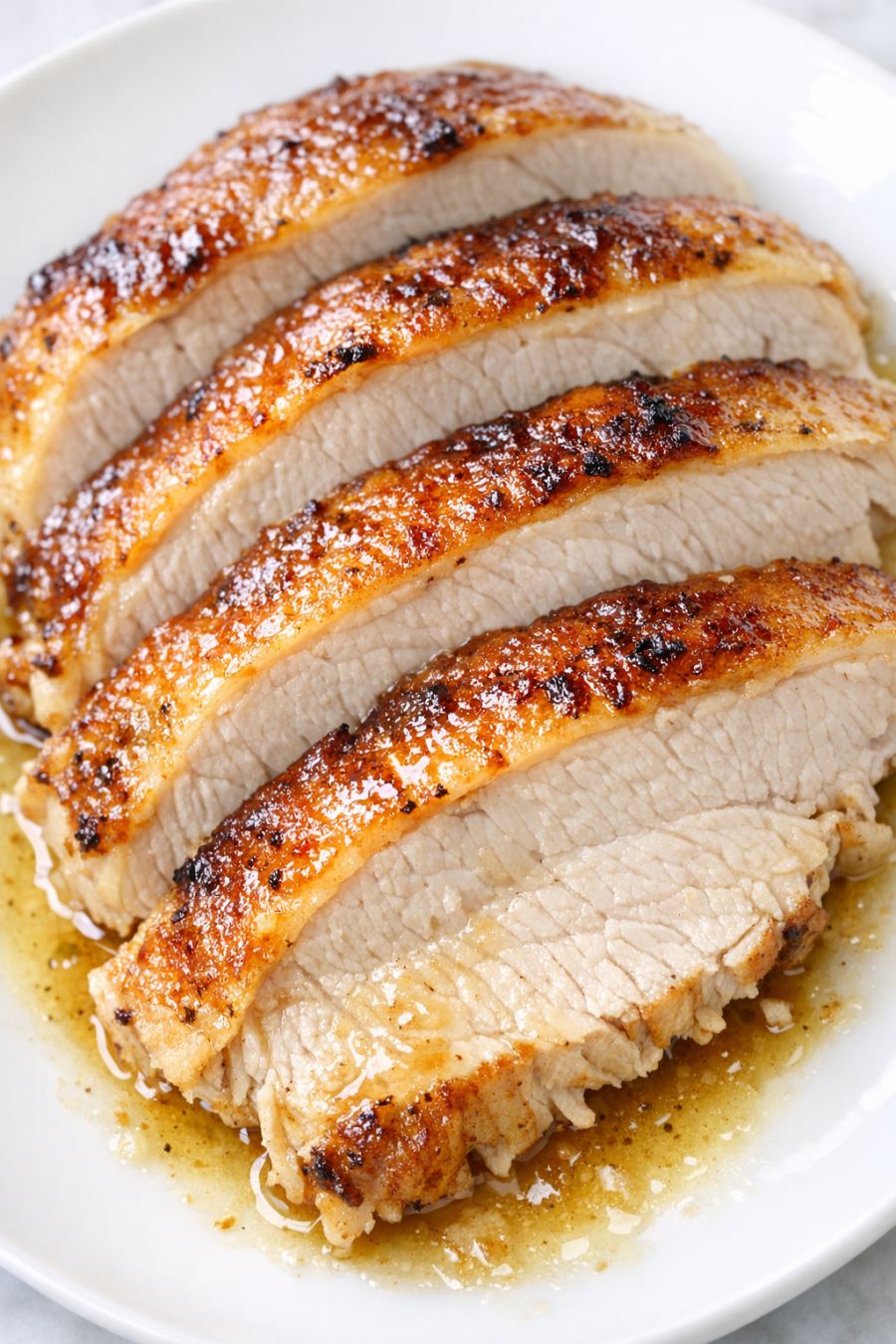
This low carb 3-ingredient Amish roast turkey breast is the kind of simple, reliable centerpiece my own Midwestern relatives would proudly serve every spring holiday. The method is very much in the Amish spirit: minimal ingredients, patient roasting, and a focus on texture and moisture rather than fuss. With just turkey, salted butter, and kosher salt, you get thick slices of tender white meat capped with crisp, golden skin that never dries out. It’s a practical, make-ahead-friendly main dish that feels special enough for a holiday feast but is easy enough for any Sunday dinner.
Serve this turkey breast sliced thick on a warm platter, spooning some of the clear pan juices over the top so the meat glistens. For a low-carb spread, pair it with buttery green beans or roasted asparagus, a simple leafy salad with a sharp vinaigrette, and perhaps cauliflower mash or roasted radishes in place of potatoes. The clean, savory flavor also works beautifully with tangy condiments like grainy mustard or sugar-free cranberry relish. Leftovers are excellent chilled and sliced for salads or lettuce wraps the next day.
Low Carb 3-Ingredient Amish Roast Turkey Breast
Servings: 6
Ingredients
1 bone-in, skin-on turkey breast (4–5 pounds), thawed if previously frozen
4 tablespoons salted butter, very soft
2 teaspoons kosher salt
Directions
Preheat your oven to 325°F (165°C). Place an oven rack in the lower third position so the turkey breast will sit roughly in the center of the oven.
Unwrap the turkey breast and remove any packaging or inserts from the cavity. Pat the entire surface very dry with paper towels, including under the breast where it sits in the pan. Dry skin is key to crisp, golden results.
Sprinkle 1 teaspoon of the kosher salt inside the cavity and along the underside of the breast, rubbing it in gently. This seasons the meat from the inside and helps draw out some moisture for the pan juices.
Place the turkey breast on a rack set inside a roasting pan, skin side up. If you don’t have a rack, set the breast on a bed of crumpled foil to lift it slightly and allow air to circulate for better browning.
Using your fingers, carefully loosen the skin over the top of the breast, starting at the cavity end and working your way up, being careful not to tear it. You’re creating a pocket between the skin and the meat.
Spread about half of the softened salted butter directly onto the meat under the skin, pressing it in as evenly as you can with your fingers. Smooth the skin back into place over the buttered meat.
Rub the remaining softened butter all over the outside of the skin, coating the top and sides of the turkey breast. The butter will help the skin turn a deep golden brown and baste the meat as it melts.
Sprinkle the remaining 1 teaspoon kosher salt evenly over the outside of the turkey breast, focusing on the top and sides. Press it in gently so it adheres to the buttered skin.
Pour 1/2 cup of water into the bottom of the roasting pan (not over the turkey) to keep the drippings from scorching and to create a moist environment in the oven. This helps keep the breast tender while it roasts.
Roast the turkey breast, uncovered, at 325°F (165°C) for about 1 3/4 to 2 1/4 hours, depending on the exact size. As it roasts, the butter will melt, and the pan juices will become clear and fragrant. If the skin is browning too quickly before the meat is done, loosely tent the top with a piece of foil.
Begin checking the internal temperature after 1 1/2 hours. Insert an instant-read thermometer into the thickest part of the breast, not touching bone. The turkey is done when it reaches 160–165°F (71–74°C); it will rise a few degrees as it rests.
Once the turkey breast reaches temperature, carefully transfer it to a cutting board, tipping it slightly so some of the clear pan juices run back into the pan. Let it rest, loosely tented with foil, for at least 20 minutes. Resting allows the juices to redistribute so the meat stays moist when sliced.
While the turkey rests, tilt the roasting pan and spoon off any excess fat from the surface of the juices, leaving the clear, savory drippings behind. Taste the juices and adjust the salt at the table if needed.
To serve, slice the turkey breast crosswise into thick slices, keeping the crispy golden skin attached to each slice as much as possible. Arrange the slices on a warm white platter and spoon some of the clear pan juices over the top so the meat glistens. Serve the remaining juices on the side.
Variations & Tips
For a slightly richer flavor without changing the ingredient count, you can swap half of the salted butter for ghee, which browns beautifully and brings a subtle nuttiness that still fits a low-carb approach. If you need to reduce sodium, use unsalted butter and cut the kosher salt to 1 1/2 teaspoons, then let guests season their own slices at the table. To adapt this for a smaller household, use a 2–3 pound bone-in turkey breast half and reduce the butter to 3 tablespoons and the salt to 1 1/2 teaspoons; start checking for doneness around 1 1/4 hours. For very crisp skin, make sure the turkey skin is thoroughly dried before you butter it, and avoid covering it with foil until the last 15–20 minutes only if absolutely necessary to prevent over-browning. Food safety tips: Always thaw a frozen turkey breast in the refrigerator, allowing about 24 hours for every 4 pounds, and never at room temperature. Keep raw turkey and its juices away from ready-to-eat foods, and wash hands, cutting boards, and knives thoroughly with hot, soapy water after handling. Use a reliable instant-read thermometer inserted into the thickest part of the breast (not touching bone) and do not rely solely on timing or color; the turkey should reach at least 160–165°F (71–74°C). Refrigerate leftovers within 2 hours of cooking, slicing large pieces into smaller portions so they cool quickly, and use them within 3–4 days or freeze for longer storage.
