
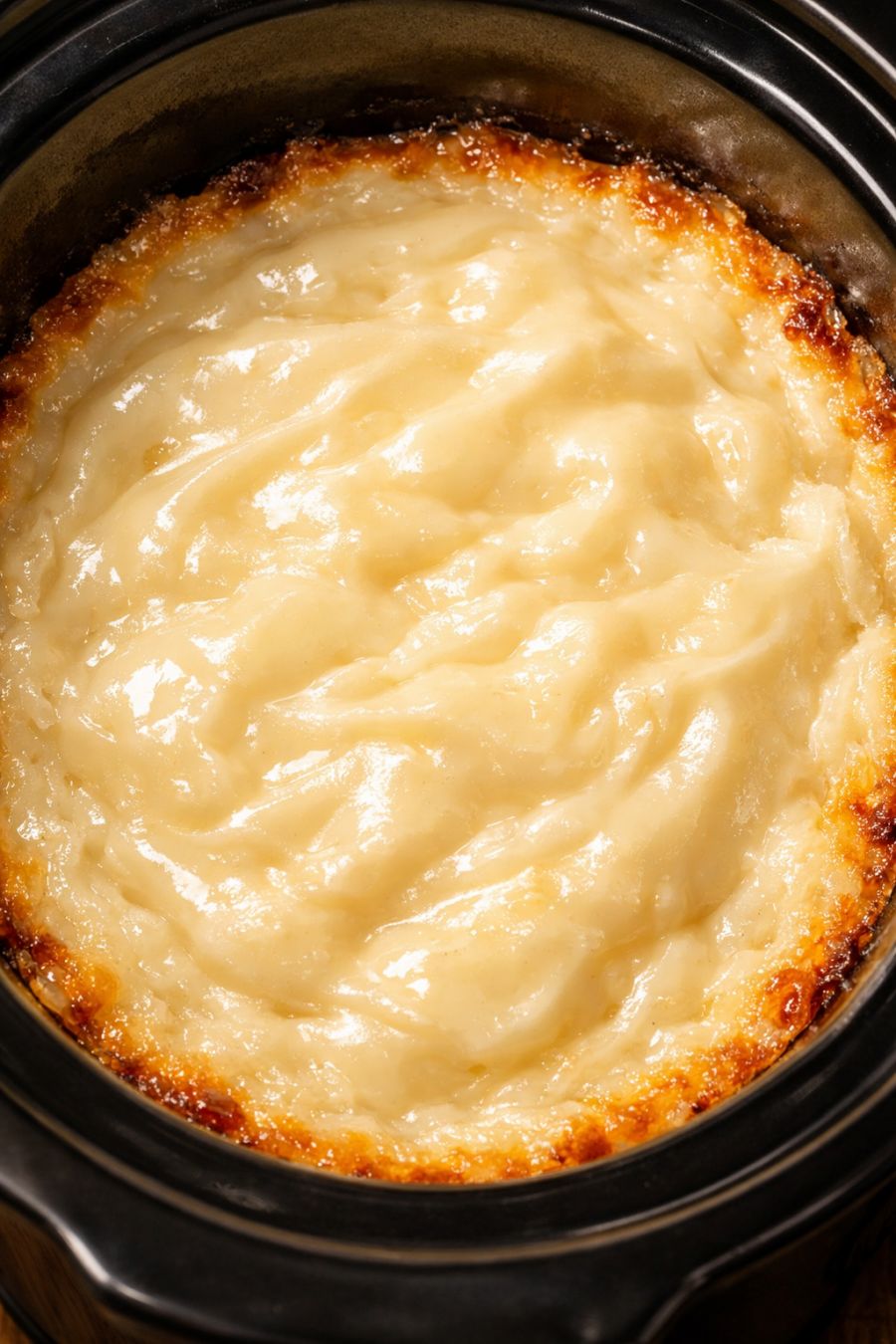
This little slow cooker ivory custard is the sort of dessert I lean on when the fields are just turning green and I’m too busy to fuss with anything fancy. It’s only three ingredients, but it reminds me of the baked custards my mother used to slide into the oven on cool Midwestern spring evenings—silky, gently jiggling, and pale as cream with the faintest caramelized edge. Instead of hovering over a water bath, you let the slow cooker do the work, and a simple sweetened milk mixture settles into a soft, gelatinous custard with a glossy ivory surface that looks almost too pretty to disturb with a spoon.
Serve this custard still slightly warm or well-chilled, scooped straight from the slow cooker into small bowls. It’s lovely on its own, but a few fresh berries, a spoonful of rhubarb compote, or a scatter of toasted nuts make it feel more special for company. A crisp butter cookie or a simple shortbread on the side gives just enough crunch against the smooth, quivering custard. For coffee drinkers, a cup of hot black coffee or mild tea is the perfect counterpoint to its gentle sweetness.
Slow Cooker Spring Ivory Custard
Servings: 6
Ingredients
3 cups whole milk
6 large eggs
1 cup granulated sugar
Directions
Lightly butter the inside of a 4- to 6-quart slow cooker crock, making sure to go up the sides so the custard releases easily and the edges caramelize to a soft golden color.
In a large mixing bowl, whisk the eggs until the yolks and whites are completely blended and just a little frothy; this helps the custard set evenly without tough spots.
Add the granulated sugar to the eggs and whisk until the mixture looks thickened and creamy, with no gritty sugar at the bottom of the bowl.
Slowly pour in the whole milk while whisking gently, blending until the mixture is smooth and uniform; avoid whipping in too much air so the surface of the custard stays mostly smooth and gelatinous rather than foamy.
Pour the custard mixture into the prepared slow cooker crock. If you see many bubbles on top, skim them off with a spoon for a smoother, glassy ivory surface after cooking.
Cover the slow cooker with its lid. For a more even, gentle heat, place a clean kitchen towel under the lid, stretching it tight so it doesn’t touch the custard, to catch condensation and prevent water droplets from marring the surface.
Cook on LOW for 2 1/2 to 3 hours, until the edges are lightly set and just turning a delicate golden color and the center has a soft, even wobble when you jiggle the crock. A thin knife inserted about 1 inch from the edge should come out mostly clean, while the very center remains slightly jiggly.
Turn off the slow cooker and carefully remove the lid, lifting away the towel so no water drips on the custard. Let the custard cool in the crock, uncovered, for about 30 to 45 minutes so it finishes setting and the surface firms into a smooth, pale ivory sheen.
For a chilled dessert, cover the crock (without letting the lid touch the custard) and refrigerate for at least 2 hours, or until thoroughly cold and the texture is softly gelatinous and spoonable. For a warm dessert, let it rest just until warm to the touch and then serve.
To serve, spoon the custard gently from the crock, making sure to include some of the slightly caramelized golden edges along with the silky center in each portion.
Variations & Tips
For a slightly richer custard, you can replace 1/2 to 1 cup of the whole milk with heavy cream, which will give an even silkier, more luxurious texture while keeping the same simple three-ingredient base. If you prefer a lighter sweetness, reduce the sugar to 3/4 cup; the custard will still set, though the surface may not brown quite as deeply at the edges. To make individual servings instead of one large custard, place heat-safe ramekins in the slow cooker, pour in the custard mixture, then add hot tap water around them to come halfway up the sides before cooking on LOW; this gives a more delicate, even set, but be careful moving the hot water bath. Always use fresh, uncracked eggs and keep the custard mixture refrigerated if you need to pause before cooking. When the cooking time is finished, the custard should reach at least 160°F in the center for food safety. Cool it promptly and refrigerate leftovers within 2 hours; enjoy within 3 days. Avoid leaving the custard at room temperature for long stretches, especially in warm weather, as dairy and eggs can spoil quickly.
