
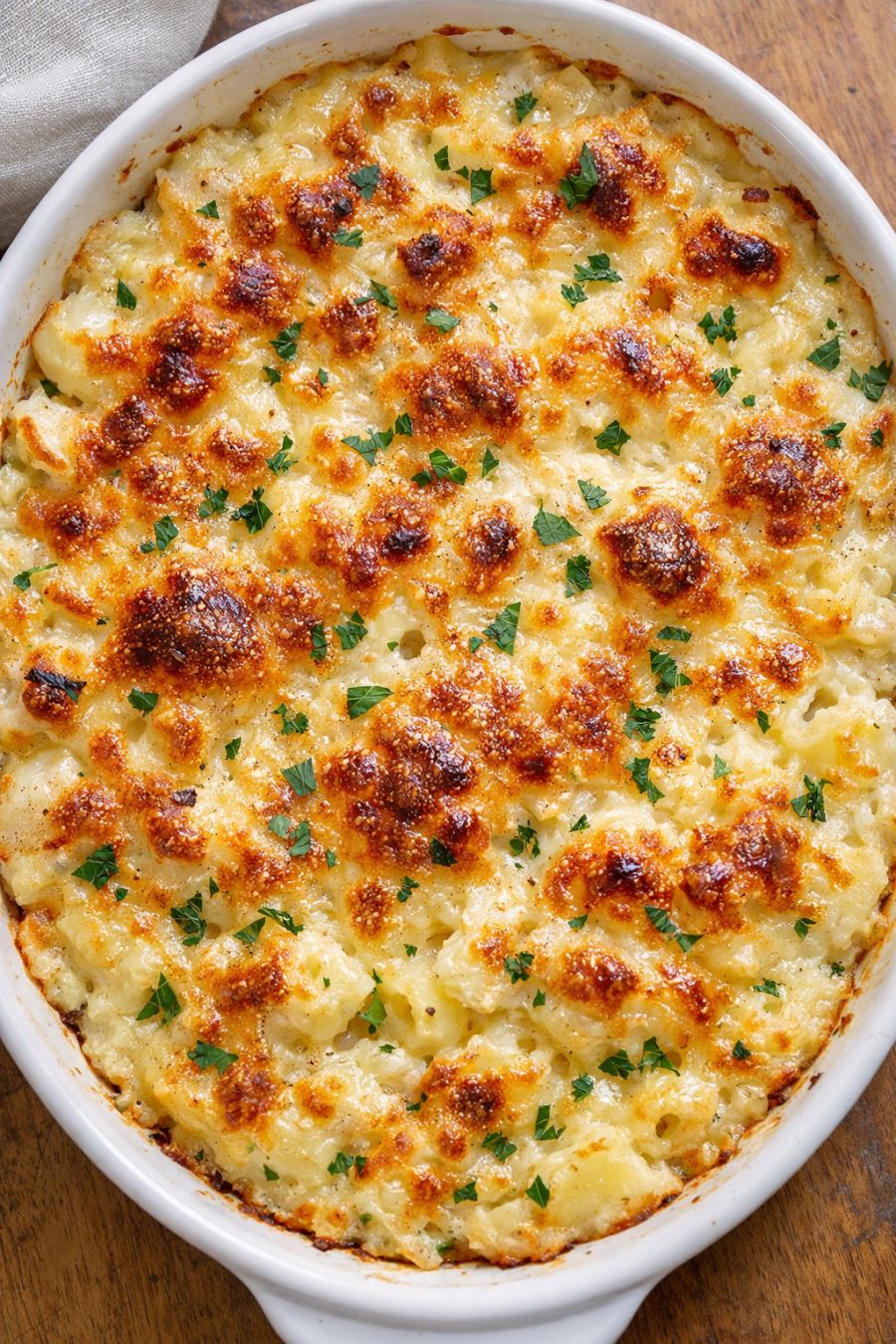
This oven-baked four-ingredient creamed potato casserole is adapted from a recipe card I found in my late aunt’s kitchen, written in her looping script and dotted with splatters from years of Sunday dinners. It’s the kind of Midwestern comfort food that doesn’t apologize for being rich and simple: just potatoes, cream, butter, and salt, baked until the top is golden and the center is spoon-soft and velvety. You make it when you want something deeply familiar and unfussy, the sort of dish that feels right alongside a roast or as the star of a cozy, carb-forward supper.
Serve this casserole piping hot, straight from the white oval baking dish, with a big spoon for scooping generous portions. It’s excellent next to roast chicken, pork chops, or a simple seared steak, and it loves something green on the plate—think steamed green beans, a crisp salad with a sharp vinaigrette, or roasted Brussels sprouts. The richness also pairs nicely with tangy condiments like grainy mustard or a dollop of sour cream on the side. Leftovers can anchor a breakfast plate with scrambled eggs and sautéed greens.
4-Ingredient Creamed Potato Casserole
Servings: 6
Ingredients
3 pounds russet potatoes, peeled and thinly sliced (about 1/8 inch thick)
2 cups heavy whipping cream
6 tablespoons unsalted butter, cut into small pieces
2 teaspoons kosher salt (or 1 1/2 teaspoons fine table salt), plus more to taste
Directions
Preheat your oven to 375°F (190°C). Lightly butter a 2- to 2 1/2-quart white oval casserole dish, making sure to coat the bottom and sides so the potatoes don’t stick.
Peel the potatoes and slice them into thin rounds, about 1/8 inch thick. For the creamiest texture, keep the slices fairly even so they cook at the same rate. Do not rinse the slices; the surface starch helps thicken the cream as it bakes.
Layer about one-third of the potato slices in the bottom of the prepared casserole dish, overlapping them slightly like shingles. Sprinkle with about one-third of the salt and dot with one-third of the butter pieces.
Repeat with a second layer of potatoes, again overlapping slightly. Sprinkle with another third of the salt and dot with another third of the butter.
Finish with a final layer of potatoes, using the neatest slices on top for a more attractive finish. Sprinkle with the remaining salt and dot with the last of the butter.
Slowly pour the heavy whipping cream evenly over the potatoes. Gently tap the dish on the counter so the cream works its way down between the layers. The cream should come just to the top layer of potatoes or barely below; if your dish is very deep and the potatoes aren’t mostly covered, add a splash more cream.
Cover the casserole tightly with foil and place it on a rimmed baking sheet to catch any bubbling overflow. Bake, covered, for 45 minutes, until the potatoes are starting to soften and the cream is hot and steamy.
Remove the foil and continue baking, uncovered, for 30 to 40 minutes, until the potatoes are completely tender when pierced with the tip of a knife and the top is richly golden brown with little browned edges. If the top is browning too quickly before the potatoes are tender, loosely tent with foil again.
Let the casserole rest for at least 10 to 15 minutes before serving. This short rest allows the creamy sauce to thicken slightly so it’s spoonable but still luxuriously soft. Taste a small bite from the edge and sprinkle a pinch more salt over the top if needed before bringing it to the table.
Variations & Tips
Because this recipe is built on just four ingredients, each one matters. Use starchy potatoes like russets for the creamiest, most tender texture; waxy potatoes will hold their shape more and feel less silky. If you prefer a slightly firmer casserole that slices more neatly, you can swap half the heavy cream for whole milk, but the original all-cream version is what gives the old-fashioned, spoonable consistency my aunt was known for. For a subtly deeper flavor without changing the ingredient list, you can brown the butter first in a small saucepan until it smells nutty, then let it cool slightly before dotting it over the potatoes. If you must reduce the richness, you can cut the butter down to 4 tablespoons, though the top will brown a bit less. To avoid curdling and ensure food safety, keep the baking temperature moderate (around 375°F) and bake until the center of the casserole is bubbling and the potatoes are fully tender; underbaking can leave the interior lukewarm and the dairy undercooked. Always refrigerate leftovers within 2 hours of baking, store them tightly covered, and reheat thoroughly in a 325°F oven until hot all the way through (165°F in the center) before serving again. For anyone watching sodium, reduce the salt slightly and finish individual portions with just a light sprinkle so the flavor still pops without overdoing it.
