
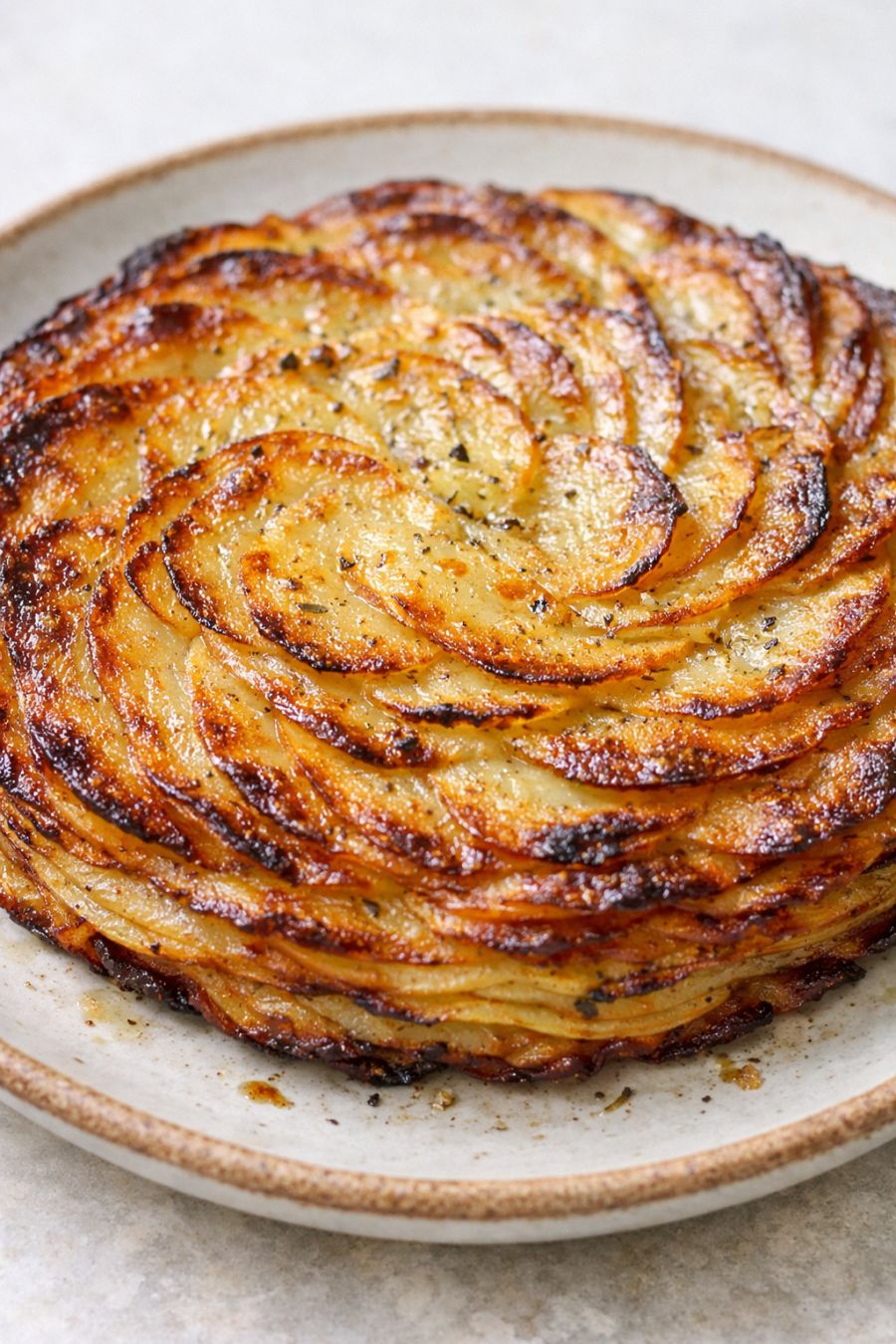
My mother-in-law, Ruth, made this potato galette every single Easter morning for 40 years, and the platter always came back to the kitchen scraped clean. It’s nothing fancy—just potatoes, butter, and salt—but the way those thin slices bake up into a golden, lacy-edged round feels like a little bit of magic. This is the kind of practical, make-ahead dish Midwestern farm wives have leaned on for decades: inexpensive, filling, and pretty enough to earn a place on the holiday table year after year.
Serve the galette hot or warm, cut into wedges like a pie. It’s wonderful alongside baked ham, roast chicken, or a simple egg bake at brunch. I like to set it on a sturdy ceramic plate so the crisp edges stay dry and crunchy. A bowl of applesauce, a green salad with a tangy vinaigrette, or sliced tomatoes in summer all balance the richness. Leftovers reheat nicely in a hot oven or skillet until the bottom crisps again, and a wedge topped with a fried egg makes a very fine farmer’s breakfast.
Oven-Baked 3-Ingredient Potato Galette
Servings: 6–8
Ingredients
2 1/2 pounds russet potatoes, peeled
6 tablespoons unsalted butter, melted (plus a little extra for the pan)
1 1/4 teaspoons kosher salt
Directions
Heat your oven to 400°F (200°C). Place a 9- or 10-inch heavy ovenproof skillet or round metal cake pan in the oven to heat while you prepare the potatoes. This helps the bottom brown and crisp nicely.
Peel the potatoes and keep them in a bowl of cold water while you work so they don’t discolor. When you’re ready to slice, dry each potato well with a clean towel so extra moisture doesn’t steam the galette.
Using a mandoline or a very sharp knife, slice the potatoes into thin rounds, about 1/16–1/8 inch thick. Try to keep the slices as even as you can so they cook at the same rate.
In a large bowl, drizzle the melted butter over the potato slices. Sprinkle the salt over the top. Toss gently with your hands to coat every slice lightly and evenly. If any slices stick together, pull them apart so the butter and salt can reach all surfaces.
Carefully remove the hot skillet or pan from the oven and brush or swirl a thin layer of extra melted butter over the bottom and slightly up the sides. Work quickly but safely; the pan will be very hot.
Starting from the center of the pan, arrange potato slices in a tight, overlapping spiral, slightly shingling each slice over the last to form a neat round. When you finish the first layer, continue with a second and third layer, using all the potatoes and pressing them down gently with your hands as you go. The tighter you pack them, the better the galette will hold together.
Once all the potatoes are in the pan, press down firmly with the back of a spatula or the bottom of a clean, flat-bottomed measuring cup to compact the layers. This helps create that pretty, sliceable cake with crisp, golden edges.
Place the pan in the oven and bake, uncovered, for 35–45 minutes, until the potatoes are tender all the way through when pierced with the tip of a knife and the top is deep golden brown with some darker, crisped edges.
For an extra-crispy bottom, carefully press the potatoes down again halfway through baking, and if your pan is very full, spoon off any excess butter that pools on top. This encourages more browning instead of simmering.
When the galette is done, let it rest in the pan for 5–10 minutes so it can set. Run a thin spatula or knife around the edge to loosen. Place a serving plate over the pan and, using oven mitts, invert quickly and carefully so the galette drops onto the plate, browned side up. If you prefer, you can simply serve it straight from the pan, cutting into wedges.
Cut into 6–8 wedges and serve warm, admiring those thin, crispy, golden layers that made this a holiday staple for so many years.
Variations & Tips
You can dress this up or down without losing its simple charm. For a cheesier version, scatter 1/2 cup finely grated sharp cheddar or Parmesan between the middle and top layers of potatoes before baking, but be aware this technically adds another ingredient beyond the classic three. A few grinds of black pepper or a pinch of garlic powder mixed in with the salt will give it a gentle kick. If you don’t have russet potatoes, Yukon Golds will work; they give a slightly creamier center and a lovely yellow color, though the edges may not get quite as lacy-crisp. To make it ahead for a big brunch, you can bake the galette until just tender but still pale, cool it, and refrigerate it in the pan, tightly covered, overnight. Reheat in a 400°F (200°C) oven until hot and deeply golden. For food safety, always refrigerate leftovers within 2 hours of baking, and reheat only once to at least 165°F (74°C). Use a sharp knife or mandoline carefully when slicing the potatoes; keep your fingers clear and use the guard if your mandoline has one. Because the pan and butter get very hot, use thick oven mitts and keep handles turned away from the edge of the stove or counter so no one bumps them. If you prefer less richness, you can reduce the butter by a tablespoon or two, but the galette will be a bit less crisp and indulgent than the old Easter version my mother-in-law swore by.
