
This 5-ingredient slow cooker vintage lemon sponge pudding is the kind of dessert I pull out for Mother’s Day or when I want to impress without a lot of fuss. It’s inspired by old-fashioned self-saucing lemon puddings: as it cooks, a soft, pale yellow lemon custard forms on the bottom and a delicate sponge layer rises on top. Everything happens right in the slow cooker, so you can tuck it away and let it do its thing while you make dinner or set the table. It tastes like something your grandma might have made, but with the ease busy families need now.
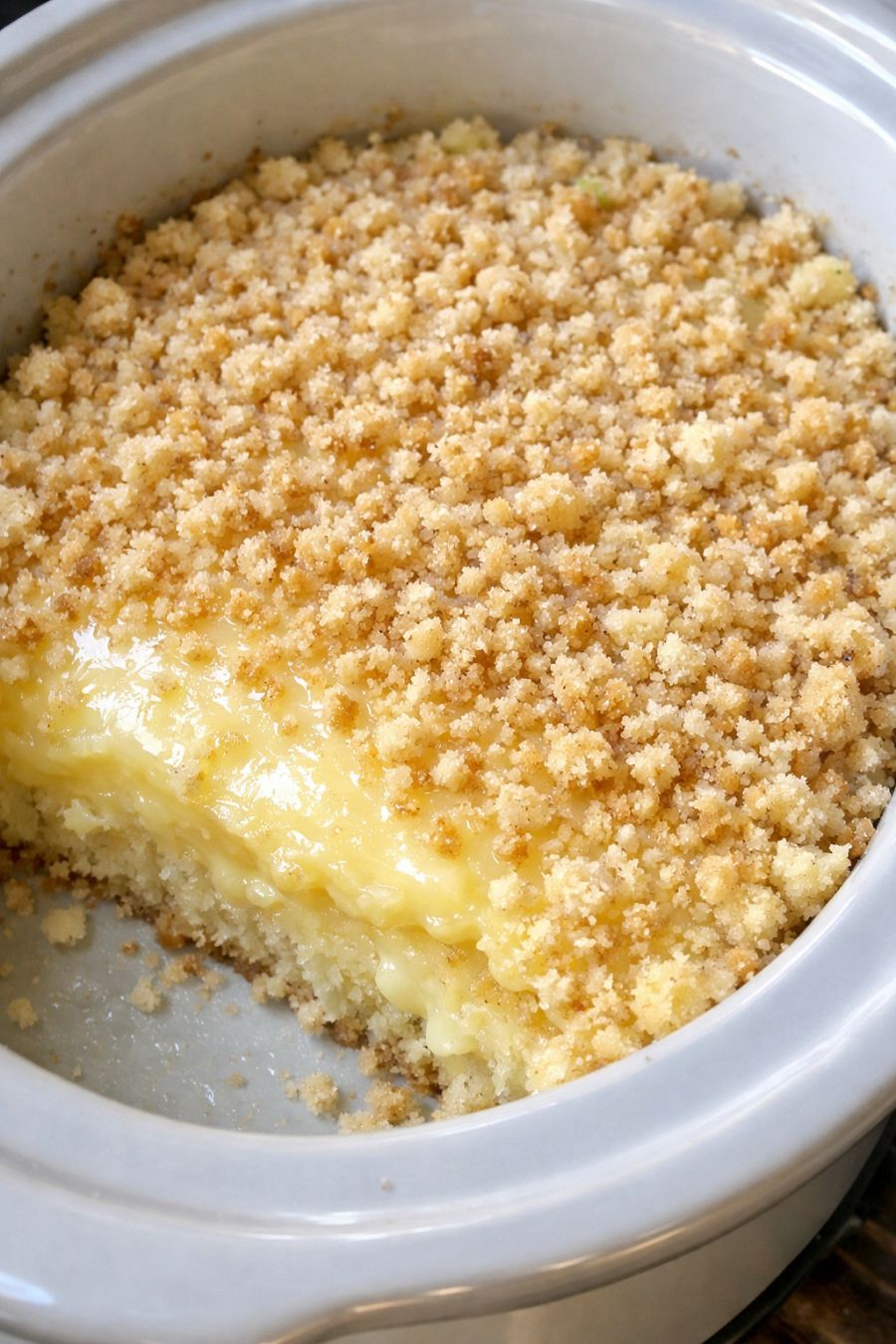
Serve this lemon sponge pudding warm, spooned straight from the oval slow cooker so you can see that creamy custard layer under the tender crumb topping. It’s lovely on its own, but a little whipped cream or vanilla ice cream makes it feel extra special for holidays like Mother’s Day. Fresh berries—especially raspberries or blueberries—pair beautifully with the bright lemon flavor. A cup of coffee or hot tea on the side turns it into a cozy, linger-at-the-table kind of dessert.
5-Ingredient Slow Cooker Lemon Sponge Pudding
Servings: 6
Ingredients
1 cup granulated sugar
1/2 cup all-purpose flour
3 large eggs, separated
1 cup whole milk
1/3 cup fresh lemon juice (from 2–3 lemons), plus 1 teaspoon finely grated lemon zest
Directions
Lightly butter the inside of an oval slow cooker (about 4–6 quarts) to keep the pudding from sticking and to help the layers release nicely when you scoop.
In a medium bowl, whisk together the granulated sugar and all-purpose flour until well combined and no flour lumps remain. This helps the sponge bake up evenly.
In a separate large bowl, whisk the egg yolks, whole milk, fresh lemon juice, and lemon zest until smooth and creamy. The mixture should smell bright and lemony.
Gradually whisk the sugar-flour mixture into the lemon mixture until you have a smooth, pourable batter. It will be fairly thin—that’s what creates the custard layer.
In a clean mixing bowl, beat the egg whites with a hand mixer or stand mixer on medium-high speed until they reach soft peaks that gently curl over when you lift the beaters.
Gently fold the beaten egg whites into the lemon batter in 2–3 additions, using a spatula and light, sweeping motions. Stop folding as soon as the mixture looks mostly combined; a few small streaks of egg white are okay and help keep the sponge light.
Pour the airy batter into the prepared slow cooker, smoothing the top lightly with the back of a spoon. The mixture will look thin, but it will separate into a custard base and sponge top as it cooks.
Cover the slow cooker with its lid. Cook on LOW for 2 1/2 to 3 hours, or until the top looks set and lightly puffy, with a delicate, pale crumb that springs back gently when touched in the center. The edges may pull slightly from the sides, and you should see a soft, custardy layer underneath if you peek with a spoon.
Once done, turn off the slow cooker and let the pudding rest, covered, for about 15 minutes. This helps the custard thicken slightly while keeping the sponge tender.
To serve, spoon the warm pudding into small bowls, making sure to scoop down to get both the pale yellow custard and the fluffy sponge topping in each serving. Serve as-is, or top with whipped cream, ice cream, or fresh berries.
Variations & Tips
For a milder lemon flavor, reduce the lemon juice to 1/4 cup and skip the zest; this can be helpful for picky eaters who prefer something less tangy. If your family loves extra brightness, you can add an additional teaspoon of lemon zest without changing the other measurements. To make a slightly richer dessert, replace 1/4 cup of the milk with heavy cream. For a lighter texture, you can use 2% milk instead of whole, though the custard will be a bit less creamy. If you’d like a pretty finish for holidays, dust the top lightly with powdered sugar right before serving, or scatter a few fresh berries on top of each bowl. For kids who don’t love obvious “bits,” strain the lemon juice before using and skip the zest so there are no visible flecks. If your slow cooker runs hot, start checking at 2 hours to avoid overcooking the sponge; it should look set but still very soft. Always use pasteurized eggs when possible and keep raw egg whites and yolks refrigerated until you’re ready to mix the batter. Once cooked, refrigerate leftovers within 2 hours in a covered container and eat within 2–3 days; reheat gently in the microwave in short bursts so the custard doesn’t curdle. Avoid leaving the finished pudding sitting on the warm setting for more than 1 hour, as it can dry out and the eggs can become overcooked.
