
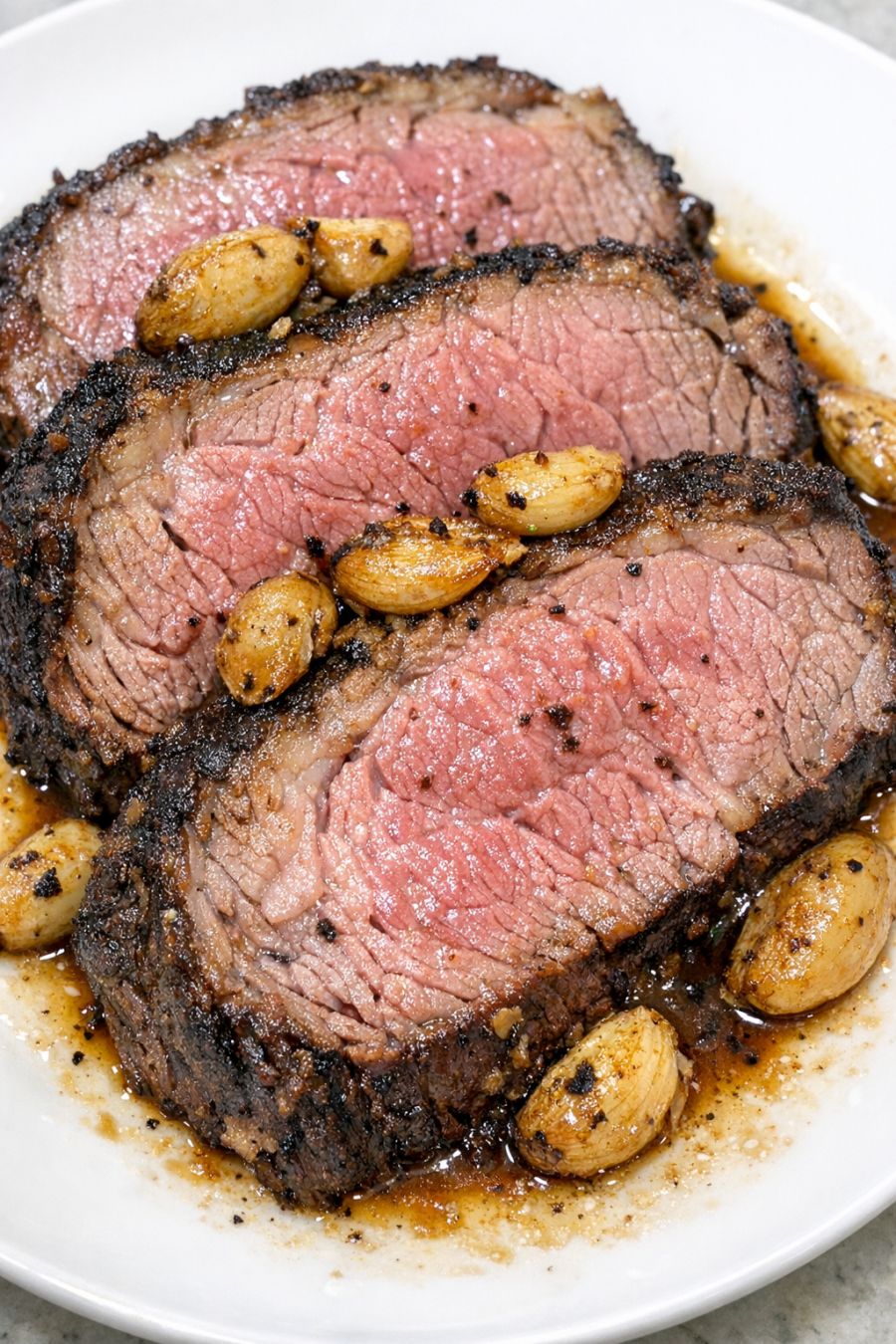
This slow cooker 3-ingredient garlic prime rib roast is the kind of special-occasion dinner that feels fancy but is honestly almost embarrassingly easy. I first made a version of this for my mom one spring when I didn’t want to be stuck in the kitchen all day, and now she asks for it every time she visits. The garlic melts into the meat and the juices, giving you unbelievable flavor with hardly any work. Using the slow cooker keeps the prime rib tender and rosy pink inside, while a quick sear at the end gives you that dark, caramelized crust you see in steakhouse photos.
Serve thick slices of the juicy prime rib on warm white plates so the natural juices can pool around the meat. Spoon some of the slow-cooked garlic cloves over the top of each slice. This roast is lovely with creamy mashed potatoes or buttered baby potatoes to soak up the juices, plus a simple green side like roasted asparagus, green beans, or a tossed salad. Warm dinner rolls or crusty bread are great for mopping up the garlicky drippings, and if you like, a little horseradish or Dijon on the side makes it feel restaurant-level special.
Slow Cooker 3-Ingredient Garlic Prime Rib Roast
Servings: 6–8
Ingredients
1 (4–5 lb) bone-in prime rib roast (also called standing rib roast), excess surface moisture patted dry
2–3 heads garlic (about 20–30 cloves), cloves peeled and left whole
2 1/2 tsp kosher salt (or 2 tsp fine sea salt), divided
Directions
Unwrap the prime rib roast and pat it very dry on all sides with paper towels. This helps it sear nicely later and keeps the exterior from steaming.
Sprinkle 2 teaspoons of the kosher salt evenly over all sides of the roast, pressing it in gently with your hands. Make sure you season the fat cap and the ends, not just the top. Let the roast sit at room temperature for 30–45 minutes while you prep the garlic; this takes off the chill and helps it cook more evenly.
Separate the garlic heads into cloves and peel them, leaving the cloves whole. You want plenty of whole cloves so they can roast and turn soft and golden in the slow cooker. If any cloves are very large, you can cut them in half lengthwise.
Scatter the peeled garlic cloves over the bottom of a large slow cooker in an even layer. Sprinkle the remaining 1/2 teaspoon kosher salt lightly over the garlic. This creates a flavorful, garlicky bed for the roast and seasons the cooking juices.
Place the seasoned prime rib roast on top of the garlic in the slow cooker, fat side up and bone side down. Position it so the meat isn’t pressing hard against the sides of the crock; this helps it cook more evenly and keeps the juices underneath.
Cover the slow cooker with the lid. Cook on LOW for 4 1/2 to 6 hours, depending on the size of your roast and how you like it done. Start checking the internal temperature with an instant-read meat thermometer at 4 hours: for rosy pink medium-rare, pull the roast when the thickest part reaches about 125–130°F (52–54°C); for medium, 135°F (57°C). The temperature will rise a bit as it rests.
Once the roast reaches your desired temperature, carefully lift it out of the slow cooker using tongs and a sturdy spatula or carving fork, keeping it intact. Transfer it to a cutting board, tent it loosely with foil, and let it rest for at least 20 minutes. Resting is important for keeping the meat juicy and letting the internal temperature even out.
While the roast rests, use a slotted spoon to scoop the soft, golden garlic cloves from the slow cooker juices into a small bowl. They should be very tender and lightly browned. You can lightly mash some with a fork to make a rustic garlic spread, or leave them whole for serving on top of the sliced beef.
For that dark brown, steakhouse-style exterior, preheat a large cast-iron or heavy skillet over medium-high to high heat on the stovetop while the roast is resting. You want it very hot before you add the meat. (If you prefer, you can also use the broiler: place the roast on a rimmed baking sheet and broil a few minutes, watching closely.)
Once the pan is very hot, carefully place the rested roast, fat side down first, into the dry skillet. Sear 1–2 minutes per side, turning with tongs, until the exterior is deeply browned and crisp in spots. The goal is color and flavor, not cooking it through again, so keep the sear quick.
Transfer the seared roast back to the cutting board. Slice between the bones to remove the rib section if it’s bone-in, then slice the roast into thick slices, about 1/2 to 3/4 inch each. You should see a rosy pink interior with a dark brown crust around the edges.
Lay the slices on a warm white serving platter or individual plates. Spoon some of the natural juices from the cutting board and the slow cooker over the meat, and tuck a few of the roasted garlic cloves on top of each portion. Serve right away while hot and juicy.
Variations & Tips
If your family likes bolder flavors, you can rub the roast with freshly ground black pepper along with the salt before it goes into the slow cooker, or tuck a few sprigs of fresh rosemary or thyme around the meat (this adds flavor without increasing the core 3 ingredients). For a milder garlic flavor for picky eaters, use just 1–1 1/2 heads of garlic and serve the roasted cloves on the side so everyone can add as much or as little as they like. If you don’t have a bone-in roast, a boneless prime rib works too; just start checking the temperature a little earlier, as boneless can cook slightly faster. You can also use this method with a well-marbled beef ribeye roast, though very lean cuts (like eye of round) won’t be as juicy. For a gravy-style sauce, skim excess fat from the slow cooker juices and simmer them briefly on the stove to reduce; you can whisk in a small spoonful of cornstarch mixed with cold water if you want it thicker.
Food safety tips: Always thaw the roast completely in the refrigerator before cooking; never slow-cook from frozen, as the meat may stay too long in the temperature “danger zone.” Keep the roast refrigerated until about 30–45 minutes before cooking, and don’t leave raw meat out at room temperature for more than 2 hours total. Use a clean, instant-read thermometer to check doneness in the thickest part of the roast, avoiding the bone. After cooking, refrigerate leftovers within 2 hours in shallow containers, and reheat only to steaming hot (165°F/74°C) before serving. Store leftovers in the refrigerator for up to 3–4 days, or freeze for longer storage.
