
This low carb 3-ingredient Amish stewed rhubarb is the kind of simple, honest recipe that has been bubbling on Midwestern stovetops for generations. Every May, when the rhubarb stalks turned rosy and tall along the fence line, my grandmother would head out with a paring knife and an old enamel bowl. By afternoon, the whole house smelled bright and sweet-tart as that rhubarb simmered gently on the back burner. This version keeps the spirit of her recipe—just rhubarb, a bit of low-carb sweetener, and water—so you still get that jammy, glossy, pink-red spoonful of spring without all the sugar. It’s practical, thrifty, and a lovely way to celebrate the first real harvest of the season.
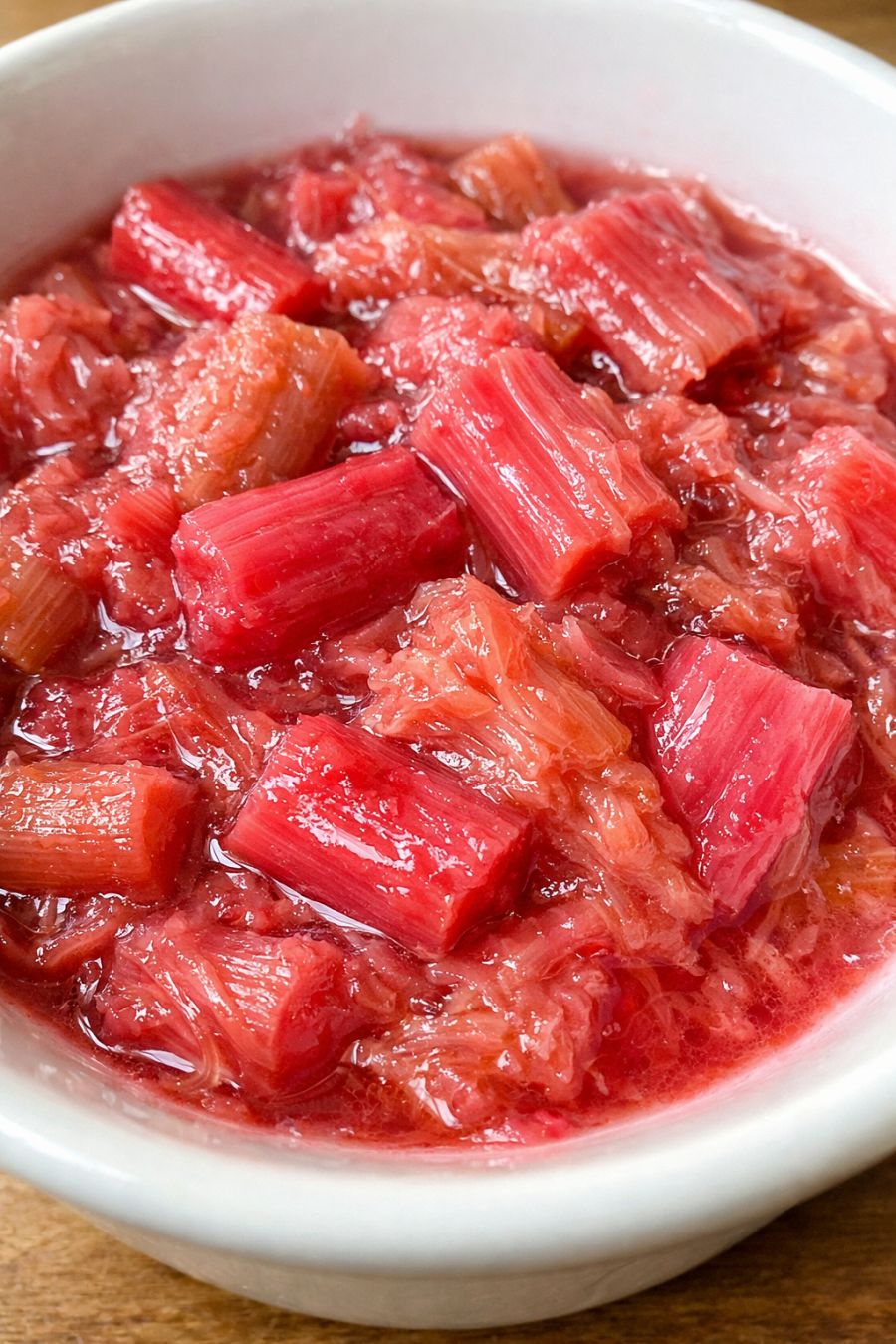
Serve this stewed rhubarb slightly warm or chilled in a small white bowl, just as my grandmother did, with a spoon and a quiet moment. It’s wonderful spooned over plain Greek yogurt, low-carb vanilla ice cream, or cottage cheese for a simple breakfast or dessert. You can also swirl it into chia pudding, layer it in a low-carb parfait, or use it as a bright, tangy topping for almond flour pancakes or waffles. For company, I like to set it out in a pretty serving bowl and let folks spoon it over whatever they’re having—its glossy, jammy texture and vibrant pink color dress up even the simplest meal.
Low Carb 3-Ingredient Amish Stewed Rhubarb
Servings: 4
Ingredients
4 cups chopped fresh rhubarb stalks (about 1 pound, leaves discarded)
1/3 cup granular low-carb sweetener (erythritol, allulose, or preferred blend, to taste)
1/2 cup water
Directions
Trim and prepare the rhubarb: Rinse the rhubarb stalks under cool running water. Slice off and discard any leafy tops and tough root ends; never use the leaves, as they are not safe to eat. Cut the stalks into 1/2-inch pieces until you have about 4 cups.
Combine ingredients in a saucepan: In a medium, heavy-bottomed saucepan, add the chopped rhubarb, the granular low-carb sweetener, and the water. Give everything a gentle stir so the rhubarb is evenly coated and the sweetener is moistened.
Begin cooking over medium heat: Set the pan over medium heat and bring the mixture just to a gentle simmer, stirring occasionally. The rhubarb will start to release its juices and soften, and you’ll see a pretty pink-red syrup forming.
Simmer until soft and jammy: Once it’s bubbling softly, reduce the heat to low. Let the rhubarb cook, uncovered, for 12–18 minutes, stirring every few minutes, until the stalks have mostly broken down and the mixture is glossy, soft, and spoonable. It should look like a loose, chunky jam in a syrupy liquid.
Taste and adjust sweetness: Turn off the heat. Carefully taste a small spoonful (it will be hot) and add a tablespoon or two more low-carb sweetener if you prefer it sweeter, stirring until dissolved. Remember that the flavor will mellow slightly as it cools.
Cool and serve: Let the stewed rhubarb cool in the pan for 10–15 minutes, then transfer it to a white serving bowl so its bright color shows nicely. Serve warm, at room temperature, or chilled. As it cools, it will thicken a bit more and develop an even more jammy texture.
Store leftovers: Once fully cooled, cover and refrigerate for up to 5 days. For longer storage, spoon into freezer-safe containers, leaving a little headspace, and freeze for up to 3 months. Thaw in the refrigerator before serving.
Variations & Tips
You can keep the same three-ingredient spirit and still make this stewed rhubarb your own. For a softer, more dessert-like flavor, stir in 1 teaspoon of vanilla extract after you remove the pan from the heat (this does technically add a fourth ingredient, but it doesn’t change the basic method). If your rhubarb is especially tart, use up to 1/2 cup low-carb sweetener, adding it gradually and tasting as you go. A pinch of salt can deepen the flavor without making it salty. For a slightly thicker, more jam-like consistency, simply simmer a few minutes longer, stirring often so it doesn’t scorch; if it gets too thick, add a tablespoon or two of water to loosen it. If you prefer a smoother texture, mash the cooked rhubarb lightly with a fork or potato masher, or blend briefly with an immersion blender once it has cooled slightly. For a gentle twist that still tastes very traditional, you can simmer a 1-inch strip of lemon peel with the rhubarb and fish it out before serving.
Food safety tips: Always discard rhubarb leaves, as they are toxic and not safe to eat; only the stalks should be used. Wash the stalks well to remove any soil or garden debris. Use a nonreactive saucepan (stainless steel or enamel) so the tart rhubarb doesn’t react with the pan and affect flavor or color. Keep the heat on low once it starts simmering and stir regularly to prevent scorching on the bottom. Cool the stewed rhubarb before covering and refrigerating, and store it in a clean, covered container. If you choose to can rhubarb, follow a tested canning recipe and up-to-date guidelines from a trusted source, as this simple stovetop version is intended for short-term refrigeration or freezing only.
