
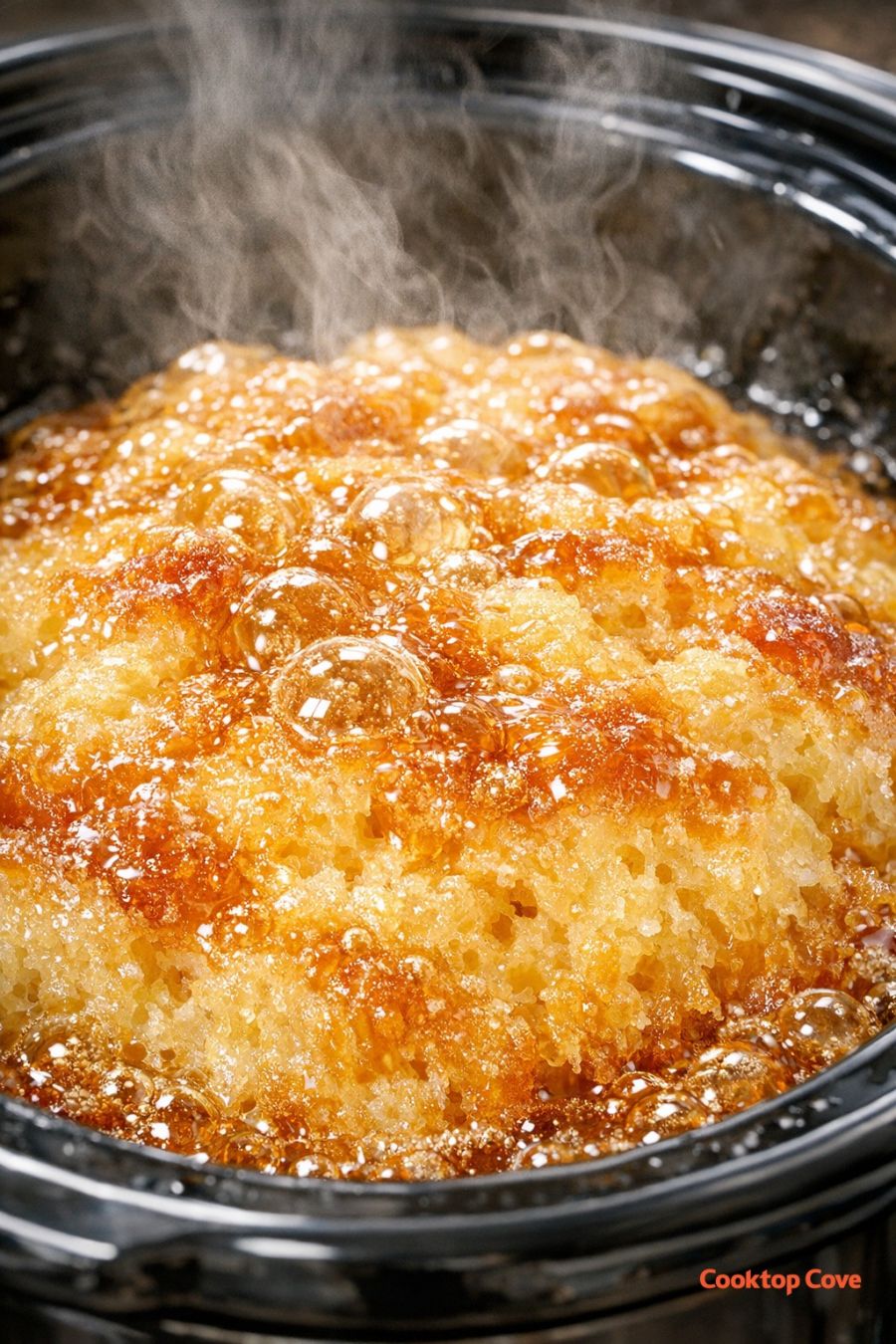
This 3-ingredient slow cooker golden sponge cake is my May magic trick when I want a sweet treat ready hours before a weekend barbecue. It’s essentially a self-saucing sponge: a fluffy, porous cake that bakes right in a pool of bubbling golden syrup, turning into a tender, gelatinous mass soaked with caramel notes. The idea borrows from old-fashioned British treacle sponge and Midwest dump cakes, but streamlined for the slow cooker so you can set it up at noon and forget it until dessert time.
Serve the warm golden sponge straight from the slow cooker, spooned into shallow bowls so you catch plenty of the syrupy sauce. A scoop of vanilla ice cream, lightly sweetened whipped cream, or plain Greek yogurt works beautifully against the hot, buttery sweetness. I like to add something fresh—sliced strawberries, peaches, or a handful of raspberries—to cut the richness. Coffee, black tea, or a not-too-sweet sparkling wine all make nice pairings if you’re serving this after a backyard cookout.
3-Ingredient Slow Cooker Golden Sponge Cake
Servings: 6
Ingredients
1 box (about 15.25 oz / 430 g) yellow cake mix
4 large eggs, at room temperature
1 cup (320 g) golden syrup or light corn syrup
Directions
Lightly grease the insert of a 4- to 6-quart slow cooker with butter or neutral oil, making sure to coat the bottom and lower sides so the cake releases easily and the syrup doesn’t stick.
Pour the golden syrup into the bottom of the greased slow cooker and tilt the insert gently so the syrup forms an even layer. This will become the bubbling golden sauce that soaks into the sponge.
In a medium mixing bowl, crack in the eggs and whisk just until the yolks and whites are evenly blended and slightly frothy; you don’t need to whip them to full volume, but a little air helps create that fluffy, porous texture.
Sprinkle the dry yellow cake mix over the whisked eggs. Using a spatula or wooden spoon, stir gently but thoroughly until no dry pockets remain and you have a thick, smooth batter. Avoid overmixing; stop as soon as the mix is fully moistened so the cake stays tender.
Carefully spoon the batter over the layer of golden syrup in the slow cooker, starting around the edges and then filling in the center. Try not to disturb the syrup too much; you want a distinct syrup layer that will bubble up as the cake cooks.
Smooth the top of the batter lightly with the back of the spoon. It doesn’t need to be perfect—any small ridges will even out as the batter rises and the syrup steams.
Cover the slow cooker with its lid. If your lid tends to drip condensation, you can place a clean kitchen towel under the lid (keeping the towel ends away from the heating element) to absorb excess moisture and help maintain a light, fluffy crumb.
Cook on LOW for 2.5 to 3.5 hours, or until the sponge is puffed, golden on top, and the center springs back lightly when touched. A toothpick inserted into the cake (not all the way to the syrup) should come out mostly clean. The edges will look set while the bottom remains a soft, gelatinous, syrup-soaked layer.
Once cooked, turn off the slow cooker and let the sponge rest, covered, for 10 to 15 minutes. This brief rest allows the hot syrup to settle into the porous cake, giving you that moist, almost custardy texture without falling apart completely.
To serve, run a heatproof spatula gently around the edges to loosen the cake. Spoon generous portions into bowls, making sure to scoop from the bottom so each serving has both fluffy sponge and plenty of bubbling golden syrup. Serve warm.
Variations & Tips
For a deeper caramel character, use dark golden syrup or a blend of golden syrup and mild molasses (about 3 parts syrup to 1 part molasses), keeping the total to 1 cup. If you prefer a lighter sweetness, substitute half of the golden syrup with honey; note that honey will add its own floral flavor and may brown slightly faster along the edges. To introduce citrus brightness, finely grate the zest of 1 lemon or orange directly into the batter before cooking; this cuts the richness and plays well with the syrup. If you want more structure and less gelatinous texture at the bottom, reduce the syrup to 3/4 cup; the cake will be a bit drier and more sliceable, with less sauce. For an almost bread-pudding effect, gently swirl the batter once through the syrup with the tip of a knife after spooning it in, creating marbled pockets of syrup throughout the sponge. You can also portion this into a smaller, heatproof baking dish that fits inside a larger slow cooker as a water bath: place the filled dish on a rack in the slow cooker, pour hot water around it halfway up the sides, and cook the same way for an even softer, custard-like crumb.
Food safety tips: Always cook on LOW rather than WARM to ensure the eggs and batter reach a safe internal temperature (at least 190°F/88°C in the center of the cake). Use pasteurized eggs if you’re concerned about egg safety, especially when serving to children, pregnant individuals, or anyone immunocompromised. Avoid lifting the lid repeatedly during cooking; each peek can significantly drop the temperature and extend cook time, increasing the risk of uneven cooking. Once cooked, do not leave the cake on the WARM setting for more than 2 hours; prolonged holding in the temperature “danger zone” can encourage bacterial growth. Cool leftovers promptly, transfer to a covered container, and refrigerate within 2 hours of cooking; reheat individual portions gently in the microwave or in a low oven until steaming hot before serving.
