
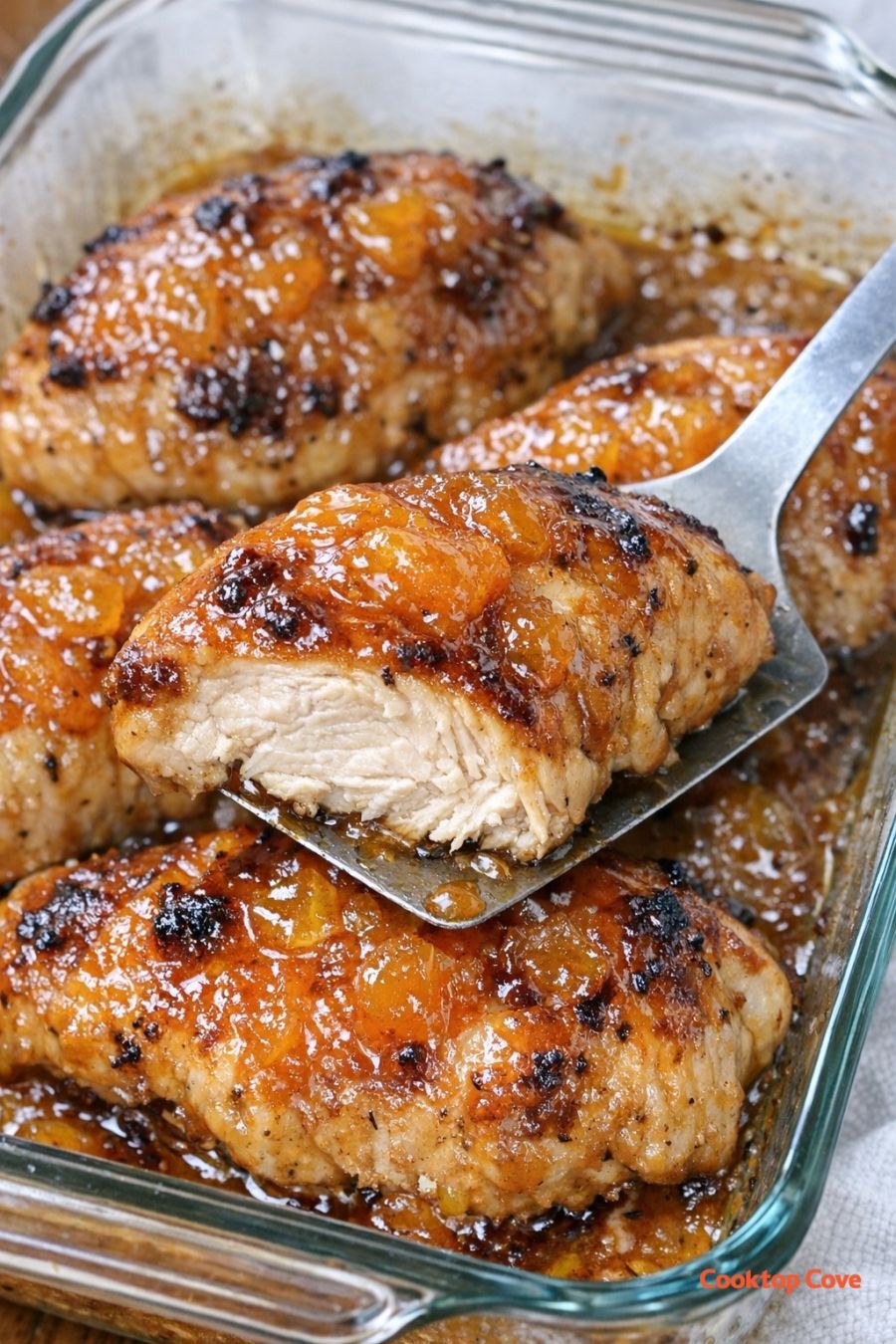
This oven baked 3-ingredient apricot jam chicken is the kind of sweet and tangy dish that could have sat on any church basement buffet or garden club table in the 1980s. My aunt used to walk into our spring garden club meetings with this very casserole in a glass dish tucked under her arm, and I swear the ladies would start lining up before she even set it down. It’s sticky, glossy, and just a little bit nostalgic—apricot jam and onion soup mix were pantry darlings back then. With only three ingredients and almost no fuss, it’s perfect for busy weeknights, potlucks, or any time you want something comforting that tastes like it took more effort than it really did.
Serve this apricot jam chicken hot right from the glass casserole dish, spooning that extra orange glaze over the top of each piece. It goes especially well with plain white rice or buttered egg noodles to soak up the sweet and tangy sauce. On the side, think simple: steamed green beans, roasted carrots, or a crisp lettuce salad with a light vinaigrette to balance the richness. For a more old-fashioned Midwestern plate, add a scoop of mashed potatoes and some buttered peas. Leftovers (if there are any) make a fine next-day lunch tucked into a soft roll or sliced over a bed of greens.
Oven Baked 3-Ingredient Apricot Jam Chicken
Servings: 6
Ingredients
2 1/2 to 3 pounds boneless, skinless chicken breasts (about 6 pieces)
1 1/2 cups apricot jam or apricot preserves
1 (1-ounce) packet dry onion soup mix
Directions
Preheat your oven to 350°F (175°C). Lightly grease a 9x13-inch glass casserole dish so the chicken doesn’t stick and the glaze can bubble and caramelize around the edges.
Pat the chicken breasts dry with paper towels. If they are very thick, slice them horizontally to make more even pieces so they cook at the same rate. Lay the chicken breasts in a single layer in the prepared glass casserole dish, with a little space between each piece if possible.
In a medium bowl, stir together the apricot jam and the dry onion soup mix until the mixture is thick, glossy, and evenly combined. The onion bits should be well distributed throughout the jam.
Pour the apricot-onion mixture evenly over the chicken breasts, using a spatula or the back of a spoon to spread it so every piece is well coated. Make sure some of the sauce runs down into the bottom of the dish; this will turn into a sticky, spoonable glaze as it bakes.
Place the casserole dish on the center rack of the preheated oven. Bake, uncovered, for 35 to 45 minutes, or until the chicken is cooked through and the glaze is bubbling and slightly caramelized around the edges. The internal temperature of the thickest part of the chicken should reach 165°F (74°C) when checked with an instant-read thermometer.
About halfway through the baking time, carefully spoon some of the bubbling sauce from the bottom of the dish back over the tops of the chicken breasts to keep them moist and build up that sticky glaze.
Once the chicken is done, remove the dish from the oven and let it rest for 5 to 10 minutes. The sauce will thicken slightly as it cools. Use a spatula to lift out each piece, making sure to scoop up plenty of the vibrant orange sauce to spoon over the top when serving.
Variations & Tips
If your chicken breasts are very large, you can cut them into smaller cutlets or use boneless, skinless chicken thighs instead; just keep the total weight around 2 1/2 to 3 pounds and bake until the internal temperature reaches 165°F (74°C). For a slightly less sweet version, use 1 1/4 cups apricot jam and add 1 to 2 tablespoons of water to thin the glaze a bit, which can help it soak into the meat. If you like a deeper caramelized edge, turn the oven up to 375°F (190°C) for the last 5 to 10 minutes of baking, watching closely so the sugars in the jam don’t burn. You can also line the bottom of the dish with a single layer of thinly sliced onion before adding the chicken if you want extra onion flavor without adding more ingredients to the sauce. For food safety, always thaw chicken fully in the refrigerator (never on the counter), avoid rinsing raw chicken to prevent splashing bacteria, and wash your hands, cutting boards, and knives thoroughly after handling it. Use an instant-read thermometer to confirm the chicken has reached 165°F (74°C) in the thickest part, and refrigerate leftovers within 2 hours in a shallow covered container; reheat until hot and steaming before serving again.
