
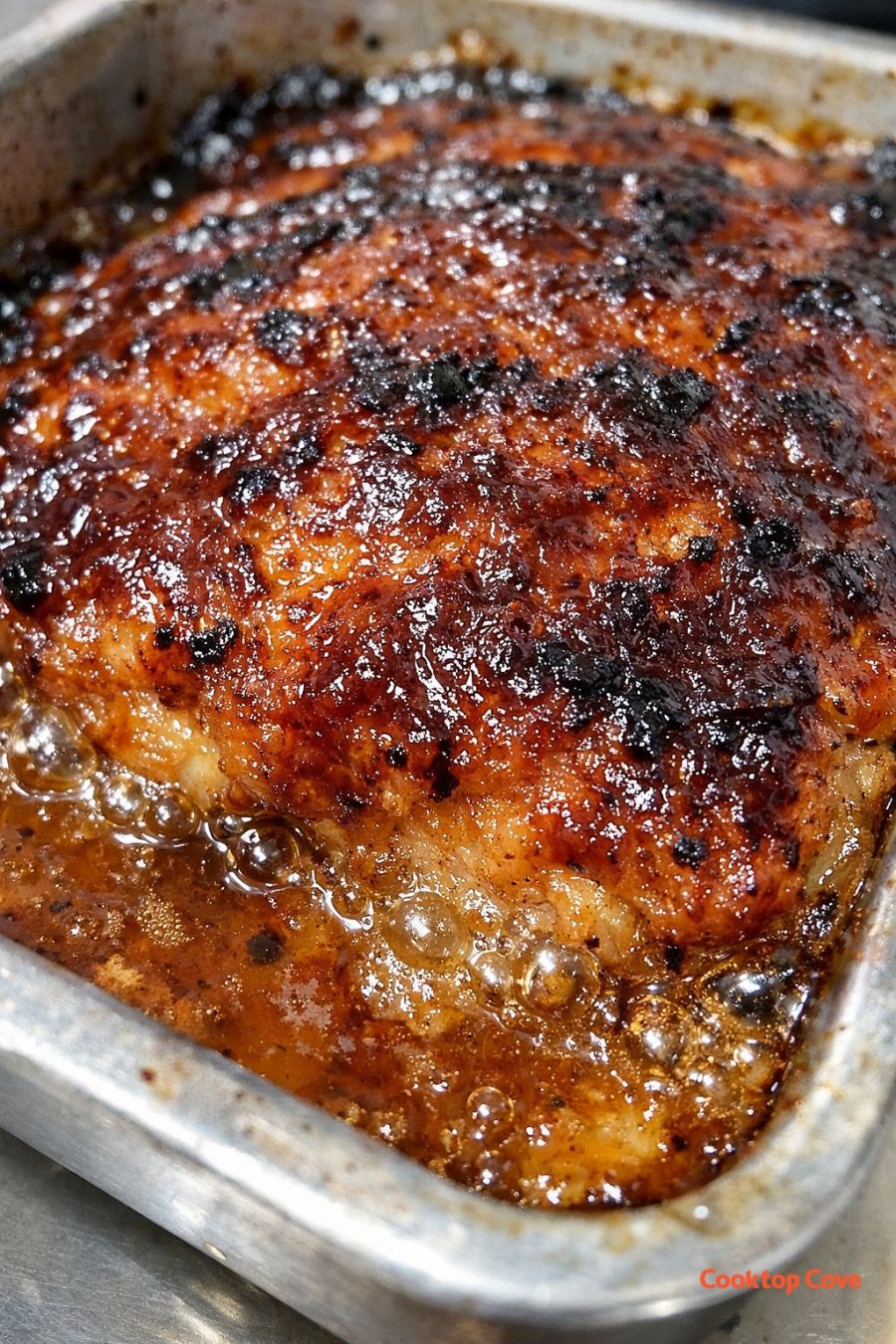
This 3-ingredient oven “may magic” is one of those set-it-and-forget-it dinners that quietly takes care of itself while you go about your afternoon. It leans on a classic Midwestern trick: mayonnaise as both seasoning and basting sauce. In the heat of the oven, the mayo melts, bastes, and then caramelizes with brown sugar into a dark amber, slightly gelatinous glaze that clings to the chicken and bubbles in the corners of the pan. It’s not fussy, it’s not fancy, but it’s deeply satisfying and perfect for days when you want dinner handled hours ahead.
Serve the chicken with something that will happily soak up the sweet-savory pan juices: buttered rice, mashed potatoes, or a simple egg noodle toss are all excellent. A crisp green salad with a sharp vinaigrette balances the richness, as do plainly roasted vegetables like green beans, carrots, or Brussels sprouts. If you want to keep it very Midwestern, add soft dinner rolls to swipe through the dark amber glaze at the bottom of the pan.
3-Ingredient May Magic Roast Chicken
Servings: 4
Ingredients
2 1/2 to 3 pounds bone-in, skin-on chicken thighs or drumsticks
1 cup mayonnaise
1/2 cup packed dark brown sugar
Directions
Heat the oven to 375°F (190°C). Set a rack in the center of the oven. Lightly grease a metal roasting pan or 9x13-inch metal baking dish; metal helps build that dark amber crust and bubbling edges.
Pat the chicken pieces dry with paper towels. This helps the mayo mixture cling and encourages better browning. Arrange the chicken in a single layer in the prepared pan, skin side up, leaving just a little space between pieces.
In a medium bowl, whisk together the mayonnaise and dark brown sugar until completely smooth and glossy. The mixture will look thick and pale tan at first, then deepen slightly as the sugar dissolves.
Spoon the mayo–brown sugar mixture evenly over the chicken, coating the tops and sides of each piece. Use the back of the spoon to spread it into a fairly even layer; it’s fine if some of it pools in the bottom of the pan—that will become the gelatinous, spoonable glaze later.
Cover the pan tightly with foil and place it in the oven. Bake for 35 minutes. During this time the mayo mixture will loosen, melt, and begin to baste the chicken, staying protected under the foil so it doesn’t scorch.
Remove the foil and increase the oven temperature to 400°F (200°C). Continue baking, uncovered, for 25 to 35 minutes, or until the chicken is cooked through (an instant-read thermometer should read 175°F to 185°F / 80°C to 85°C in the thickest part, not touching bone). The mayo-sugar coating will thicken, turn a dark amber color, and bubble around the edges of the pan, forming a shiny, slightly gelatinous glaze.
If after 25 minutes uncovered the crust is not as deeply browned as you’d like, leave it in for an additional 5 to 10 minutes, watching closely. You want a deep amber, caramelized surface with bubbling, glistening corners, but not a burnt top.
Transfer the pan to a cooling rack and let the chicken rest for 10 minutes. As it rests, the glaze will thicken slightly more and cling to the chicken. Spoon some of the dark amber pan juices over each piece as you serve, and offer extra from the corners of the pan at the table.
Variations & Tips
You can swap in other cuts of chicken as long as they’re bone-in and skin-on; legs and thighs work best because they stay juicy and can handle the longer cooking time needed for the glaze to caramelize. If you use bone-in, skin-on breasts, start checking for doneness a bit earlier (around 20 minutes after removing the foil) to avoid overcooking. For a slightly tangier profile, stir 1 to 2 tablespoons of Dijon or whole-grain mustard into the mayo–brown sugar mixture, understanding that this technically adds an ingredient. A pinch of smoked paprika or black pepper on the chicken before saucing also adds depth without changing the basic three-ingredient structure if you treat them as pantry seasonings. To prepare ahead, you can coat the chicken with the mayo–brown sugar mixture up to 8 hours in advance, cover, and refrigerate; slide the cold pan straight into the preheated oven and add a few extra minutes to the covered bake time. For food safety, keep raw chicken refrigerated until baking, wash hands and surfaces after handling, and never reuse any marinade or sauce that has been in contact with raw poultry unless it has been thoroughly cooked. Always cook chicken to a safe internal temperature of at least 165°F (74°C), though dark meat is more succulent in the 175°F to 185°F range. Leftovers should be cooled promptly, refrigerated within 2 hours, and eaten within 3 to 4 days; reheat until steaming hot before serving.
