
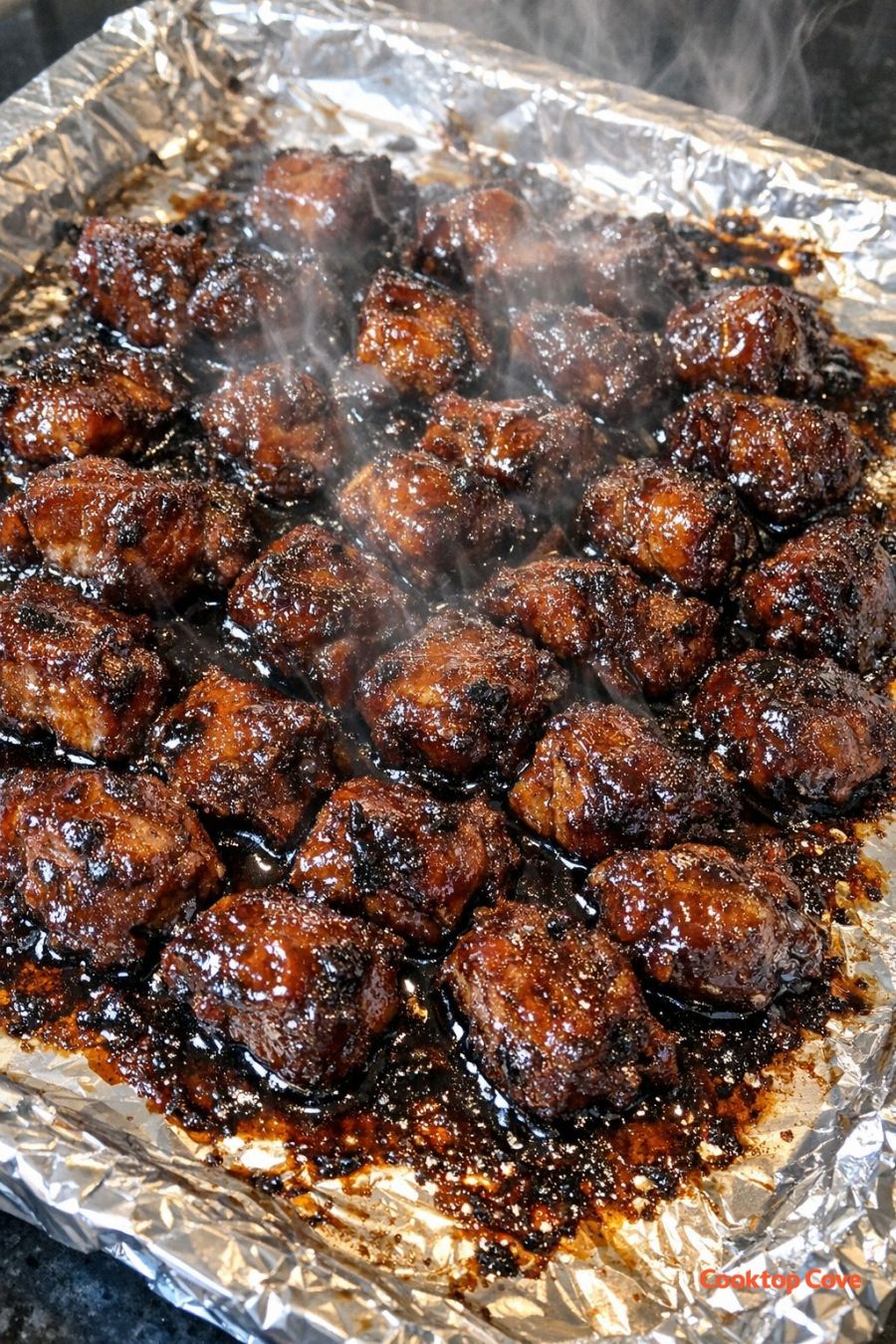
This easy pan of 4-ingredient oven pork burnt ends using caramelized protein chunks is the kind of thing I lean on for our May long weekend when I want dinner handled hours ahead. It reminds me of the slow-cooked pork trimmings my dad used to bring home from the locker plant, all sticky and dark around the edges. Instead of fussing with a smoker or a dozen ingredients, we let the oven do the work: low and slow to turn those cubes of pork into tender, gelatinous little bites, then a hot blast at the end to caramelize the glaze until it clings and shines. It’s simple, forgiving, and very much in the spirit of old Midwestern oven barbecue—just pared down for busy days and small-town kitchens.
Serve these pork burnt ends piled on a warm platter with classic picnic sides: creamy potato salad, coleslaw, and buttered corn on the cob all fit right in. They’re wonderful tucked into soft sandwich buns with extra sauce on the side, or set out on a foil-lined sheet pan right from the oven so folks can spear a few pieces as an appetizer. A pan of baked beans or cheesy scalloped potatoes will soak up the extra glaze, and a crisp green salad or sliced garden tomatoes helps balance the richness.
4-Ingredient Oven Pork Burnt Ends
Servings: 4–6
Ingredients
3 pounds boneless pork shoulder (Boston butt), cut into 1 1/2-inch chunks
2 teaspoons kosher salt
1 cup thick barbecue sauce, plus more for serving if desired
1/3 cup packed brown sugar
Directions
Line a large rimmed baking sheet with heavy-duty aluminum foil, shiny side up, for easy cleanup. If you have a metal cooling rack that fits inside the sheet pan, set it on top of the foil; otherwise, you can cook the pork directly on the foil.
Trim any large, hard chunks of fat from the pork shoulder, but leave some fat for flavor and tenderness. Cut the pork into roughly 1 1/2-inch cubes so they cook evenly and caramelize nicely.
Place the pork cubes in a large mixing bowl and sprinkle evenly with the kosher salt. Toss well with clean hands until every piece is seasoned. Let the pork sit at room temperature for about 15–20 minutes while you heat the oven; this takes the chill off and helps it cook more evenly.
Preheat your oven to 275°F (135°C). This gentle heat allows the pork to slowly render and become tender while the edges start to dry slightly, which is what you want for good burnt ends.
In a small bowl, stir together the barbecue sauce and brown sugar until the sugar is mostly dissolved and the mixture is glossy and thick. This is your simple glaze that will cling to the pork and caramelize into that rich, dark coating.
Pour about half of the barbecue-sugar mixture over the salted pork cubes in the large bowl. Toss thoroughly until every piece is lightly coated. You don’t want them swimming in sauce at this stage—just enough to season and begin building flavor.
Arrange the pork cubes in a single layer on the prepared baking sheet or rack, leaving a little space between pieces so the heat can circulate and help them brown instead of steam.
Place the pan on the middle rack of the 275°F (135°C) oven and bake, uncovered, for 2 to 2 1/2 hours, turning the pieces once halfway through. The pork is ready for the next step when it is very tender, shrunken, and some fat has rendered out into the pan, with the edges starting to look a bit dry and browned.
Remove the pan from the oven and increase the oven temperature to 400°F (200°C). Carefully gather the pork cubes back into the large mixing bowl, leaving most of the rendered fat on the pan. Spoon any dark, flavorful bits and a little of the juices into the bowl with the pork for extra flavor.
Pour the remaining barbecue-sugar mixture over the hot pork cubes and toss gently but thoroughly until every piece is well coated and glossy. The heat from the meat will help the glaze loosen and cling.
Spread the glazed pork cubes back onto the foil-lined baking sheet in a single layer. Return the pan to the 400°F (200°C) oven and bake for 15–20 minutes, stirring once or twice, until the glaze is bubbling, thick, and darkened in spots and the edges of the pork look caramelized.
If you’d like an extra bit of char, switch the oven to broil on high for 2–4 minutes at the end, watching closely so the sugars don’t burn. You’re looking for deep browning and little sticky, almost blackened tips on some corners, not a scorched pan.
Remove the pan from the oven and let the pork rest on the foil-lined sheet for about 5–10 minutes. The glaze will thicken as it cools slightly, and the pork will stay hot and succulent, just like those glistening chunks you see on a barbecue truck tray.
Transfer the burnt ends to a warm serving dish or serve them right off the foil-lined pan. Spoon any extra glaze from the pan over the top. Offer additional barbecue sauce on the side, if you like, and enjoy while hot.
Variations & Tips
You can play with this simple base while still keeping the spirit of a 4-ingredient, make-ahead dish. For a smokier taste without a smoker, choose a smoky barbecue sauce and, if you like, swap 1 teaspoon of the salt for a smoked salt (still counting as the same ingredient category in your pantry). If your crowd prefers a little heat, use a spicy barbecue sauce or stir a spoonful of hot sauce into the measured cup of sauce before mixing with the brown sugar; that way you’re not really adding another separate component to shop for. For a sweeter, more old-fashioned flavor, use a molasses-heavy barbecue sauce and dark brown sugar instead of light. You can also cut the pork into slightly smaller cubes (about 1 inch) for more surface area and more caramelized edges, but watch the final bake so they don’t dry out. If you need to stretch the meal, serve the burnt ends over buttered rice or egg noodles so the glaze coats the starch.
Make-ahead and holding: To have dinner handled hours ahead, cook the pork through the long, low oven step (until tender), then cool slightly, cover, and refrigerate the cubes and their juices up to a day in advance. About 45 minutes before serving, toss with the remaining glaze, spread on a foil-lined sheet, and finish in a 400°F (200°C) oven until hot and caramelized. You can also keep the finished burnt ends warm for an hour or so in a low oven (around 200°F/95°C), covered loosely with foil, which is handy when folks are arriving at different times.
Food safety tips: Always start with fresh pork shoulder kept refrigerated at or below 40°F (4°C) and avoid leaving raw pork at room temperature for more than 1 hour total. Use a clean cutting board and knife, and wash your hands well after handling raw meat. For safety, the internal temperature of the pork should reach at least 195°F (90°C) for the tender, shreddable texture typical of burnt ends; you can check a larger cube with an instant-read thermometer. Do not reuse any marinade or glaze that has been in contact with raw pork unless it has been fully cooked. Refrigerate leftovers within 2 hours and reheat until steaming hot before serving again.
