
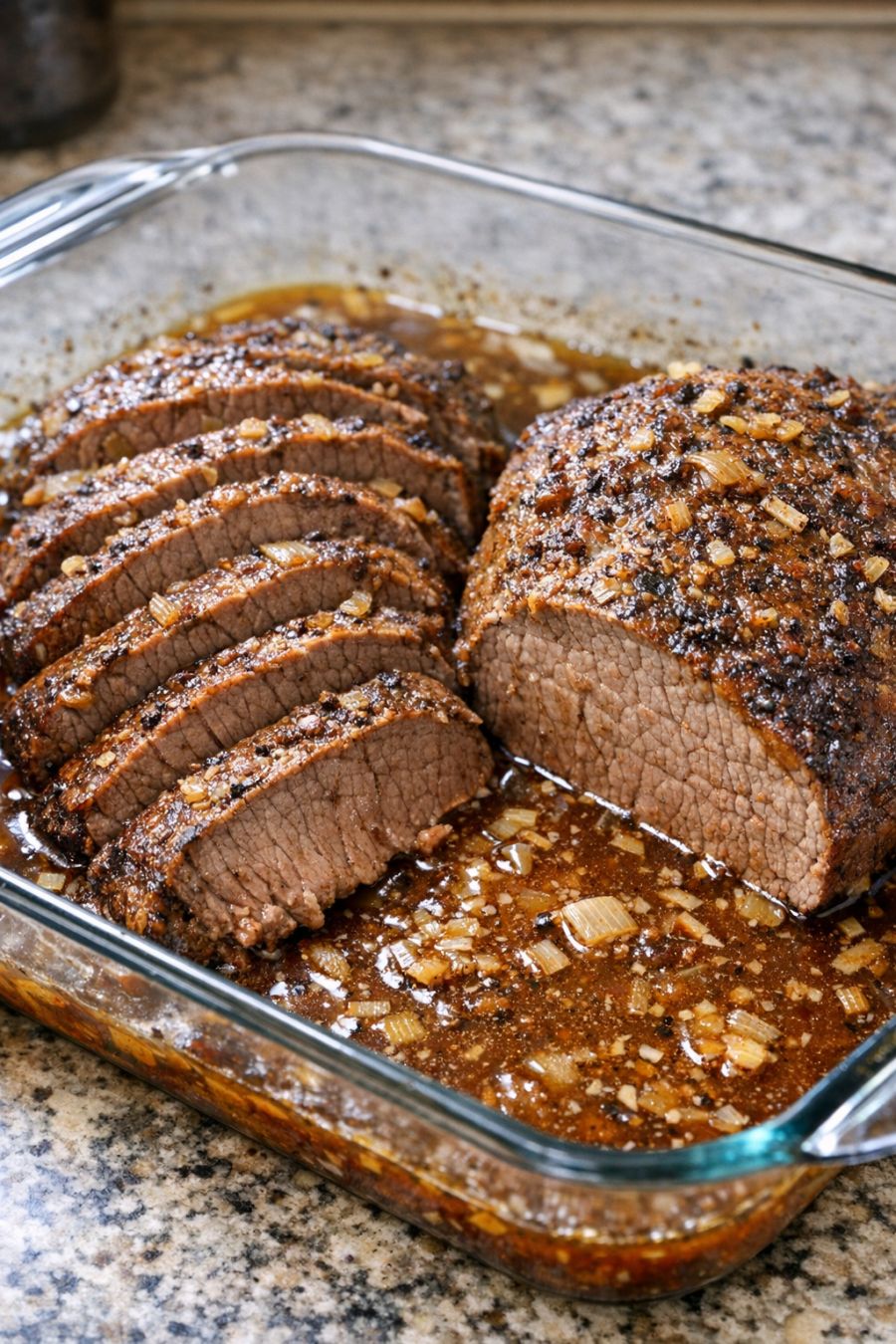
This 3-ingredient oven beef using raw beef bottom round roast is the kind of no-fuss, crowd-pleasing meal I lean on when life is busy but I still want something that feels special. You literally toss the raw roast into a glass roasting pan, sprinkle on a simple seasoning mix, pour in a little broth, and let the oven do the rest. Bottom round is a lean, budget-friendly cut that’s popular here in the Midwest, especially for Sunday dinners and potlucks. Slow roasting turns it into tender, sliceable beef that makes the whole house smell amazing and has friends asking how you made something so good with so little effort.
Serve this roast sliced thin across the grain with mashed potatoes or buttered egg noodles to soak up all those savory pan juices. A simple green veggie like steamed green beans, roasted carrots, or a tossed salad balances the richness. Leftovers are wonderful piled onto crusty rolls with a slice of cheese for easy sandwiches, or chopped and stirred into beef and noodles the next night. A jar of pickles or a quick coleslaw on the side adds a nice crunch and brightness to the plate.
3-Ingredient Oven Beef Bottom Round Roast
Servings: 6
Ingredients
3 to 4 pound raw beef bottom round roast
2 tablespoons dry onion soup mix (about 1 packet)
1 1/2 cups low-sodium beef broth
Directions
Preheat your oven to 325°F (165°C). Place a deep glass roasting pan on the counter so it’s ready.
Unwrap the raw beef bottom round roast and pat it dry with paper towels. Set the roast directly into the center of the glass roasting pan, fat side up if there is a fat cap.
Sprinkle the dry onion soup mix evenly all over the top and sides of the roast, pressing it in lightly so it sticks. The seasoning will look dark and a bit messy on the raw meat, and that’s exactly what you want for good flavor.
Pour the beef broth into the glass roasting pan around the roast, not directly over the top, so you don’t wash off the seasonings. The liquid should come up the sides of the roast by about 1/2 to 1 inch.
Cover the glass roasting pan tightly with a layer of heavy-duty aluminum foil or a fitted glass lid, making sure it’s sealed so steam doesn’t escape during cooking.
Place the covered pan on the center rack of the preheated oven and roast for about 2 1/2 to 3 hours, or until the beef is fork-tender or reaches at least 145°F (63°C) in the center for medium doneness. For very tender, shreddable beef, you can cook closer to 3 1/2 hours, checking that it reaches at least 190°F (88°C).
Carefully remove the pan from the oven and let the roast rest, still covered, for 15 to 20 minutes. This helps the juices settle and makes slicing easier.
Transfer the roast to a cutting board. Slice thinly across the grain for the most tender bites. Spoon the dark, savory pan juices from the glass roasting pan over the sliced beef when serving, or pour them into a gravy boat for the table.
Variations & Tips
For a slightly richer flavor, you can swap part of the beef broth for 1/2 cup of red wine (still keeping the total liquid around 1 1/2 cups). If you want a touch of sweetness, sprinkle 1 teaspoon of brown sugar over the roast before adding the broth (this doesn’t count as a separate ingredient for the base recipe, just an optional tweak). For kids or picky eaters who don’t love visible onion bits, choose a fine-textured onion soup mix or blend the dry mix into the broth before pouring it into the pan so it looks smoother. You can also shred the cooked beef instead of slicing it and serve on slider buns with cheese for an easy party sandwich tray. If you’d like a thicker gravy, after removing the roast, pour the pan juices into a small saucepan, bring to a simmer, and whisk in a slurry of 1 tablespoon cornstarch mixed with 2 tablespoons cold water; cook until thickened. FOOD SAFETY TIPS: Always start with a fully thawed roast—do not cook this from frozen in the oven, as it may cook unevenly. Use a meat thermometer to ensure the center of the roast reaches at least 145°F (63°C) for safe consumption, or higher if you prefer it more done. Let the roast rest before slicing to keep juices in the meat rather than on the cutting board. Refrigerate leftovers within 2 hours of cooking, store them in a shallow, covered container, and use within 3 to 4 days, reheating to at least 165°F (74°C) before serving again.
