
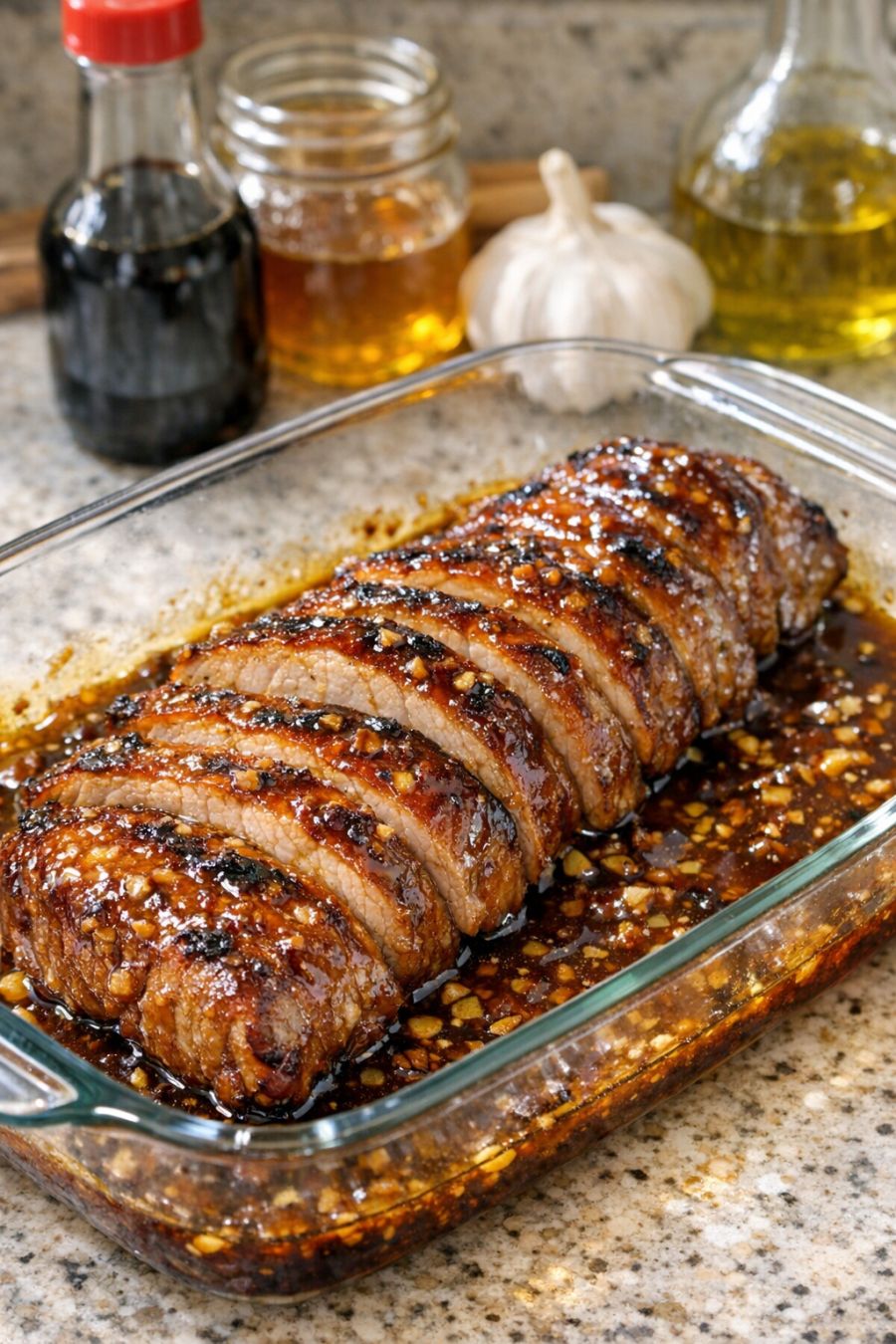
This 5-ingredient oven pork tenderloin is the kind of no-fuss, family-pleasing dinner that fits right into a busy weeknight. You literally toss the raw pork tenderloin straight into a glass casserole dish, whisk together four pantry-friendly ingredients, pour them over the top, and let the oven do the rest. The result is tender, juicy pork with a sweet-savory glaze that tastes like you fussed for hours, even though it only took a few minutes of hands-on time.
Serve this pork tenderloin sliced with the extra pan juices spooned over the top. It’s wonderful with mashed potatoes, rice, or buttered egg noodles to soak up the sauce, plus a simple veggie like steamed green beans, roasted carrots, or a bagged salad mix. For a lighter meal, pile slices of the pork over mixed greens with cherry tomatoes and cucumbers and drizzle with a bit of the warm pan juices. Leftovers are great tucked into sandwiches or wraps with a slice of cheese and some crunchy lettuce.
5-Ingredient Oven Pork Tenderloin
Servings: 4
Ingredients
1 1/2 to 2 pounds raw pork tenderloin (1–2 pieces)
1/3 cup soy sauce (low-sodium if preferred)
1/3 cup honey
2 tablespoons olive oil
4 cloves garlic, minced (or 1 1/2 teaspoons garlic powder)
Directions
Preheat your oven to 400°F (200°C). Place a 9x13-inch glass casserole dish on the counter so it’s ready for the pork.
Pat the raw pork tenderloin dry with paper towels, trimming any excess silver skin if needed. Lay the tenderloin (or both pieces if there are two) directly into the center of the glass casserole dish.
In a small bowl or liquid measuring cup, whisk together the soy sauce, honey, olive oil, and minced garlic until the honey is mostly dissolved and the mixture looks like a smooth, glossy marinade.
Pour the marinade evenly over the raw pork tenderloin in the glass casserole dish, turning the pork with tongs or a fork to coat all sides well. Nestle the pork back into the middle of the dish so it sits in the marinade.
If you have time, let the pork rest in the marinade in the dish for 15–20 minutes on the counter while the oven finishes heating, turning once halfway through. This step is optional but helps the flavors soak in a bit more.
Once the oven is hot, place the glass casserole dish on the center rack, uncovered. Bake for 20–25 minutes, basting the pork once or twice with the pan juices during cooking, until the internal temperature reaches 145°F (63°C) at the thickest part.
Remove the dish from the oven and loosely tent the pork with foil. Let it rest in the casserole dish for 5–10 minutes so the juices redistribute and the pork stays tender and moist.
Slice the pork tenderloin into 1/2-inch thick pieces right in the glass dish or on a cutting board, then spoon some of the warm, glossy pan juices over the top before serving.
Variations & Tips
For a little kick, add 1–2 teaspoons of Dijon mustard or sriracha to the marinade before pouring it over the pork. If your family prefers sweeter flavors, stir in an extra tablespoon of honey or a splash of apple juice. For a more herb-forward version, sprinkle dried Italian seasoning or dried thyme over the top of the tenderloin before baking. To keep picky eaters happy, you can pull a few slices for them from the ends of the tenderloin where the flavor is a bit milder and offer the pan juices on the side for dipping. If you need to avoid soy, swap the soy sauce for coconut aminos and add a small pinch of salt to taste. For an easy one-pan meal, scatter baby potatoes or carrot chunks around the pork in the glass casserole dish; just cut them small so they cook through in roughly the same time. Food safety tips: Always start with fresh, cold pork and keep it refrigerated until you’re ready to cook. Wash your hands, utensils, and any surfaces that touch raw pork or the marinade. Use a meat thermometer to ensure the pork reaches at least 145°F (63°C) in the thickest part, then let it rest before slicing. Do not reuse leftover marinade as a sauce unless you boil it for several minutes to kill any bacteria. Refrigerate leftovers within 2 hours and enjoy them within 3–4 days, reheating just until warm to keep the pork from drying out.
