
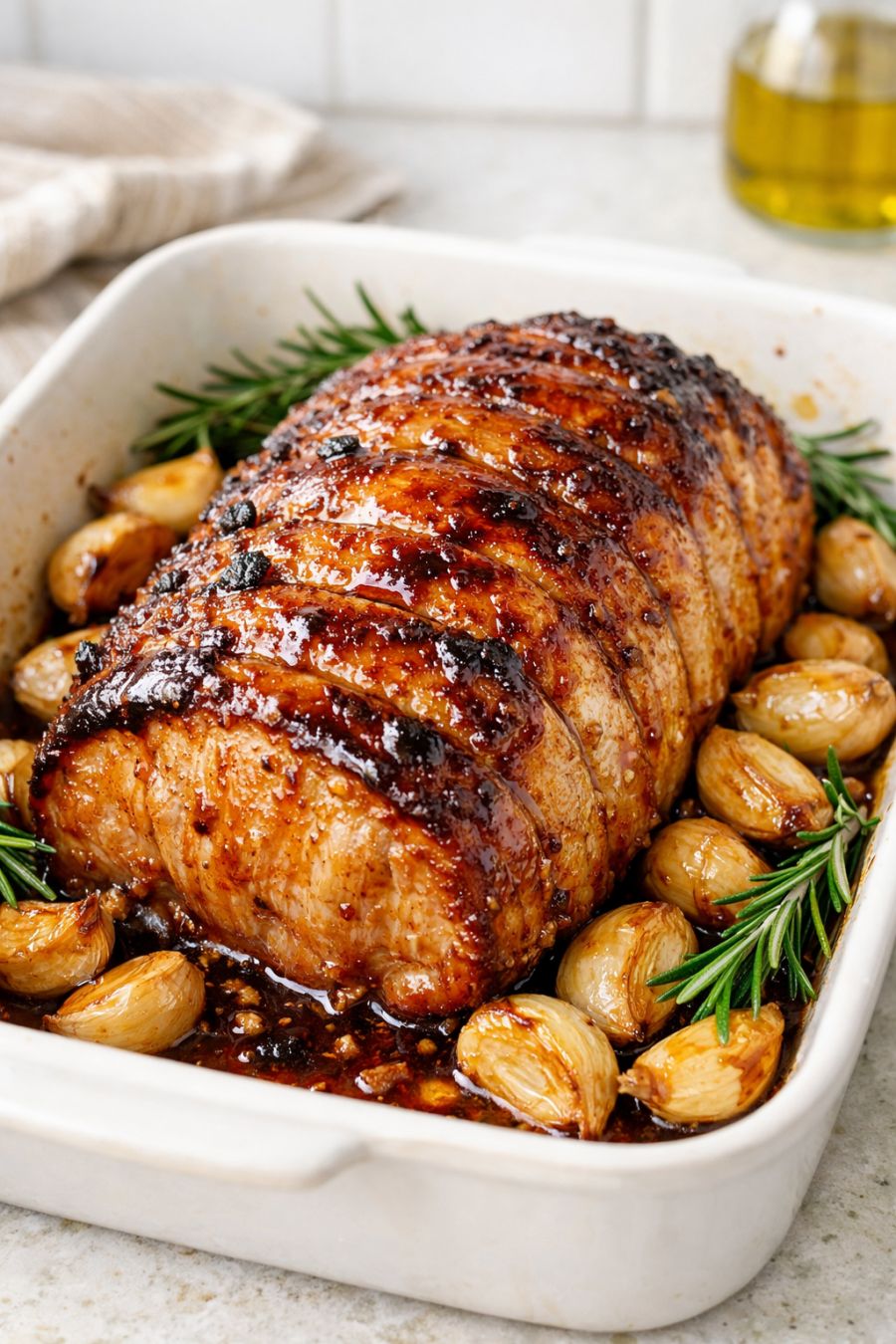
This 5-ingredient oven pork loin roast is the kind of weeknight recipe I lean on when I want something comforting but don’t feel like fussing. You literally toss a raw pork loin into a glass casserole dish, whisk together four pantry staples, and let the oven do the work. The method is inspired by classic Midwestern baked meat dishes—think simple glazes, one-pan cleanup, and a deeply savory aroma that drifts down the block. The result is a juicy, glossy roast with a sweet-savory glaze that feels special enough for company but is easy enough for any Tuesday.
Serve thick slices of the pork loin with mashed or roasted potatoes to catch the extra pan juices, plus a simple green vegetable like steamed green beans or roasted broccoli for balance. A crisp green salad with a tangy vinaigrette helps cut through the richness, and a loaf of crusty bread is perfect for mopping up the glaze. If you enjoy wine, a light red like Pinot Noir or a dry hard cider pairs nicely with the sweet-savory notes of the roast.
5-Ingredient Oven Pork Loin Roast
Servings: 6
Ingredients
1 (2 1/2 to 3 pound) boneless pork loin roast, raw
1/3 cup soy sauce (regular or low-sodium)
1/3 cup honey (or packed light brown sugar)
2 tablespoons Dijon or yellow mustard
2 tablespoons neutral oil (such as canola or vegetable oil)
Directions
Preheat your oven to 350°F (175°C). Place a 9x13-inch glass casserole dish on the counter; you’ll both mix the glaze and roast the pork in this dish.
Pat the raw pork loin roast dry with paper towels and set it aside on a plate. Drying the surface helps the glaze cling and encourages a nice, even color as it bakes.
In the glass casserole dish, whisk together the soy sauce, honey, mustard, and neutral oil until the mixture is smooth and looks like a loose, shiny glaze. This should take less than a minute.
Place the pork loin roast directly into the center of the glass dish with the glaze. Roll and turn the roast a few times so it’s thoroughly coated on all sides, ending with the fat cap (if there is one) facing up. Spoon some of the glaze over the top for good measure.
Slide the casserole dish into the preheated oven, uncovered. Roast for 45 minutes, then carefully pull the rack out and baste the pork by spooning the pan glaze over the top and sides. This helps build that colorful, glossy coating you see in the pan.
Continue roasting for another 20 to 35 minutes, basting once more if you like, until the thickest part of the pork loin reaches an internal temperature of 145°F (63°C) when checked with an instant-read thermometer. Total cook time will usually be 1 hour 5 minutes to 1 hour 20 minutes, depending on the exact size and shape of the roast and your oven.
Once the pork reaches 145°F, remove the dish from the oven. Transfer the roast to a cutting board, tent it loosely with foil, and let it rest for 10 to 15 minutes. Resting allows the juices to redistribute so the slices stay moist instead of running dry on the board.
While the pork rests, give the glaze in the glass dish a quick stir, scraping up any browned bits. It will be a thin but flavorful sauce. If you prefer it slightly thicker, you can return just the dish to the oven for 5 to 8 minutes while the pork rests to reduce it a bit.
Slice the rested pork loin across the grain into 1/2-inch slices. Arrange on a platter or directly onto plates and spoon some of the pan glaze over the top. Serve immediately, passing any remaining glaze at the table.
Variations & Tips
To lean more savory, swap the honey for 1/4 cup packed brown sugar and add 1 teaspoon dried Italian seasoning or dried thyme to the glaze (this technically adds an extra ingredient, so think of it as an optional bonus rather than part of the base recipe). For a subtle heat, whisk 1/2 teaspoon crushed red pepper flakes into the glaze. If you prefer a slightly tangier profile, increase the mustard to 3 tablespoons. You can also use maple syrup in place of honey for a deeper, woodsy sweetness. For smaller households, this recipe halves well: use a 1 1/2-pound pork loin and reduce the glaze ingredients by half, checking temperature earlier since it will cook faster. Leftovers are excellent chilled and thinly sliced for sandwiches. For food safety, always start with a fully thawed pork loin; roasting from partially frozen can cause uneven cooking. Use a clean instant-read thermometer to verify the center reaches at least 145°F (63°C), and avoid touching bone or the glass dish when measuring. Do not leave raw pork sitting in the glaze at room temperature for more than 30 minutes; if you want to marinate longer, cover the dish and refrigerate for up to 4 hours, then bring toward room temperature for about 20 minutes before roasting. Discard any glaze that has had prolonged contact with raw pork and has not been cooked; only the glaze that has baked in the oven with the roast or been boiled is safe to serve. Refrigerate leftovers within 2 hours of cooking and consume within 3 to 4 days, reheating to at least 165°F (74°C) before eating.
