
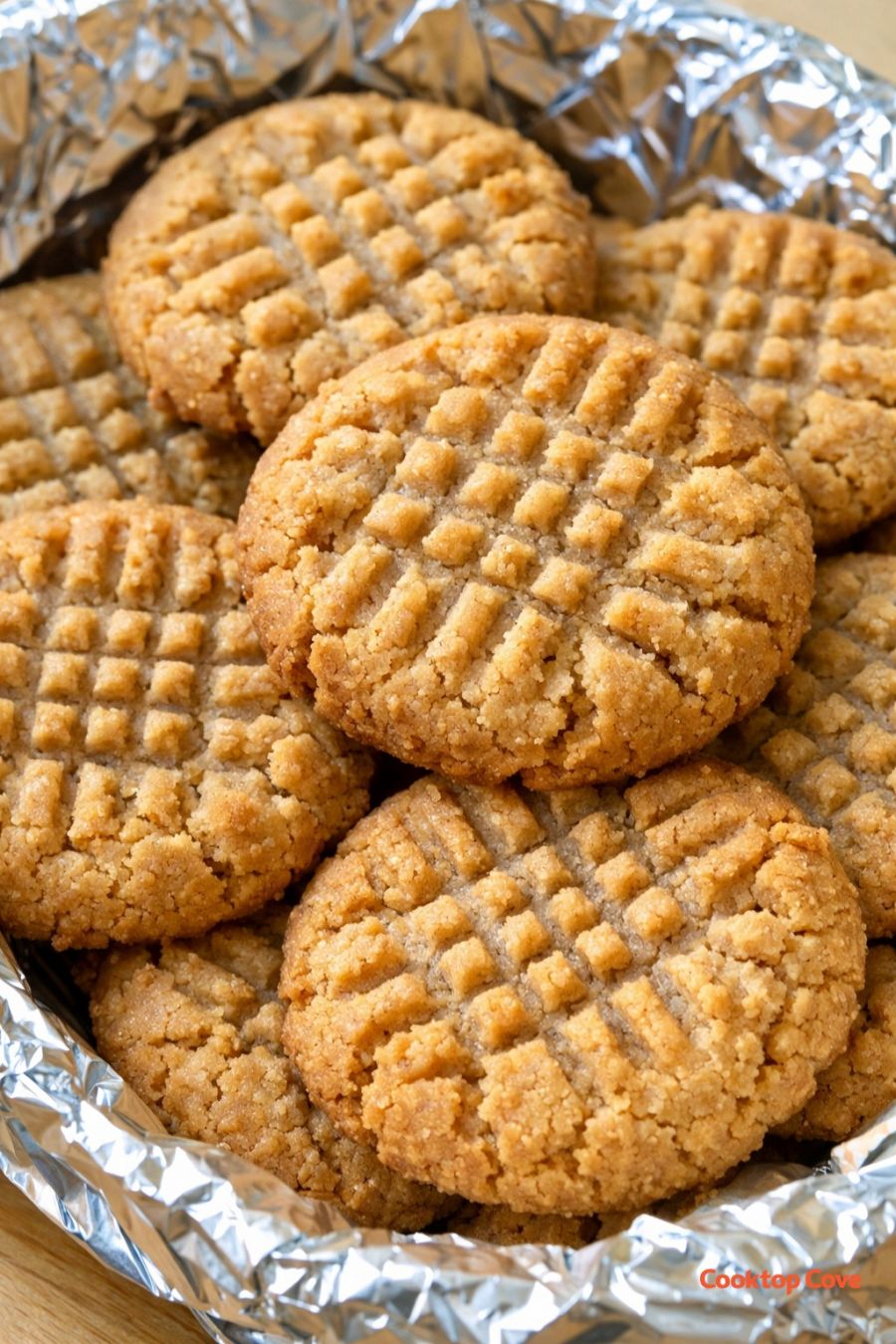
These 3-ingredient peanut butter cookies are the very first thing my aunt ever taught me to bake. I remember standing on a step stool in her cozy Midwestern kitchen, pressing fork marks into the dough and trying not to eat it all before it went into the oven. They come out soft, chewy, and golden brown with that classic crisscross on top, and they’re honestly the easiest nostalgic sweet I know. No mixer, no chilling, and no fancy ingredients—just three pantry staples and about 20 minutes between you and a warm, melt-in-your-mouth treat.
Serve these cookies still slightly warm on a foil-lined plate or platter, just like my aunt did when she pulled them from the oven and we all hovered around the counter. They’re perfect with a cold glass of milk, a mug of coffee, or hot tea after dinner. For a simple dessert board, pair them with fresh berries, a few squares of dark chocolate, and some vanilla ice cream. They also travel well in lunchboxes or to potlucks, and they stay soft enough to tuck into a cookie tin for sharing with neighbors or coworkers.
3-Ingredient Peanut Butter Cookies
Servings: 18
Ingredients
1 cup creamy peanut butter (well-stirred)
1 cup granulated sugar
1 large egg
Directions
Preheat your oven to 350°F (175°C). Line a baking sheet with aluminum foil, shiny side up, and lightly grease it with a thin swipe of butter or nonstick spray so the cookies release easily.
In a medium mixing bowl, combine the peanut butter, granulated sugar, and egg. Stir with a sturdy spoon or spatula until the mixture is thick, smooth, and fully blended with no streaks of egg or sugar.
Let the dough sit for 2–3 minutes while you clear a little counter space; this short rest helps it firm up just enough to handle easily.
Use a tablespoon or small cookie scoop to portion the dough into about 1-inch balls. Roll each portion gently between your palms to smooth it out, then place the balls on the foil-lined baking sheet, spacing them about 2 inches apart.
Using the back of a fork, press down gently on each dough ball to flatten it slightly, then turn the fork 90 degrees and press again to make a classic crisscross pattern on top. If the fork sticks, dip the tines lightly in sugar between presses.
Bake in the preheated oven for 9–11 minutes, until the cookies look puffed, lightly golden around the edges, and just set on top. They should still look a bit soft in the center; they’ll firm up as they cool.
Remove the baking sheet from the oven and let the cookies cool on the foil for at least 5–10 minutes before moving them. They will be very soft right out of the oven, so this rest helps them hold their shape while staying chewy inside.
Once they’ve set, slide the foil carefully onto a serving platter or cooling rack, or gently peel the cookies off the foil with a thin spatula. Serve warm or at room temperature, and store leftovers in an airtight container at room temperature for up to 4 days.
Variations & Tips
For a little twist, you can stir in up to 1/4 cup of mini chocolate chips or chopped peanuts without affecting the basic 3-ingredient structure—just think of them as optional extras. If you prefer a slightly less sweet cookie, reduce the sugar to 3/4 cup; the cookies will be a touch softer but still hold together. Crunchy peanut butter works too, giving a bit more texture, but make sure it’s not a super dry natural style or the dough may crumble; if using natural peanut butter, stir it very well and be prepared for a slightly more delicate cookie. For smaller batches, you can halve the recipe easily: 1/2 cup peanut butter, 1/2 cup sugar, and 1 egg yolk instead of a whole egg. To make neater, more uniform cookies for gifting, chill the mixed dough in the fridge for 15–20 minutes before rolling and pressing. Food safety tips: Always use a fresh, in-date egg and avoid tasting the raw dough, since it contains raw egg. If you’re baking with kids (like my aunt did with me), keep the hot baking sheet and oven door well out of reach and let an adult handle anything that involves heat. Store baked cookies in a cool, dry place and discard if they develop an off smell, unusual texture, or visible mold.
