
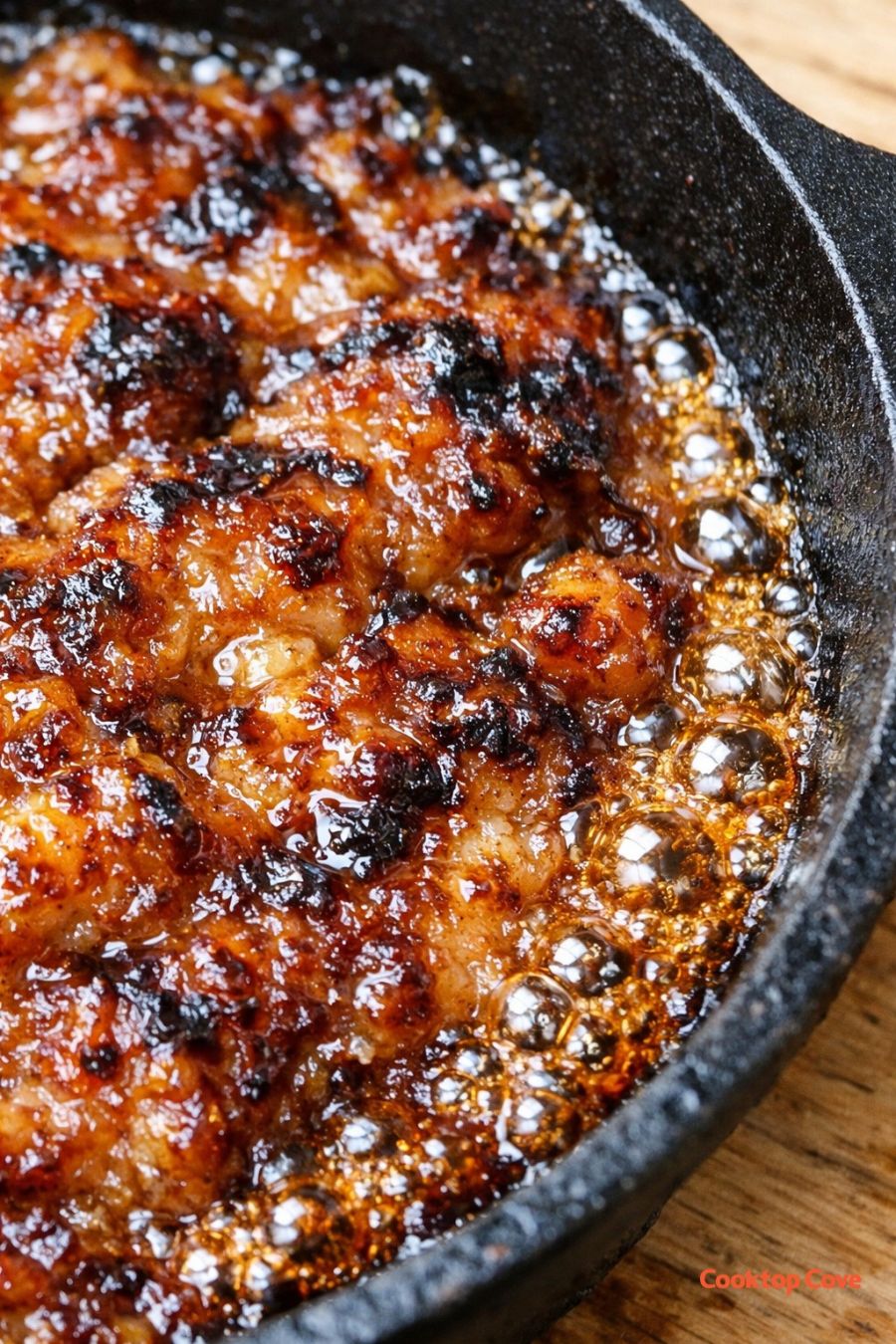
This 3-ingredient oven June heatwave hero is my go-to when it’s too hot to even think about standing over a stove, but I still want something that tastes like I tried. Boneless chicken thighs get tossed in a sweet-salty rich amber glaze and roasted in a cast iron skillet until the edges are caramelized and bubbling. It’s weeknight-friendly, uses pantry staples, and the oven does all the work while you hide out under the ceiling fan with a cold drink.
Serve these sticky, caramelized chicken thighs straight from the cast iron skillet with something cool and low-effort: a bagged salad mix, sliced cucumbers and cherry tomatoes, or leftover rice from the fridge. They’re also great tucked into warm tortillas or piled on top of microwave-steamed frozen veggies. If you’re entertaining, add a simple store-bought coleslaw and some crusty bread to soak up the extra amber glaze.
3-Ingredient June Heatwave Hero Chicken
Servings: 4
Ingredients
1 1/2 pounds boneless skinless chicken thighs
1/2 cup thick teriyaki or soy-brown sugar style sauce (rich amber in color)
2 tablespoons neutral oil (such as canola, vegetable, or light olive oil)
Directions
Preheat your oven to 425°F (220°C). Place a 10–12 inch cast iron skillet on the middle rack while the oven heats so the pan gets hot.
Pat the chicken thighs dry with paper towels and trim any large pieces of excess fat. This helps them brown and keeps the glaze from watering down.
In a medium bowl, whisk together the thick amber-colored teriyaki (or similar soy-brown sugar) sauce and the neutral oil until smooth and glossy.
Add the chicken thighs to the bowl and toss until every piece is well coated in the rich amber glaze. Let them sit in the bowl on the counter for about 5–10 minutes while the oven finishes preheating.
Using oven mitts, carefully remove the hot cast iron skillet from the oven and place it on a heat-safe surface. The pan will be very hot, so keep kids and pets clear.
Quickly arrange the glazed chicken thighs in a single layer in the hot skillet, pouring any extra glaze from the bowl over the top. The chicken should sizzle when it hits the pan.
Return the skillet to the oven and bake for 18–22 minutes, or until the chicken is cooked through (internal temperature reaches 165°F/74°C) and the glaze is bubbling at the edges. Do not broil; the high bake temp will caramelize the glaze without you needing to stand and watch it.
If you like deeper caramelization, leave the chicken in for an extra 3–5 minutes, watching through the oven window to make sure the glaze turns a deep amber and sticky but does not burn.
Carefully remove the skillet from the oven and let the chicken rest for 5 minutes. The glaze will thicken slightly as it cools, creating that succulent, caramelized layer around the edges of the pan.
Serve the chicken straight from the cast iron skillet, spooning the rich amber glaze from the edges over the top of each piece.
Variations & Tips
To change up the flavor while keeping this a 3-ingredient heatwave hero, swap the teriyaki-style sauce for another thick, amber-colored glaze: a bottled honey-garlic sauce, a maple-soy marinade, or a brown sugar BBQ sauce all caramelize beautifully in the oven. If your sauce is thinner, simmer it on the stovetop for a few minutes ahead of time (or microwave in 30-second bursts) to reduce and thicken, so it bubbles and clings in the skillet instead of staying watery. For extra heat, choose a spicy teriyaki or stir a spoonful of chili crisp into your sauce before coating the chicken (this technically adds an ingredient, but it’s worth it if you’re flexible). You can also use bone-in chicken thighs; just increase the bake time to 30–35 minutes and double-check the internal temperature. Leftovers keep well in the fridge for up to 3–4 days; cool completely before refrigerating in a shallow, covered container, and reheat until steaming hot. Always handle raw chicken on a separate cutting board, wash your hands and utensils after touching it, and never reuse marinade that has had raw chicken in it unless it has been boiled. Keep the cast iron handle covered with an oven mitt or towel while you’re working so you don’t accidentally grab the hot handle—especially on those tired, too-hot-to-think nights.
