
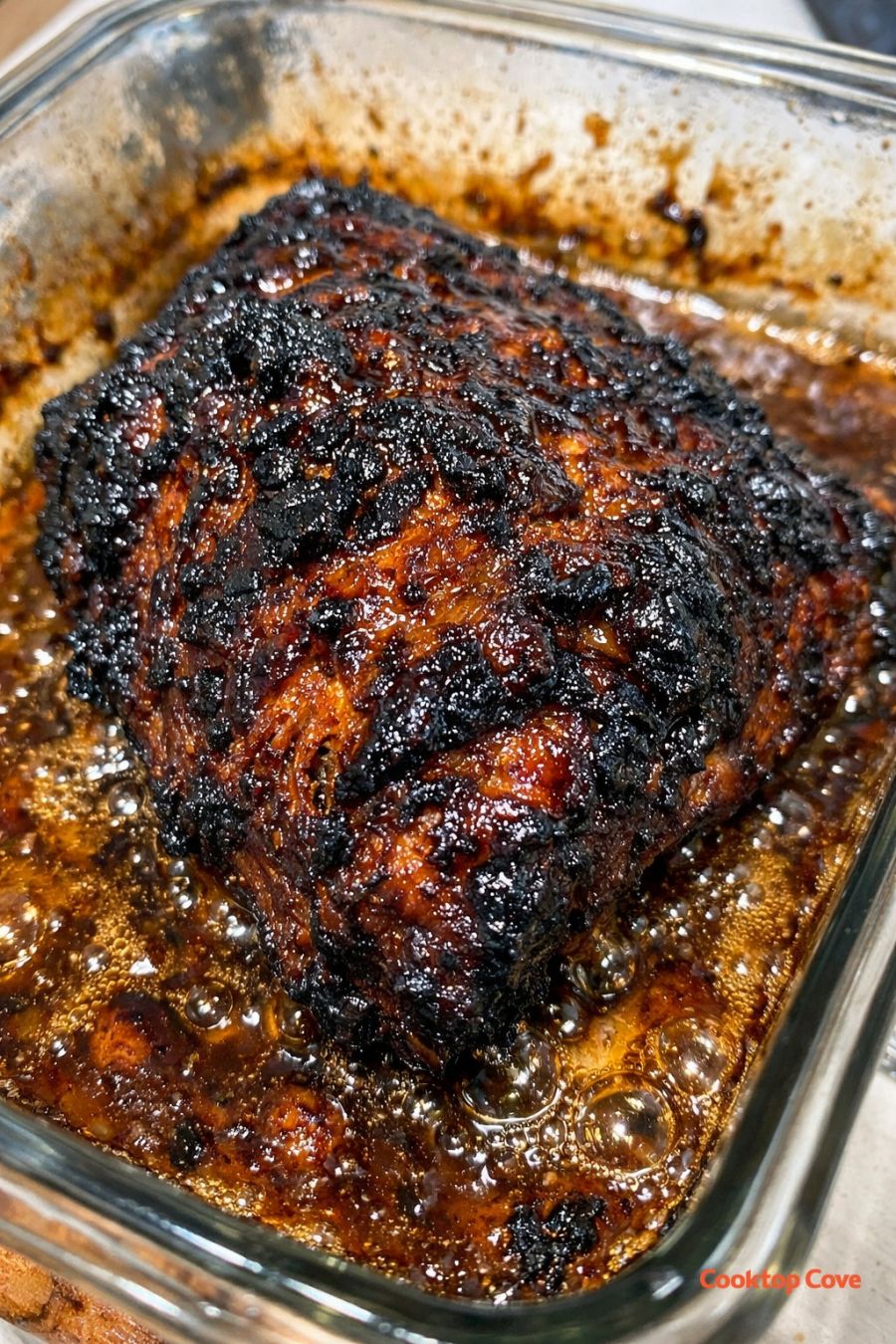
This 5-ingredient balmy evening supper leans on the oven to do nearly all the work, so you can stay out of the kitchen heat and let dinner make itself. I’m using a fibrous, plant-based protein (the kind that shreds and chars beautifully) and treating it much like I would sticky oven-baked ribs or burnt-ends: a thick glaze, high heat, and a glass baking dish to catch all those bubbling juices. It’s a modern, Midwestern weeknight solution that borrows the glossy, caramelized look of slow barbecue without the smoker or a long ingredient list.
Serve the charred, glazed protein spooned over fluffy rice, couscous, or buttered noodles so the sweet-savory juices soak in. A crisp side—like a simple cucumber salad, sliced tomatoes with salt and olive oil, or a bagged slaw tossed with vinaigrette—keeps the meal light enough for a warm evening. A chilled rosé, light beer, or sparkling water with citrus pairs nicely with the sticky, caramelized edges and smoky notes from the paprika.
5-Ingredient Balmy Evening Supper with Charred Glazed Protein
Servings: 3–4
Ingredients
24 oz fibrous plant-based protein pieces or strips (unseasoned, refrigerated or frozen, thawed if frozen)
1 cup thick barbecue sauce (your favorite store-bought)
2 tbsp neutral oil (such as canola or grapeseed)
2 tsp smoked paprika
1 tsp kosher salt (plus more to taste)
Directions
Heat the oven to 425°F (220°C). Lightly oil a 9x13-inch glass baking dish so the protein doesn’t stick and the glaze can bubble without burning.
Pat the fibrous plant-based protein dry with paper towels if it’s at all wet; this helps it char instead of steam. Add it directly to the prepared glass baking dish, spreading it into an even layer.
In a small bowl, whisk together the barbecue sauce, neutral oil, smoked paprika, and kosher salt until smooth and glossy. Taste a tiny bit and adjust the seasoning if needed, remembering it will intensify as it reduces and caramelizes in the oven.
Pour the sauce mixture over the protein in the glass dish. Use a spoon or your hands to toss until every piece is well coated, then spread the protein back into a mostly even layer, leaving some nooks and crannies so the edges can crisp.
Slide the dish onto the center rack and bake for 20 minutes, undisturbed, until the sauce is bubbling vigorously around the edges and the protein has started to firm up.
Remove the dish from the oven and gently stir, turning the pieces so fresh surfaces are exposed to the heat. Spread back into an even layer. This step helps the glaze reduce and cling while encouraging more charring.
Return the dish to the oven and bake for another 15–20 minutes, stirring once more if you like deeper color. The sauce should be thick, sticky, and reduced, with some dark, charred spots on the protein and along the sides of the glass dish.
Let the protein rest in the hot glass dish for 5–10 minutes; the bubbling juices will settle and thicken into a glossy coating. Taste and add a pinch more salt if needed, then serve the charred, glazed protein straight from the dish, spooning over any pooled juices.
Variations & Tips
You can swap the plant-based protein for another fibrous option that chars well, such as jackfruit strands (drained well and patted very dry) or seitan strips; adjust baking time slightly if pieces are very small or very large, watching for bubbling sauce and charred edges as your cues. For an omnivore version, you can use boneless, skinless chicken thighs cut into strips; ensure they reach an internal temperature of 165°F (74°C) and allow a little extra baking time as needed. Change the flavor profile by substituting teriyaki sauce for the barbecue sauce and adding a teaspoon of grated ginger, or use a mix of gochujang and honey for a spicier, Korean-inspired glaze. If you prefer less char, drop the oven temperature to 400°F and shorten the second bake by 5 minutes. Always use a heat-safe glass baking dish and avoid placing cold glass directly into a very hot oven; let the dish come to room temperature first to reduce the risk of thermal shock. If working with frozen plant-based protein, thaw it fully in the refrigerator, then pat dry to minimize splattering and ensure safe, even heating. Leftovers should be cooled quickly, refrigerated within 2 hours, and reheated until piping hot before serving.
