
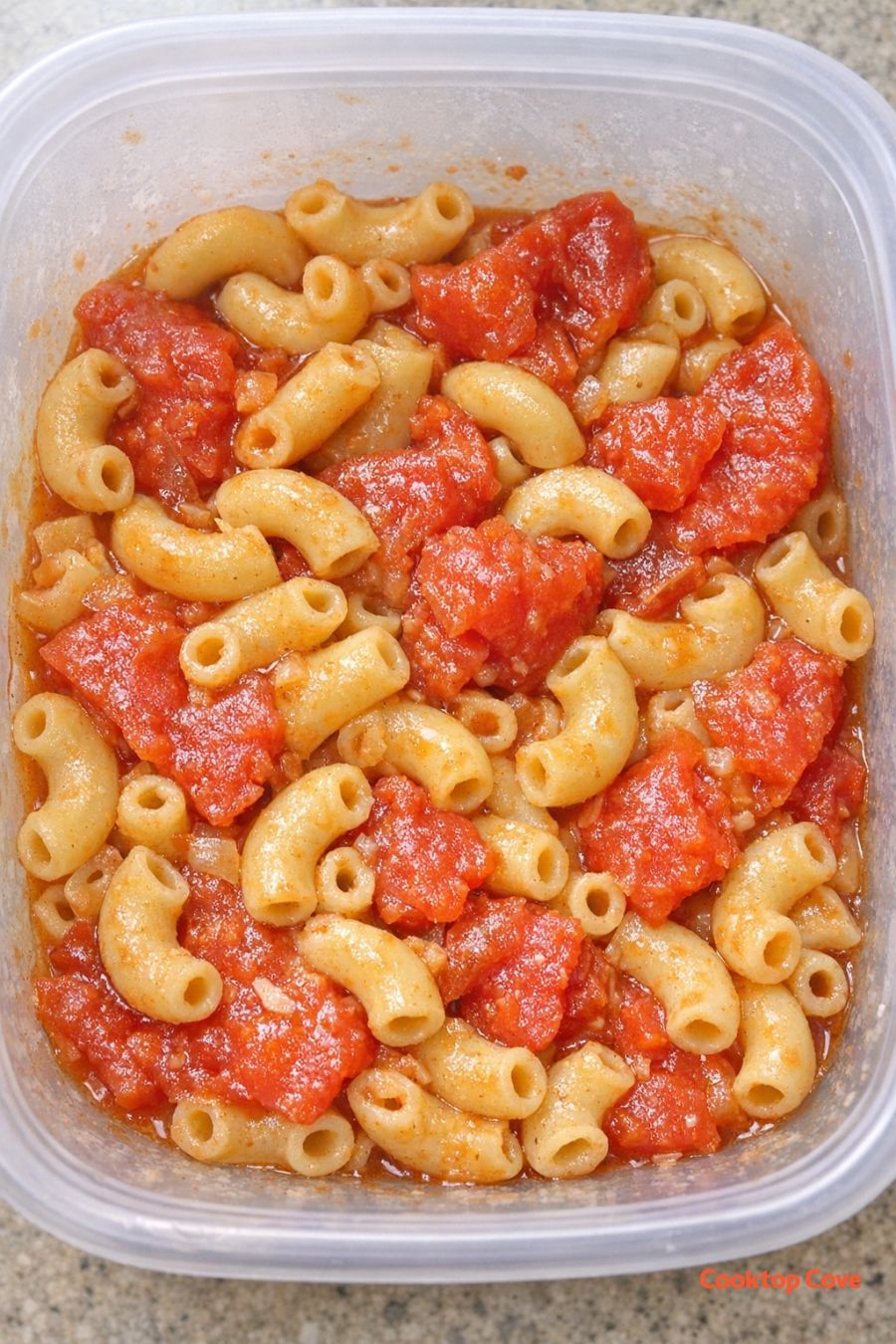
This 3-ingredient macaroni and tomatoes is the kind of humble dish that quietly holds a family together. My grandmother leaned on it every early summer, right when the garden tomatoes started coming in and money was tight. It’s a true Depression-era staple: pantry macaroni, home-canned or stewed tomatoes, and just enough bacon drippings to make everything taste rich and comforting. It’s soft, simple, and filling, the sort of bowl you can eat standing at the counter out of an old plastic container, and somehow it still tastes like home and better days ahead.
Serve this macaroni and tomatoes warm in shallow bowls with a spoon, so you can catch every bit of juicy tomato and glossy pan drippings. It’s lovely alongside sliced garden cucumbers with a splash of vinegar, a wedge of cornbread, or buttered white bread for dipping. If you like, add a small green salad to freshen things up, or just keep it plain and honest the way our grandparents did: a big scoop in a faded container, eaten on the porch while the evening cools off.
3-Ingredient Macaroni and Tomatoes
Servings: 4
Ingredients
2 cups dry elbow macaroni
1 (28-ounce) can stewed tomatoes (or 3 to 4 cups home-canned tomatoes with juices)
2 tablespoons bacon drippings (reserved bacon grease)
Directions
Bring a large pot of salted water to a rolling boil. Add the elbow macaroni and cook until just tender, according to the package directions, stirring now and then so it doesn’t stick.
While the macaroni cooks, place a large skillet or wide saucepan over medium heat. Add the bacon drippings and let them melt until glossy and fragrant, but not smoking.
Pour the stewed tomatoes (with all their juices) into the skillet with the melted bacon drippings. Stir well, breaking up any very large tomato pieces with a spoon. Bring to a gentle simmer and let the tomatoes bubble softly for 5 to 10 minutes, until they smell sweet and rich and the juices have thickened just a bit.
When the macaroni is tender, scoop out about 1/2 cup of the starchy cooking water and set it aside. Drain the rest of the macaroni well.
Add the drained macaroni to the simmering tomatoes and bacon drippings. Stir slowly but thoroughly so every noodle is coated and the colors turn a pale yellow and bright red mix with a light glossy sheen.
If the mixture seems too thick or dry, stir in a splash or two of the reserved pasta water until it loosens into a soft, saucy consistency. Taste and, if you like, add a pinch of salt or black pepper from your pantry (optional, not counted in the three ingredients).
Let the macaroni and tomatoes sit off the heat for 3 to 5 minutes so the flavors settle and the pasta absorbs some of the tomato juices. Spoon into bowls or an old plastic container for that true hand-me-down feel, and serve warm.
Variations & Tips
To stay true to the three-ingredient spirit, keep any extras simple and optional. If you don’t keep bacon drippings in a jar by the stove like many of us grew up with, you can render a few strips of bacon, then use exactly 2 tablespoons of the hot fat and crumble the cooked bacon over the top (this technically adds an ingredient, but the flavor is very close to what grandmothers did). For a meatless version, substitute 2 tablespoons of vegetable oil or butter for the bacon drippings; it won’t have the smoky flavor, but the tomatoes and macaroni will still be comforting and satisfying. If your stewed tomatoes are very tart, you can stir in a tiny pinch of sugar from your pantry to round out the flavor. Some families add a handful of shredded cheese on top or a spoonful of cottage cheese on the side, but those are modern touches, not Depression-era necessities. For food safety, always cool leftovers quickly: transfer the macaroni and tomatoes to shallow containers (like that old plastic tub we all have), let it cool at room temperature no longer than 1 to 2 hours, then refrigerate. Eat refrigerated leftovers within 3 to 4 days, reheating only what you’ll eat to at least steaming hot. If you used home-canned tomatoes, be sure they were processed safely in a proper water bath or pressure canner and that the jars were sealed and free of off smells or mold before using.
