
There are days when supper needs to be simple, filling, and made from what is already on hand, and this baked Atlantic salmon is just the sort of recipe that earns a permanent place in a busy home cook’s notebook. Using frozen raw salmon steaks right from the freezer and a handful of basic pantry staples, you can have a hearty fish dinner in the oven in no time at all. It is the kind of practical, no-fuss cooking many of us in the Midwest grew up with, where a casserole dish and a hot oven could turn plain ingredients into something mighty comforting.
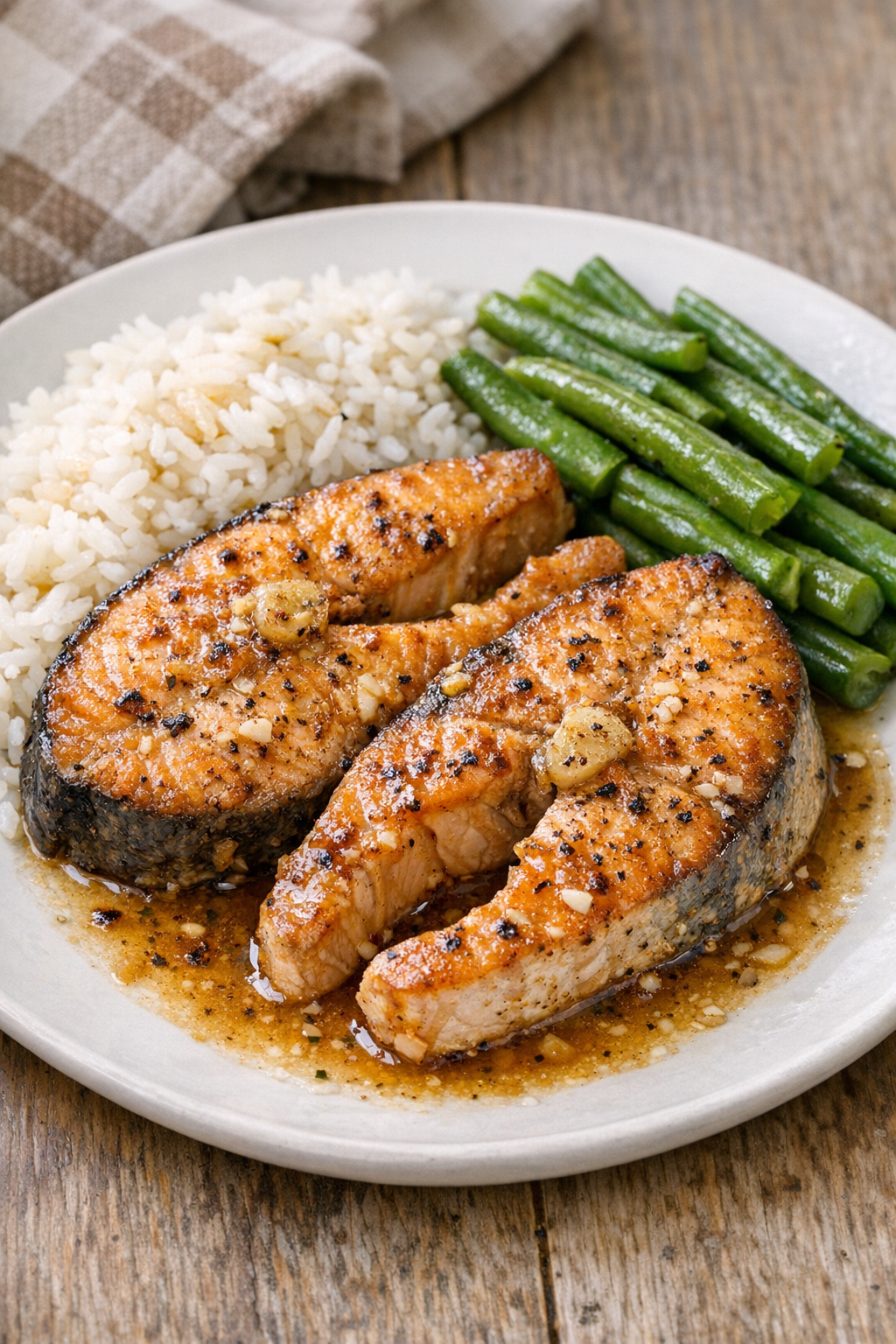
Serve this salmon with fluffy rice, buttered egg noodles, mashed potatoes, or a pan of roasted vegetables to catch every bit of the savory sauce. A crisp green bean side dish, a simple garden salad, or even a slice of warm bread goes nicely alongside, and if you want to stretch the meal a little further, spoon the juices over the side dish for extra flavor.
5-Ingredient Oven Baked Atlantic Salmon
Servings: 4
Ingredients
4 frozen raw Atlantic salmon steaks
Directions
1. Preheat your oven to 400°F and lightly grease an oven-safe casserole dish large enough to hold the salmon steaks in a single layer.
2. Place the frozen salmon steaks in the casserole dish. In a small bowl, stir together the olive oil, soy sauce, lemon juice, and garlic powder.
3. Pour the sauce evenly over the frozen salmon steaks, turning them gently if needed so the tops are well coated.
4. Cover the dish tightly with foil and bake for 25 minutes. Remove the foil, then continue baking for 10 to 15 minutes more, or until the salmon flakes easily with a fork and reaches a safe internal temperature.
5. Let the salmon rest for 5 minutes before serving, then spoon some of the pan juices over each piece.
Variations & Tips
Add a little sweetness: If your family likes that sweet-and-savory flavor, stir in a spoonful of brown sugar or honey with the sauce. It gives the salmon a gentler glaze and helps the top caramelize a bit in the last minutes of baking.
Use different seasoning: A pinch of black pepper, onion powder, paprika, or dried dill fits right in here if you want to dress it up without making it complicated. Salmon takes kindly to simple seasoning, especially when supper needs to be quick.
Check doneness carefully: Because the thickness of salmon steaks can vary, start checking near the end of the baking time. The fish should flake easily and look opaque throughout, and an instant-read thermometer should register 145°F in the thickest part.
Make cleanup easier: If you like, line the casserole dish lightly with parchment made for baking or give the dish a good coat of oil first. The sauce can bake onto the edges, so this little step can save some scrubbing later on.
Turn it into a full meal: You can scatter quick-cooking vegetables around the salmon during the uncovered portion of baking. Thin sliced zucchini, onion, or bell pepper work especially well and soak up those tasty juices.
