
I’ve spent a lifetime washing, folding, and hanging towels on clotheslines and bathroom bars, and I can tell you this much: those decorative bands near the ends are not there just to look pretty. Most folks notice them without ever really thinking about them, the same way we notice stitching on a quilt or a good hem on a dish towel. But once you know what they do, you start seeing towels a little differently.
This is one of those small household mysteries that turns out to be surprisingly practical. If you’ve ever wondered why one bath towel stays neat and square while another twists like an old country road after two washes, the answer is often sitting right there in that flat woven strip. Here’s what those bands are actually for, and how to use them to shop smarter and keep a tidier linen closet.
1. It’s usually called a dobby border, and it’s woven flatter on purpose
In towel construction, that decorative band is often called a dobby border. Unlike the fluffy terry loops that make up the absorbent body of the towel, the border is woven tighter and flatter. If you run your fingers across it, you can feel the difference right away: the pile is low or absent, the weave is denser, and the surface feels smoother.
That change in texture is intentional. A standard bath towel might measure around 27 by 52 inches, and the border often takes up 1 to 3 inches near each end. That flatter section gives the towel structure in places where a fully looped surface would be bulkier, stretchier, and harder to control in the wash.
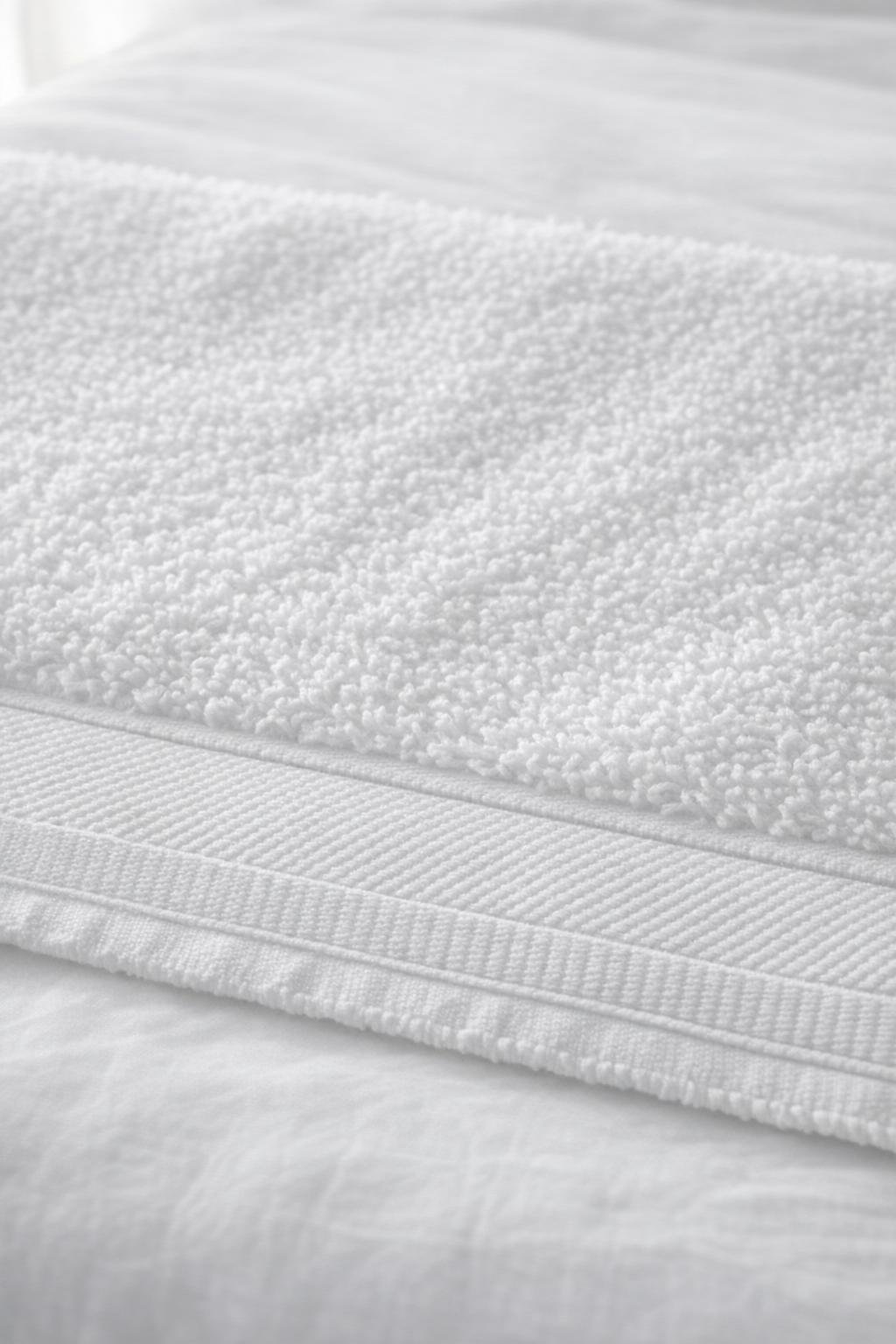
2. It helps the towel keep its rectangular shape after repeated washing
One of the handiest jobs that border does is help the towel stay looking like a rectangle instead of turning lopsided over time. Terry cloth is wonderful for drying, but all those loops can shift and pull when they’re soaked, spun, dried, and tugged off hooks day after day. The flatter woven band acts a bit like a stabilizer at the ends.
If you wash towels weekly, that can mean 50 or more laundry cycles in a year. On a towel without a well-made border, the corners often start looking uneven first. On one with a properly woven band, the ends usually stay straighter, which means neater folding, better hanging, and less of that rumpled, stretched look that makes even a clean bathroom feel untidy.
3. It reinforces the ends, where towels usually start to warp first
If you think about how a towel gets used, the ends take a lot of abuse. We grab them to dry our hair, yank them off a rack, toss them into a hamper, and pull them from the dryer by one corner. The bottom and top edges are often the first places to ripple, curl, or go a little wavy.
The border helps spread out that stress. Because the weave is tighter, it supports the edge and reduces the strain on the nearby terry loops. In practical terms, that can mean fewer distorted ends and less curling after months of washing. When I’m checking towels in a store, I always look at the last inch near the hem. If that area already looks puckered before the towel’s even been used, I put it right back on the shelf.
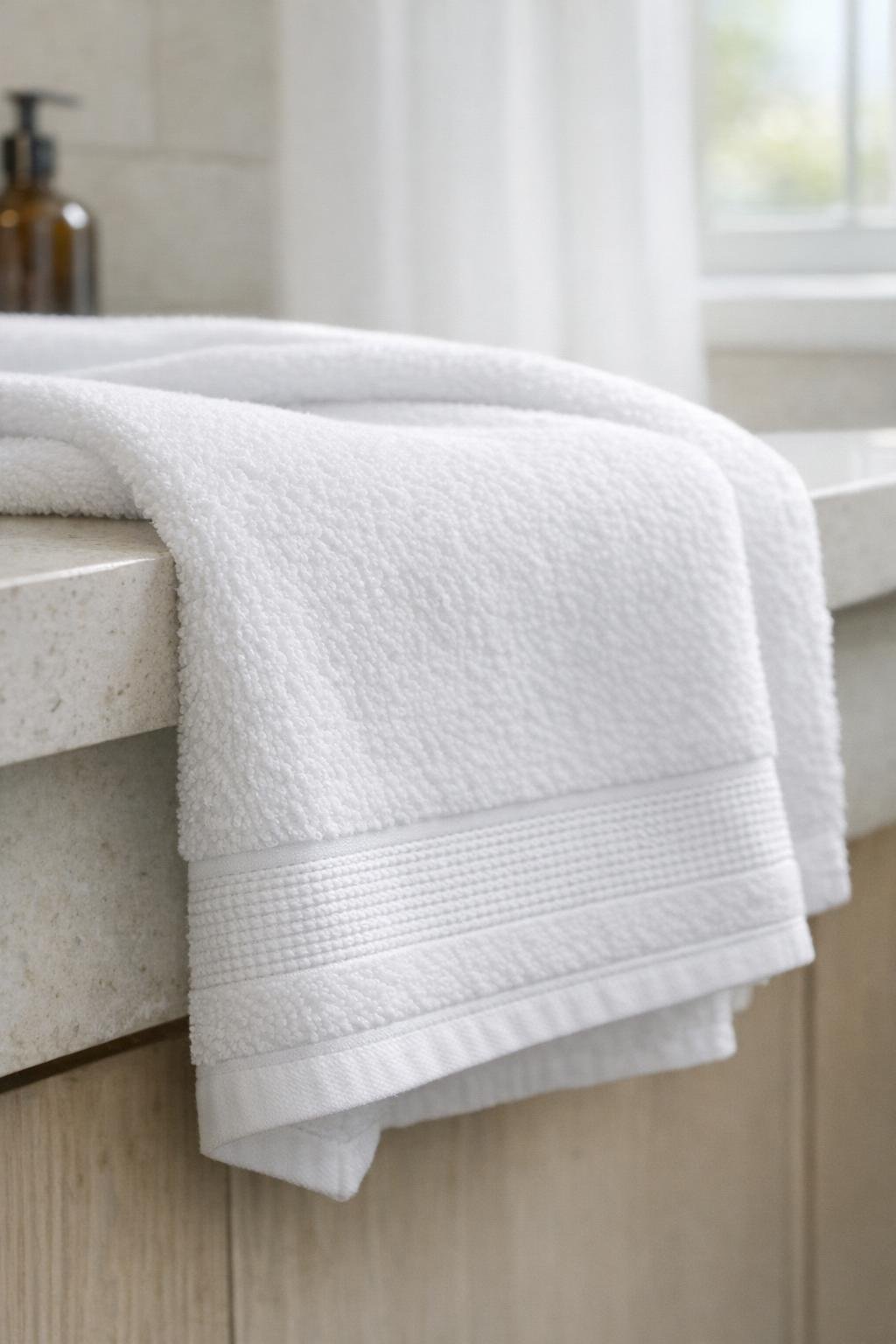
4. The band is less absorbent on purpose, which can help the towel dry more evenly
This surprises people, but that flatter band is not meant to soak up water the way the terry pile does. Since it has fewer or no loops, it naturally absorbs less. That is not a flaw. It can actually help a thick towel dry a little more evenly instead of staying heavy and soggy from edge to edge.
Anyone who has hung a dense winter bath towel knows the problem: the middle may start drying while the thick ends stay damp for hours. A flatter border cuts down on some of that bulk. It won’t turn a plush towel into a quick-dry one, but it can reduce that waterlogged feeling at the ends, especially in bathrooms with slower airflow or in cold-weather months when windows stay shut.
5. It gives you a built-in folding guide for neater stacks
This is the sort of practical detail I appreciate more with age. The border creates a natural visual line for folding, especially on larger bath towels that can feel unruly. Fold just above or along the band, and your stack tends to look tidier with much less fuss.
If your linen closet shelves are about 12 inches deep, as many are, consistent folding makes a real difference. I like to fold a standard bath towel in thirds lengthwise, then fold so the border sits neatly inside or forms the front edge of the stack. It keeps the pile from bulging out and gives the whole shelf that orderly, settled look my mother always insisted on.
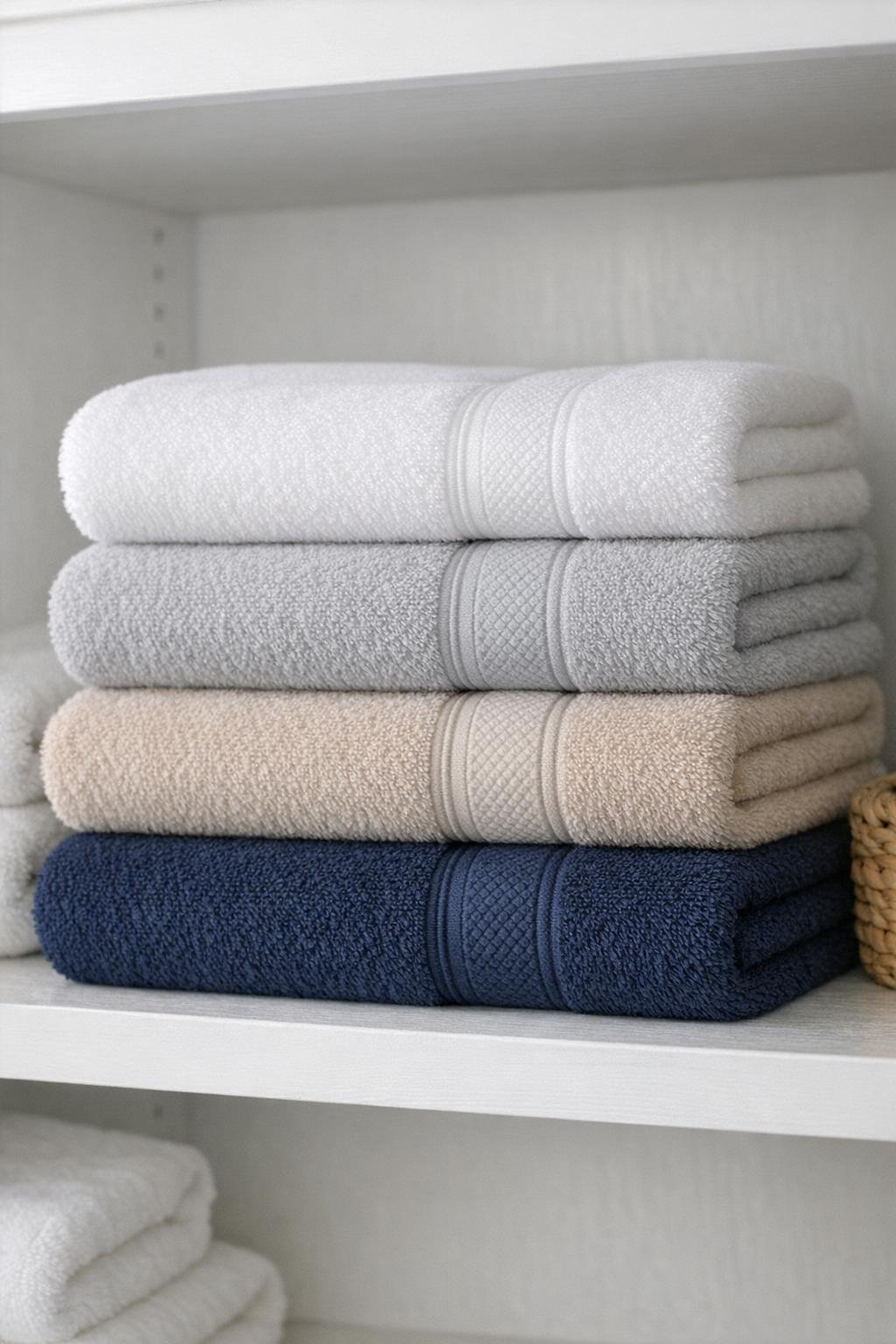
6. Hotels use the border to make folded towels look crisp and uniform
Once you know to look for it, you’ll notice that hotels, inns, and short-term rentals often fold towels so the band shows in a consistent spot. It gives a cleaner, more polished presentation. Even an ordinary white towel can look a touch more elegant when that woven strip lines up neatly across a stack or drape.
That’s partly because the border holds a crease better than thick terry does. Fold a fluffy towel any which way, and it can look puffy and uneven. Fold it with the band placed front and center, and suddenly the stack looks intentional. It’s a simple styling trick, but a useful one if you keep a guest bath and want it to feel just a bit more finished without buying all new linens.
7. The band can tell you a lot about towel quality before you buy
If you want a quick quality check, study the band. It should lie flat, the stitching should be straight, and the weave should look even from one end to the other. You don’t want puckering where the border meets the terry, loose threads at the hem, or a border that already seems to pull to one side.
One of the best tests is after the first wash. If the towel comes out with the band rippling, twisting, or shrinking differently from the body, that’s a warning sign. A well-made towel should still hang straight after laundering. In my book, that tells you more than fancy packaging ever will.
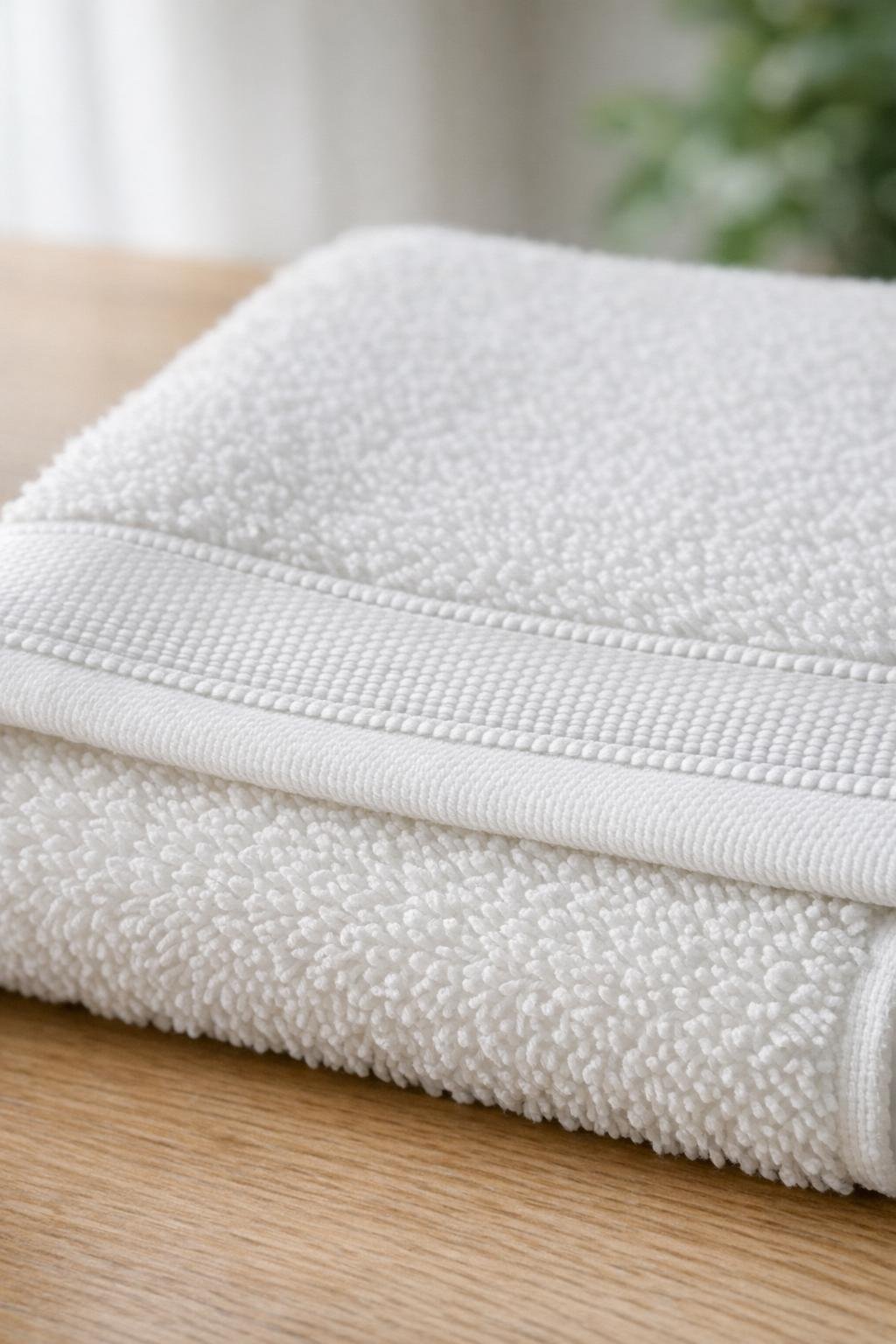
8. Ultra-thick cold-weather towels need that flat band even more
When autumn turns chilly here in the Midwest, I admit I reach for the heaviest towels in the closet. Those thick, plush towels feel wonderful, but the more pile you add, the more structure the towel needs to keep from sagging and stretching. That’s where the flatter band really earns its keep.
On a dense towel weighing 600 to 900 GSM, the body can get quite heavy when wet. Without a stabilizing border near the ends, all that weight can pull the shape out faster. So if you love extra-thick towels, don’t overlook the border. It’s often doing more work than it would on a thinner summer towel.
9. Decorative borders can add a luxury look without improving absorbency
Now here’s the shopping lesson. A towel can have a beautiful border—textured, patterned, even a little glossy—and still be just average when it comes to drying your hands or body. The border may make it look expensive, but that doesn’t mean the towel is more absorbent.
Absorbency mostly comes down to the quality of the cotton, the density of the terry, and how the loops are made. So don’t let a fancy border talk you into paying too much. If two towels cost $12 and $24, and the main difference is a prettier band, I’d check the weight, softness after washing, and seam quality before I spent the extra money.
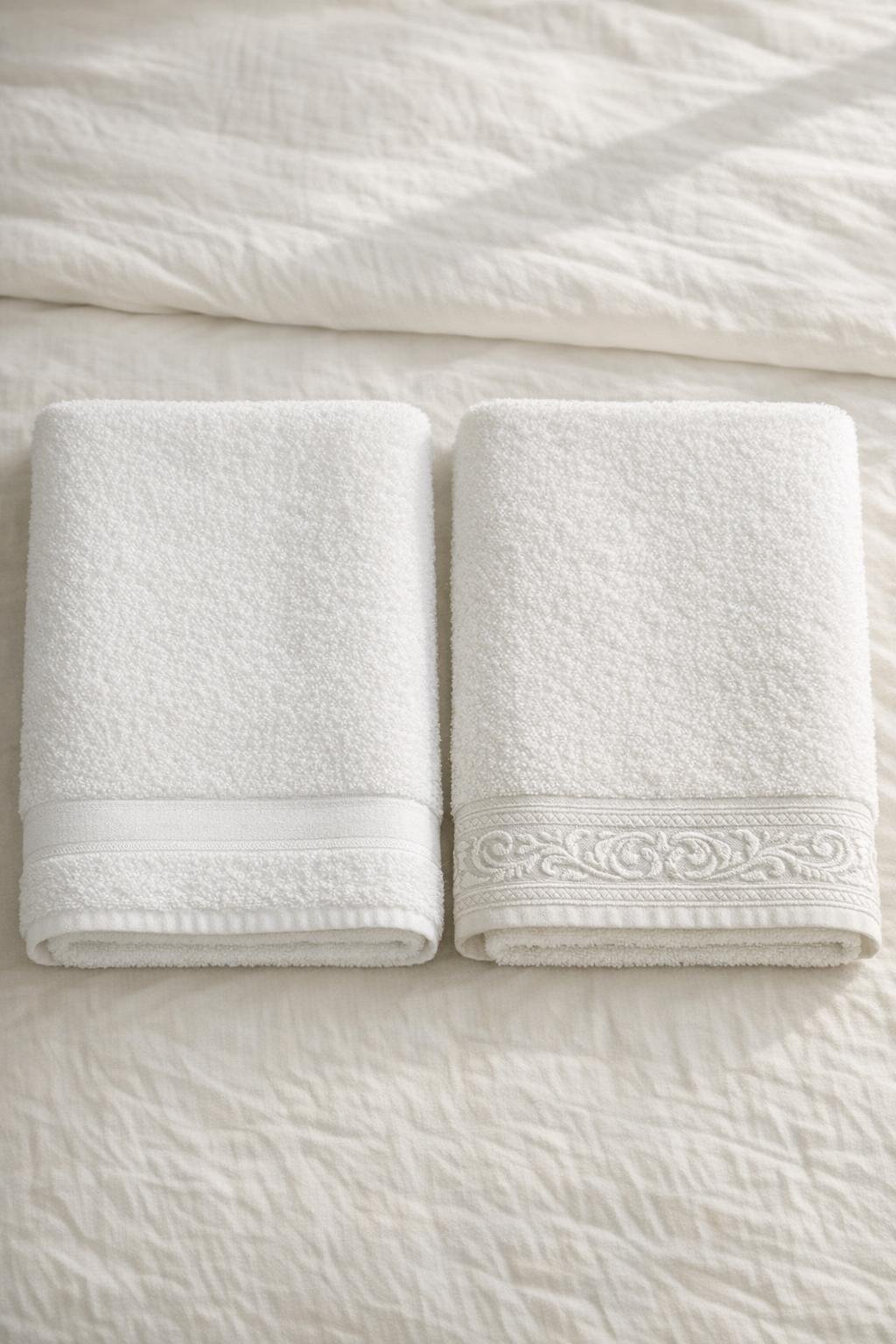
10. You can test at home whether the band is functional or mostly cosmetic
If you really want to know what you’ve got, do a simple at-home check after one wash and dry cycle. Lay the towel flat and compare four things: the band, the pile, the stitching, and how the towel hangs. Is the band still straight? Does the terry pull away from it? Do the hems stay even? Does the towel drape squarely from a bar, or does one side dip lower?
Also pay attention to feel and performance. If the band lies smooth, the towel folds easily, and the whole piece hangs without twisting, the border is likely doing a functional job. If it looks pretty but puckers, stiffens oddly, or causes the ends to buckle, then it’s mostly decorative. That little five-minute test can save you from buying six more of a towel that won’t wear well.
Funny how something as ordinary as a bath towel can hold a little secret in plain sight. Once you know what that band is doing, it’s easier to choose better towels, fold them more neatly, and spot quality before your money’s spent.
