
Most of us have a can of WD-40 tucked on a garage shelf, and for years I thought of it as the “squeaky hinge fix” and not much else. But around my house, especially with kids, pets, muddy boots, winter slush, and all the everyday mess that comes with family life, I’ve learned that little blue-and-yellow can can solve a surprising number of nagging problems fast.
Below are 20 practical ways I use WD-40 around the house, from sticker residue and crayon marks to snow shovels and frozen locks. I’m sharing exactly how I do each one, why it works, and the safety note that matters, so you can get the job done without over-scrubbing or making a bigger mess.
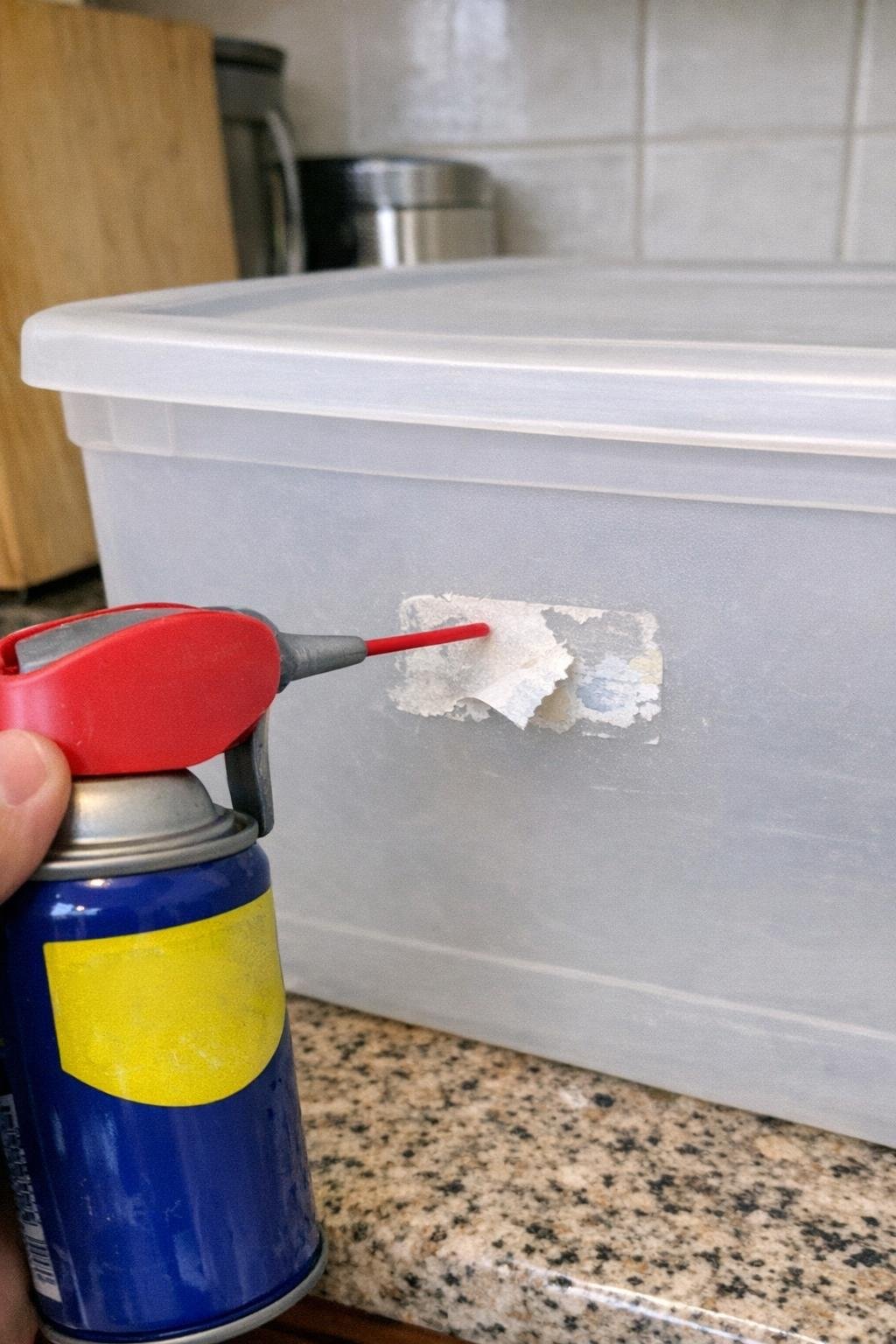
1. Remove stubborn stickers and labels
Spray a light coat of WD-40 directly over the sticker or label until the surface looks damp but not dripping. Let it sit for 3 to 5 minutes, then start lifting one corner with your fingernail or a plastic card and peel slowly. If sticky residue stays behind, spray a little more onto a paper towel or microfiber cloth and wipe until the glue comes off.
This works because WD-40 helps loosen adhesive and soften the gummy residue so it releases instead of tearing into tiny bits. It’s especially handy on glass jars, plastic bins, and metal tools. If you’re using it on painted or delicate finished surfaces, test a hidden spot first, and keep it away from heat or open flame since it’s flammable.
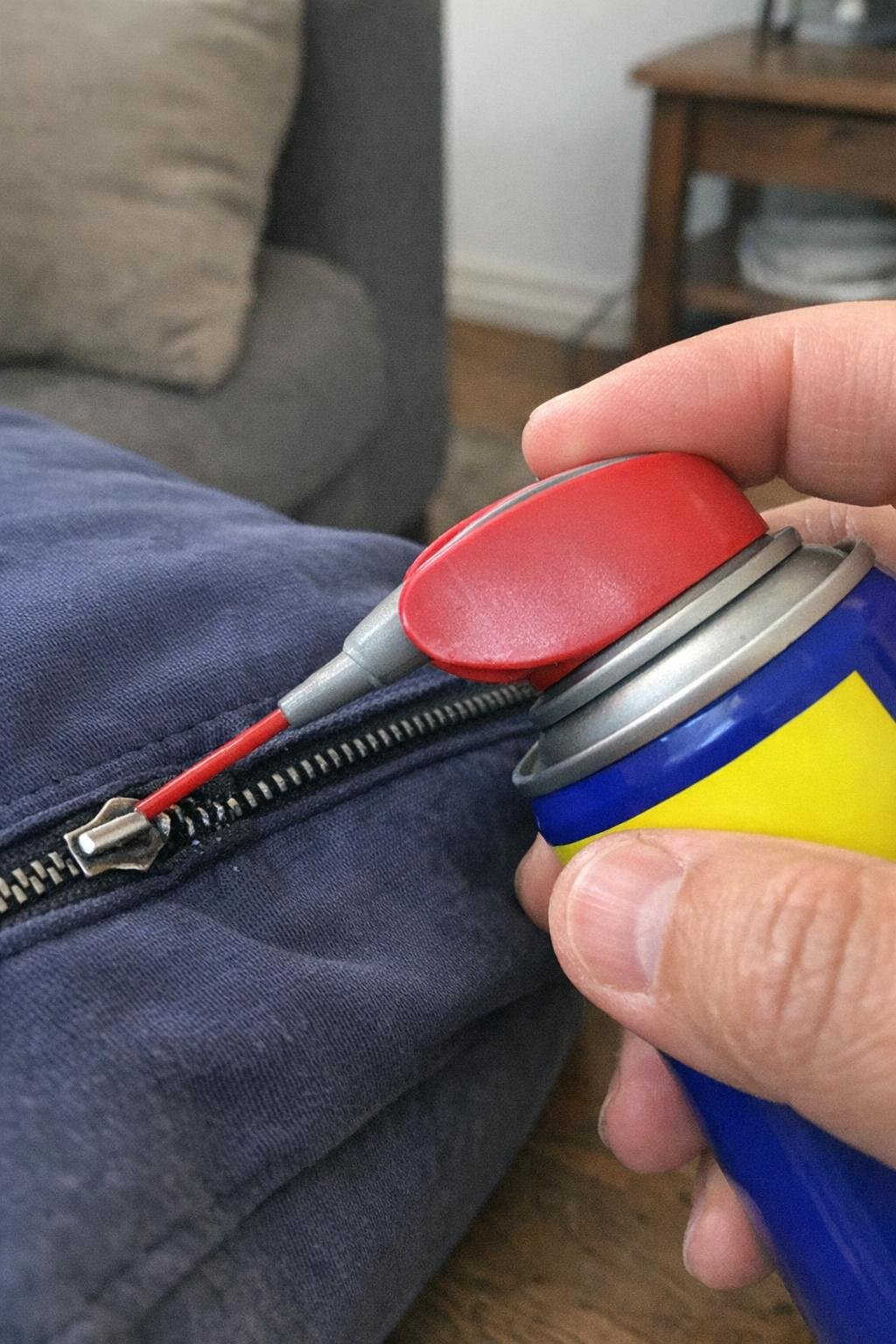
2. Free a stuck zipper
For a zipper that won’t budge on a coat, boot bag, or cushion cover, spray a tiny amount of WD-40 onto the zipper teeth, not the fabric. The easiest way is to use the red straw and apply a short burst along the stuck section, then work the zipper pull gently back and forth 4 or 5 times until it loosens.
WD-40 helps by reducing friction and loosening grime or corrosion around the metal teeth. The big caution here is to keep it off the surrounding fabric because it can leave an oily mark. I usually hold a paper towel behind the zipper while I spray, then wipe the teeth clean once it’s moving again.
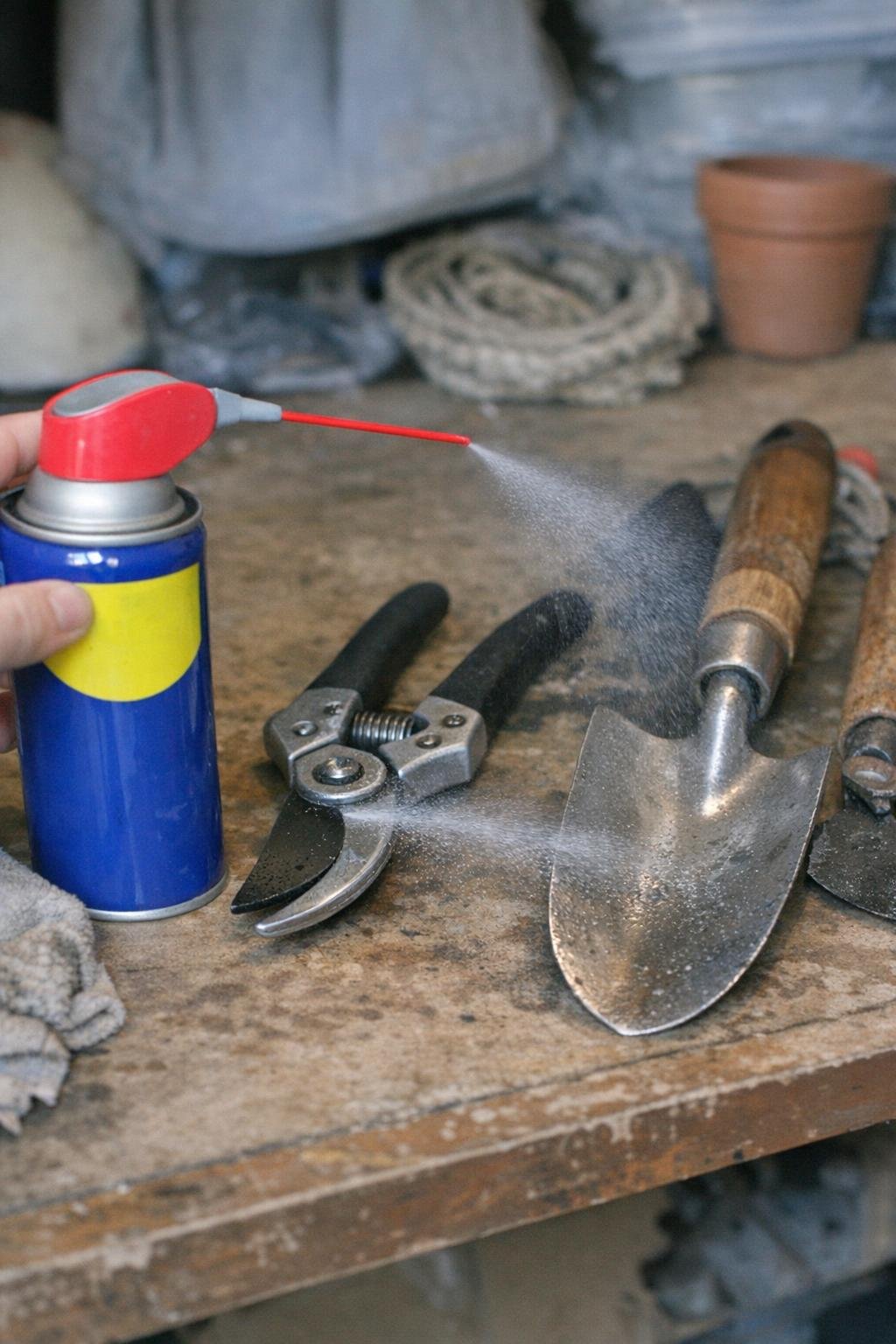
3. Clean and protect garden tools
After knocking off dried soil, wash your hand trowel, pruners, or shovel with warm water and a little dish soap, then dry them completely with an old towel. Once they’re dry, spray a light coat of WD-40 over the metal parts from about 6 to 8 inches away and wipe off the excess with a rag so you leave only a thin film.
That thin coat helps push away moisture and slow rust, which is especially useful if your tools live in a damp shed or garage. I do this at the end of spring and again before winter storage. Avoid spraying tool handles that could become slippery, and use it in a ventilated space.
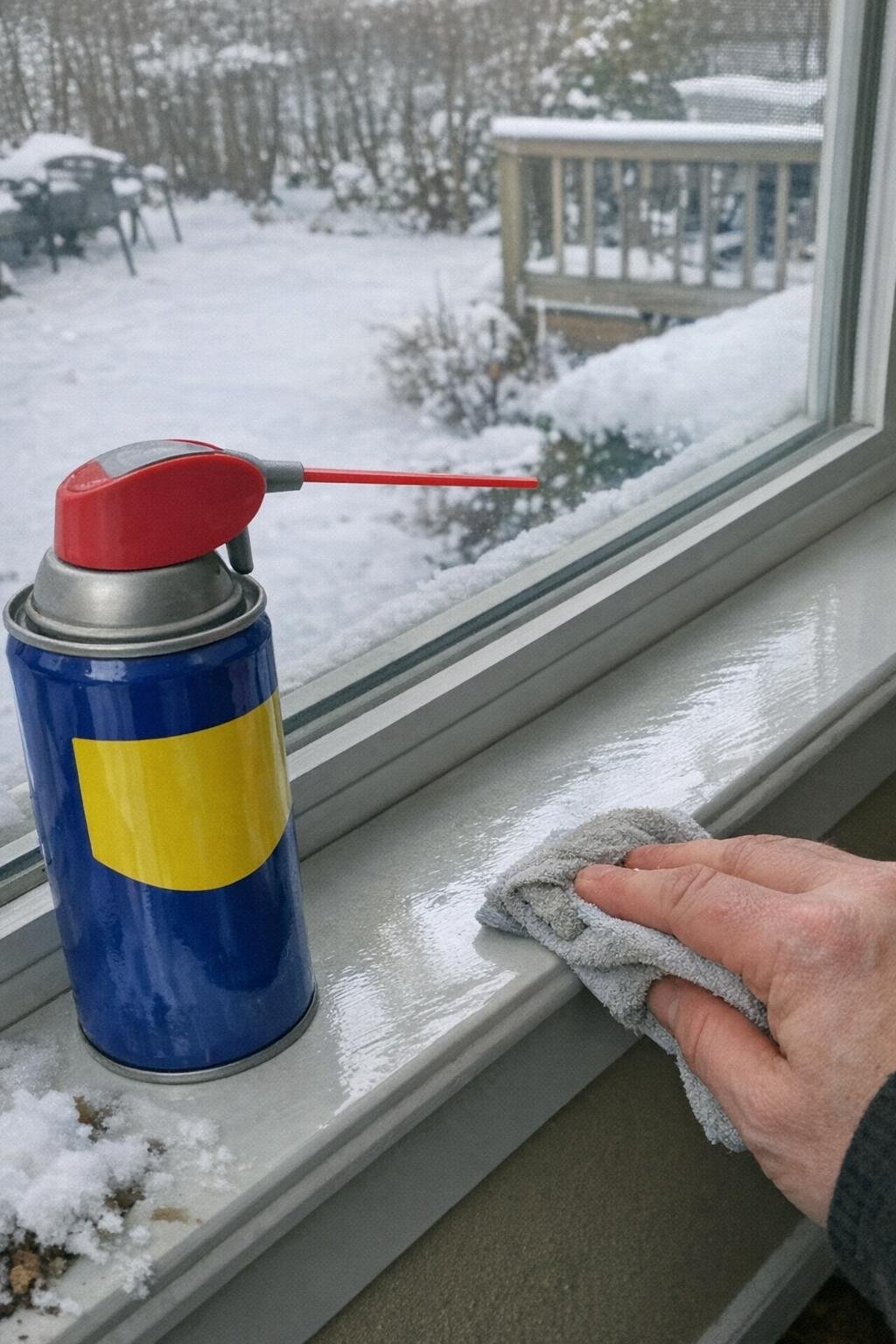
4. Keep snow and ice from sticking to windows and sills
Before a storm, spray WD-40 lightly onto a clean cloth and wipe a thin film onto the outside window sills and the lower outer edges of exterior windows where slush tends to build up. You do not need much—just enough to leave a faint slick layer. Let it sit for a minute and wipe away any drips.
It helps because it repels water and leaves a barrier that makes wet snow and light ice less likely to cling stubbornly to the surface. This can make cleanup easier after a storm, especially around basement windows and garage windows. Only use it on exterior non-walking surfaces, and never spray it on floors because that would be dangerously slippery.
5. Unstick gum from surfaces
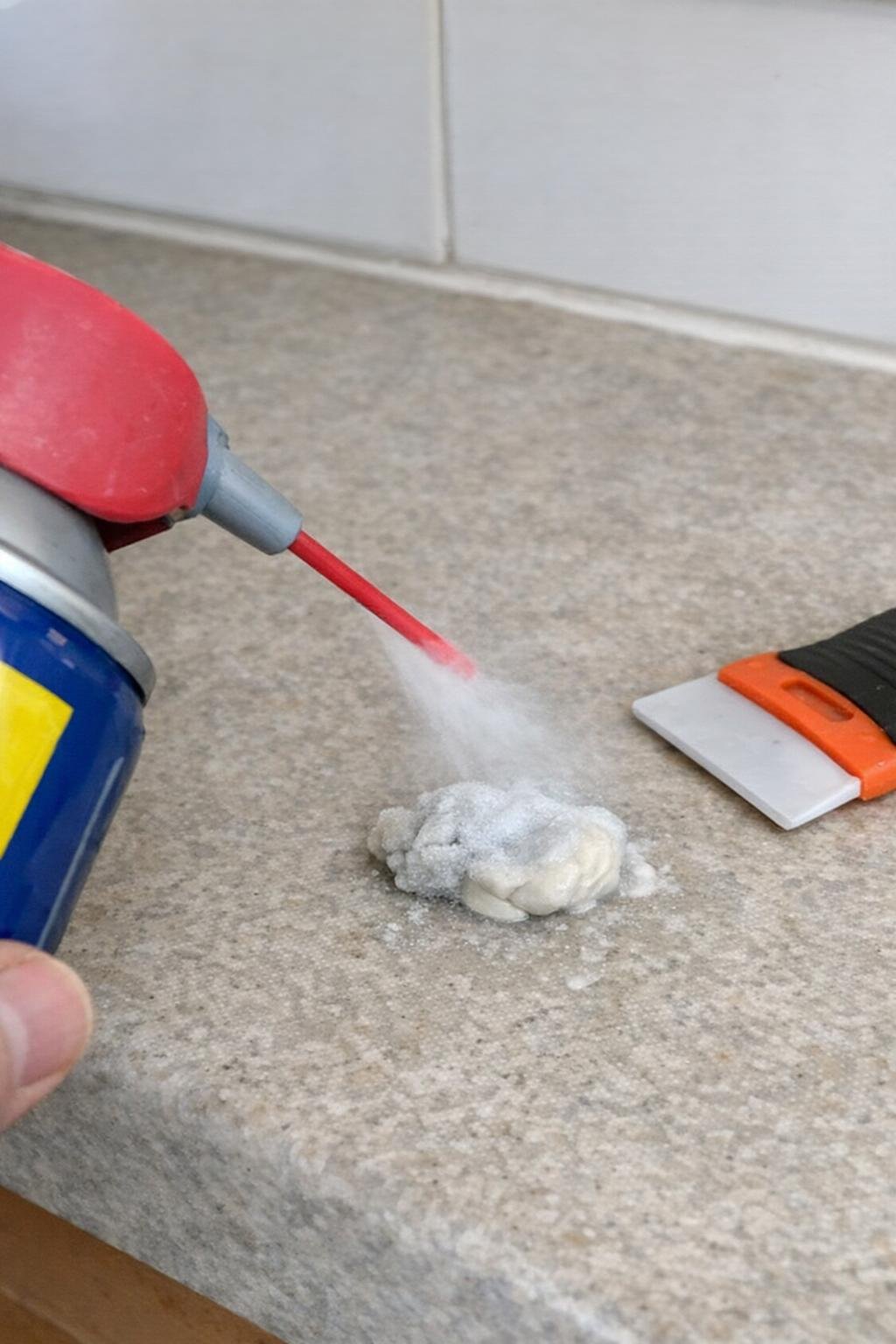
If gum gets mashed onto the bottom of a chair, a hard floor, or the underside of a table, spray the gum directly with WD-40 and let it sit for about 2 minutes. Then use a plastic scraper, old gift card, or plastic spatula to lift it off gently. Wipe the area with warm soapy water afterward to remove residue.
WD-40 works here by softening the sticky gum so it loses its grip on the surface. I’ve found this much easier than attacking it with my fingernails or a harsh scrubber. Use extra care on finished wood and painted surfaces by testing a hidden spot first, and ventilate the area while you work.
6. Polish and protect stainless steel appliances
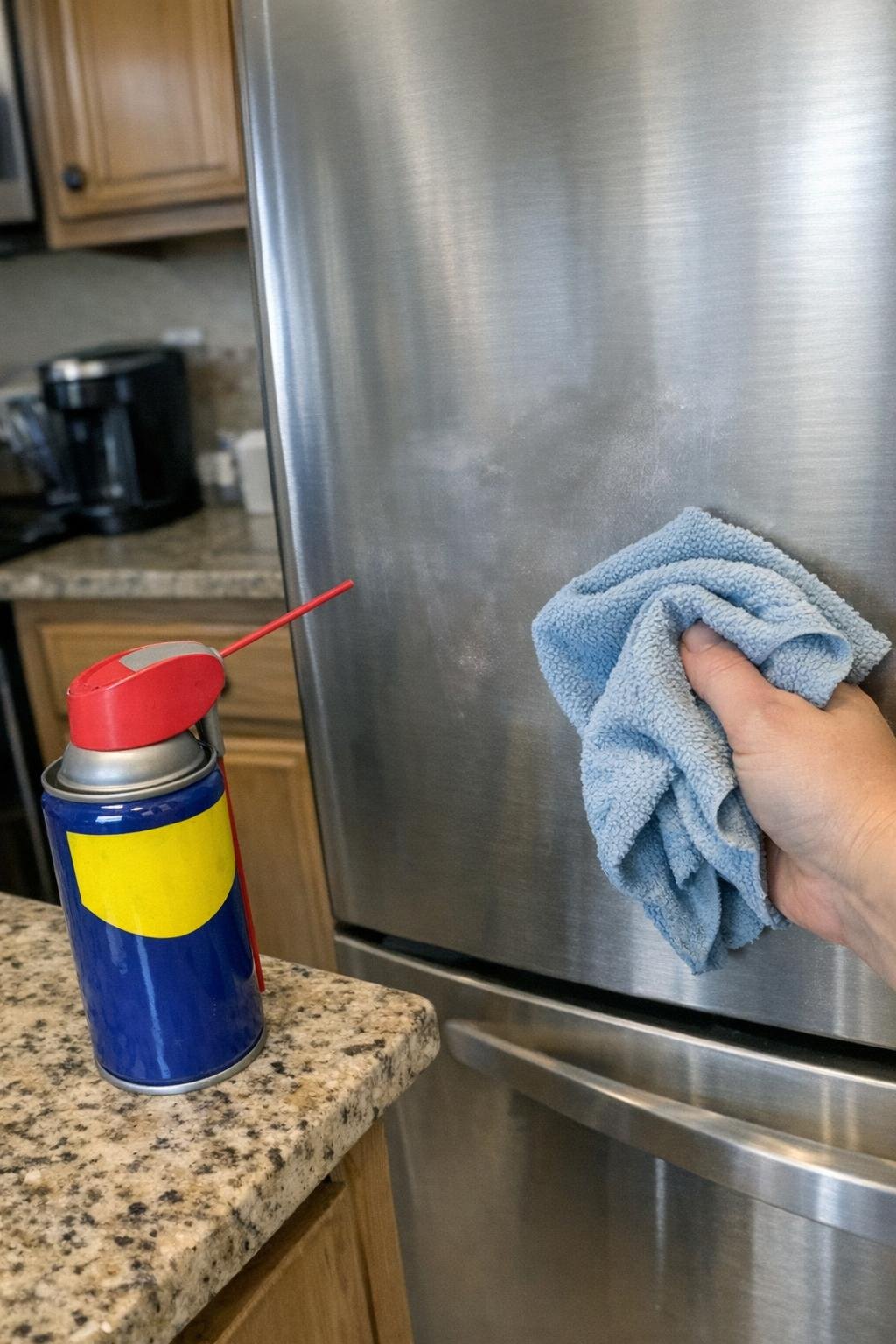
Spray WD-40 onto a clean microfiber cloth, not directly onto the appliance, then wipe with the grain on your refrigerator, dishwasher front, or trash can. Use a second dry microfiber cloth to buff off the excess right away so the surface looks even and not greasy.
It cuts through fingerprints, greasy smudges, and water spots while leaving a light protective film that helps future marks wipe off more easily. I like this on the outside of stainless steel, especially on the fridge door after a busy weekend. Never use it on surfaces that touch food, and keep it away from hot appliances or active burners.
7. Silence squeaky door hinges
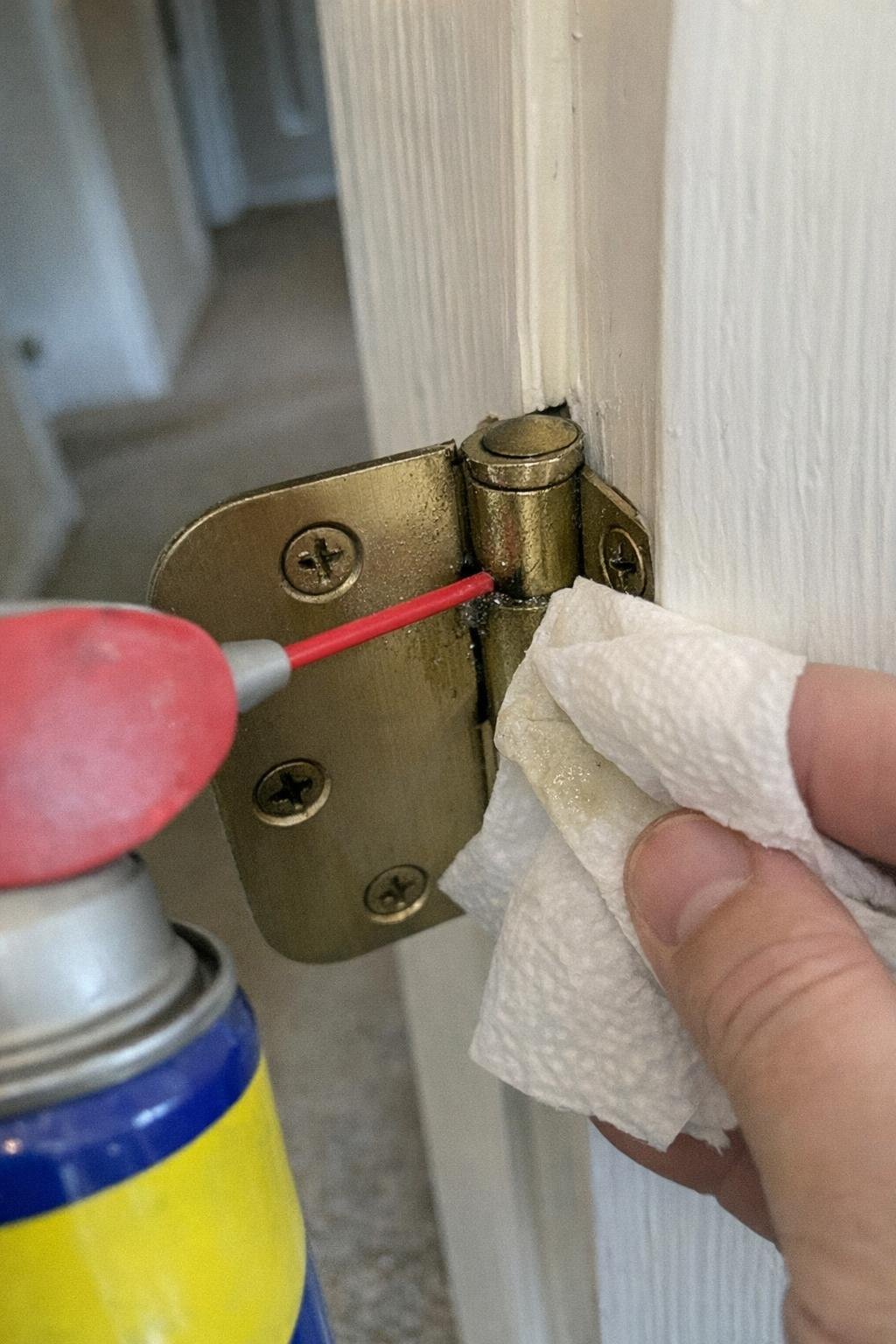
Open the squeaky door, place the red straw right at the hinge pin, and give each hinge a short 1-second spray. Swing the door back and forth 8 to 10 times to work the lubricant inside, then wipe off any drips with a paper towel so they don’t run down the trim.
This is the classic use for a reason: WD-40 gets into tight metal joints, displaces moisture, and loosens grime that causes that awful squeak. I do the worst hinges in fall before everyone starts slamming doors against cold weather drafts. Just be sure not to overspray onto painted trim or flooring.
8. Clean a yellowed, stained toilet bowl
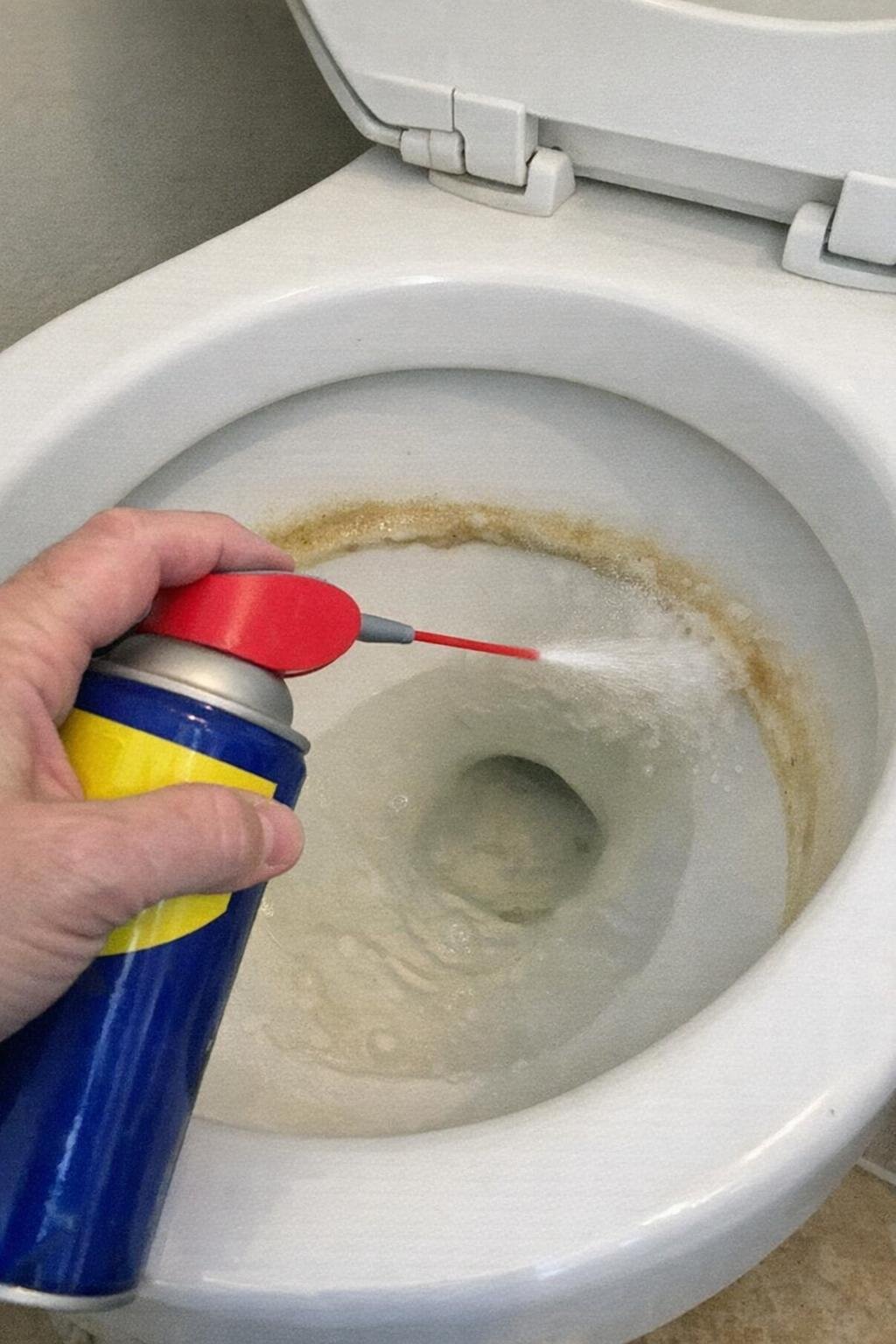
Spray WD-40 along the waterline and directly onto the yellow or brown mineral ring inside the toilet bowl. Let it sit for 5 to 10 minutes, then scrub with your toilet brush, focusing on the ring and any stained patches under the rim. Flush once, and repeat only if the stain is especially old and heavy.
This can save a lot of elbow grease because WD-40 helps loosen hard water buildup and grime so the brush can lift it faster than dry scrubbing alone. I’ve found it especially useful in a guest bath that doesn’t get flushed often enough. Make sure the bathroom is ventilated, avoid splashing, and never mix it with bleach or other toilet cleaners.
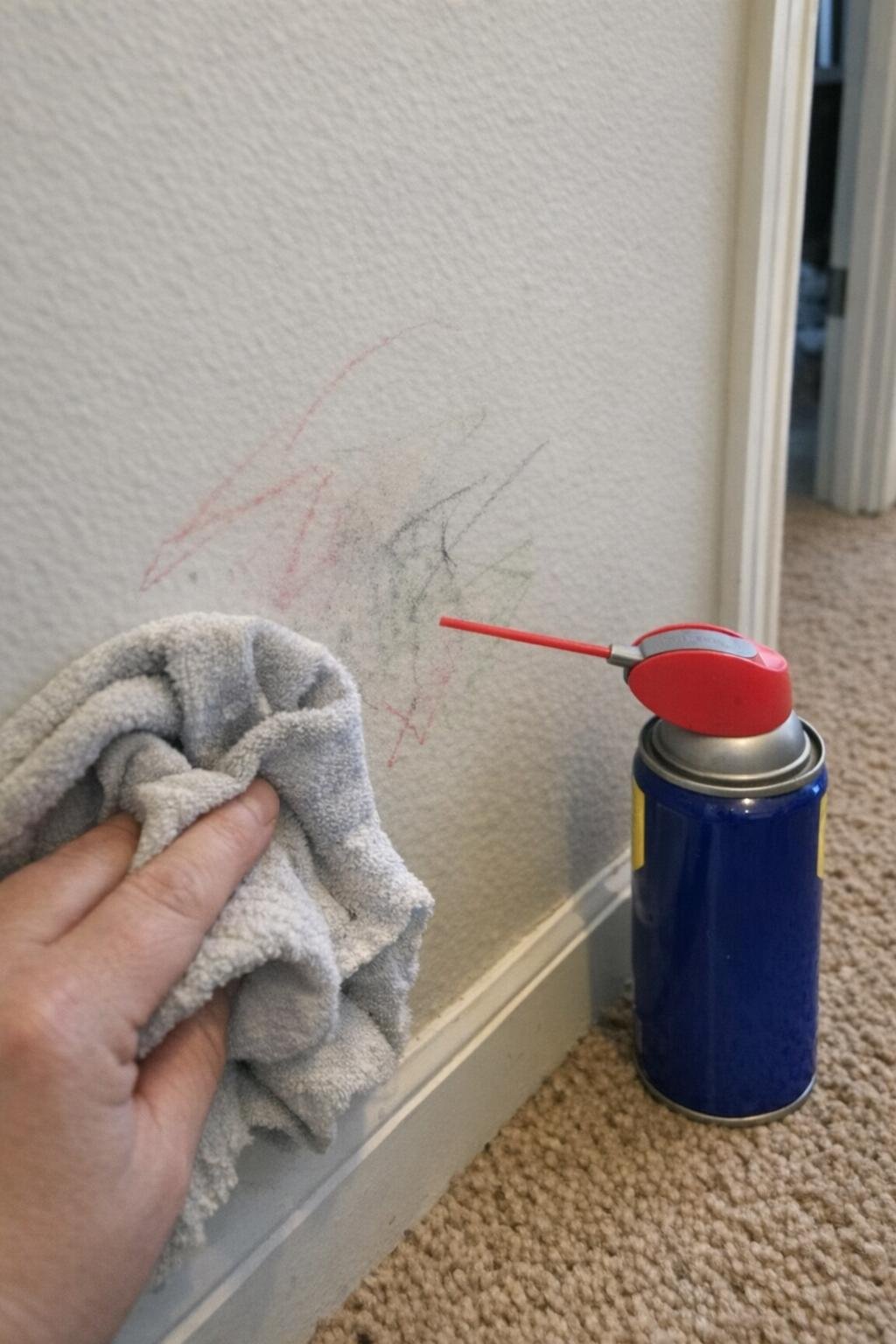
9. Lift crayon marks off painted walls
Spray a little WD-40 onto a soft cloth rather than the wall itself, then rub the crayon mark gently in small circles. Once the mark is gone, wipe the wall with a damp cloth and a drop of dish soap, then dry it with a clean towel so no oily film stays behind.
It works because WD-40 helps break down the waxy crayon layer without aggressive scrubbing. As a parent, this one has honestly saved a few hallways for me. Still, test a hidden spot first because some flat or delicate paints can react differently, and don’t scrub hard enough to burnish the paint.
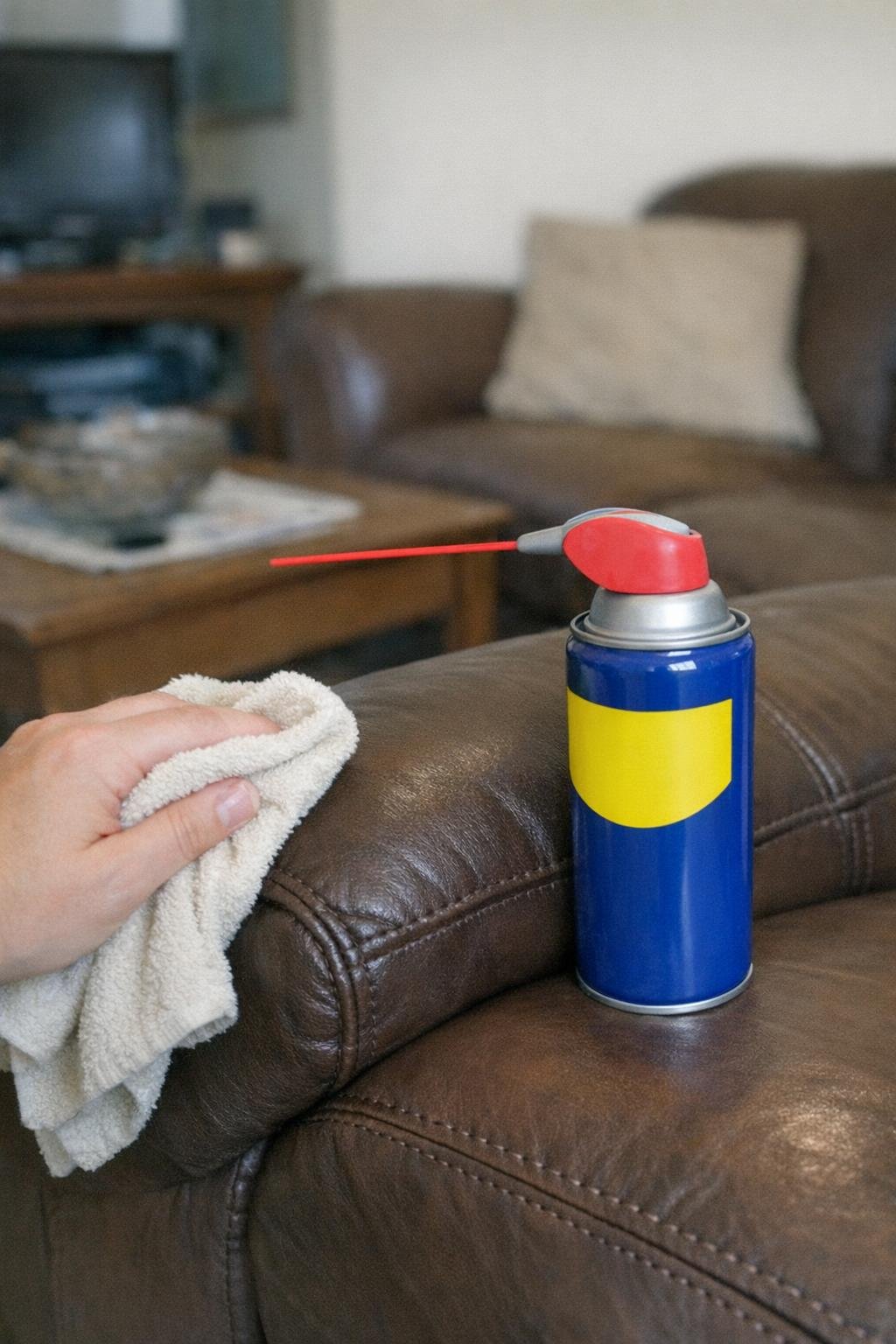
10. Condition and protect leather furniture
Spray a small amount of WD-40 onto a soft cloth and buff it lightly into a leather chair arm or sofa cushion in thin, even passes. Let it sit for 1 minute, then use a dry cloth to buff off the excess so the surface doesn’t feel slick. Always test a hidden spot first, such as the back corner or under a cushion.
On some finished leather, it can help loosen grime and bring back a little softness and sheen by leaving a light protective film. I only use a very small amount and never on suede, nubuck, or porous unfinished leather. If the room is closed up, crack a window, and keep it off skin and out of eyes.
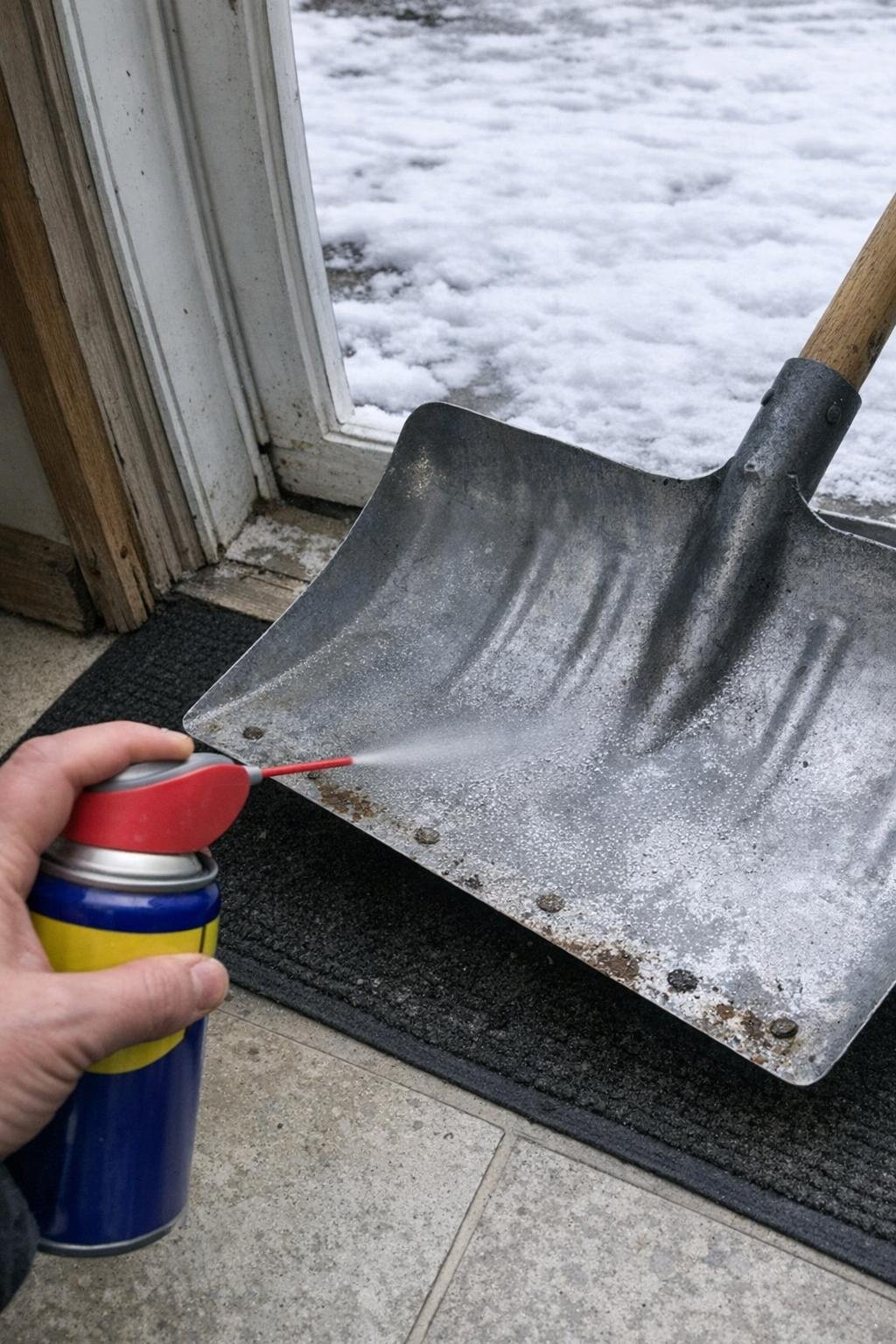
11. Coat the snow shovel so wet snow slides right off
Before each storm, knock any old snow or dirt off the shovel blade and dry it if needed. Then spray a light, even coat of WD-40 across the front and back of the blade from about 8 inches away, and wipe once with a rag so it leaves a thin film instead of puddles.
This makes a big difference with heavy, wet snow that usually clings in thick slabs. WD-40 creates a slick barrier that helps the snow slide off instead of packing onto the blade. I keep the can by the mudroom door in winter for this exact reason. Just don’t spray the handle grip, or the shovel can become slippery in your gloves.
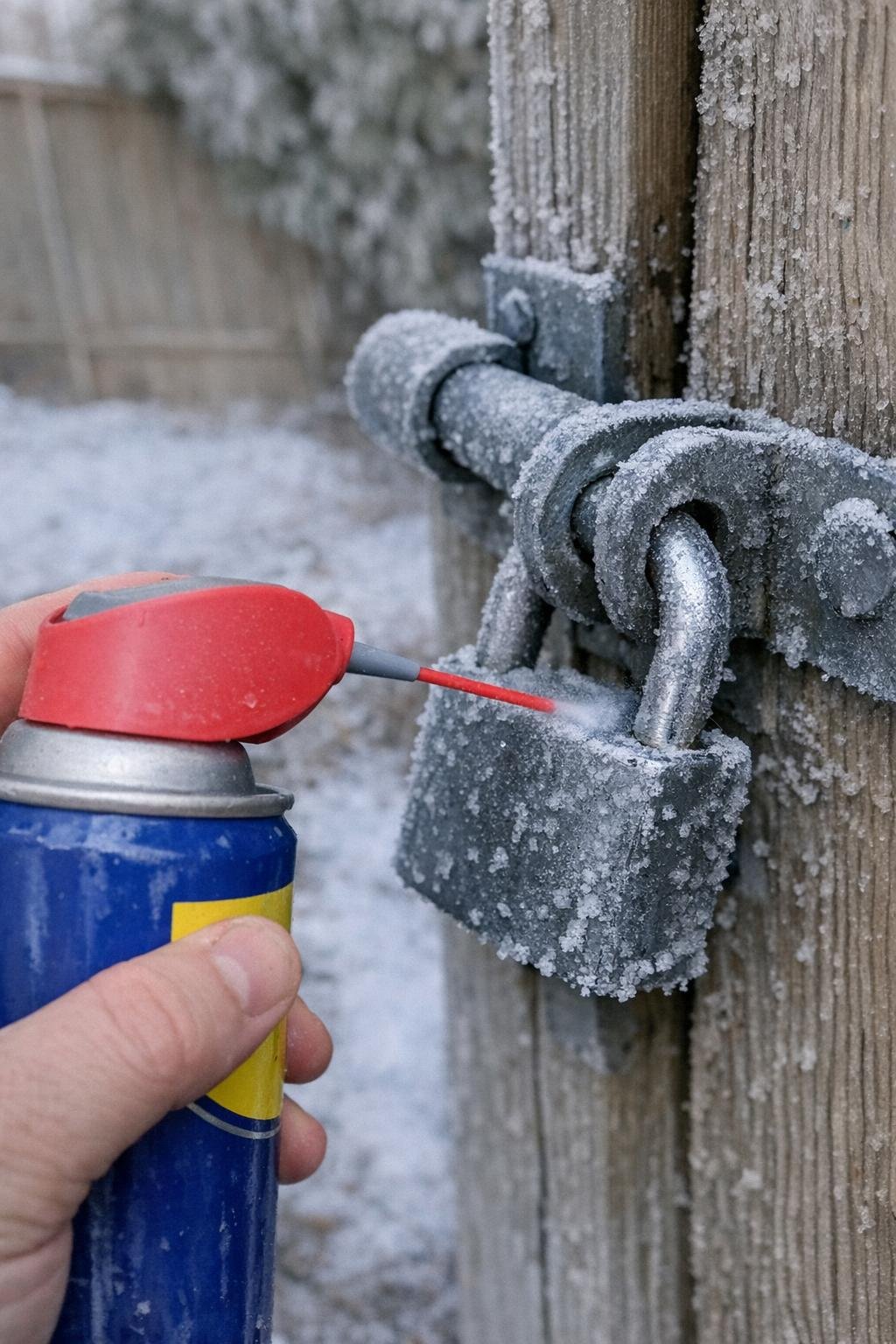
12. Free a frozen padlock, gate latch or mailbox door in a cold snap
Insert the red straw into the keyway or aim it directly into the moving parts of the latch, then give a short 1- to 2-second spray. Wait about 30 to 60 seconds, then work the key gently or move the latch back and forth until it loosens. Add one more short burst if needed.
WD-40 helps by displacing moisture and loosening the ice grip in tight metal parts, which is exactly what you want on freezing mornings. I’ve used this on a backyard gate latch and our mailbox more than once. Wear gloves if the metal is bitter cold, and never force the key hard enough to bend it.
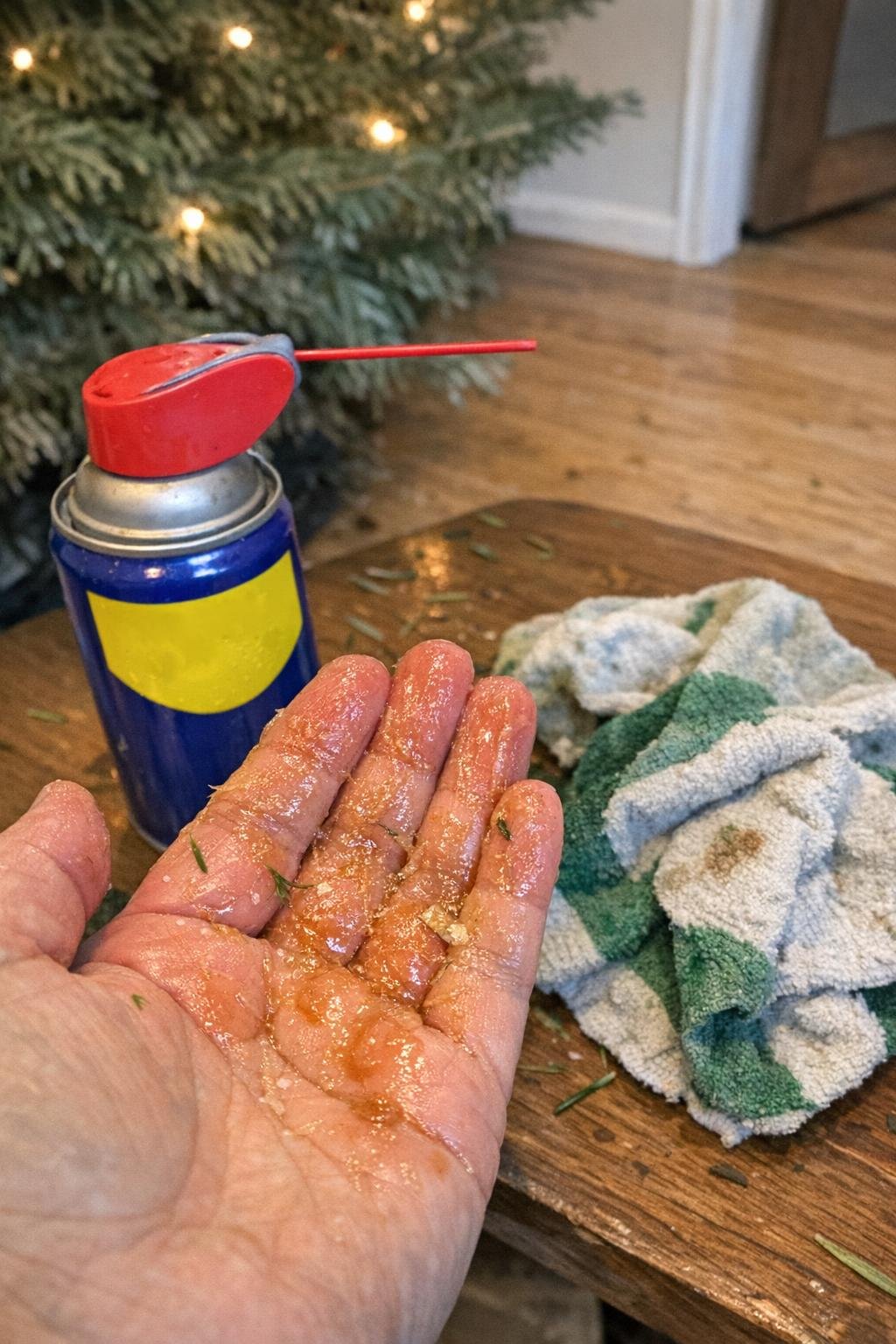
13. Get Christmas tree sap and pine pitch off hands, floors and the car
For sap on hands, spray a little WD-40 onto a paper towel or directly onto the sticky spot, rub for 15 to 20 seconds, then wash well with warm water and dish soap. For sap on vinyl flooring, painted trim, or the car exterior, spray it onto a cloth first, rub the pitch gently, and wipe clean, then wash the area with soapy water.
It works so well because sap and pitch are stubborn, sticky resins, and WD-40 helps dissolve that tacky layer so it releases. Around Christmas, this is one of my favorite cleanup shortcuts. Keep it out of eyes, don’t leave it sitting long on delicate finishes, and test a hidden spot on paint or trim first.
14. Lift old candle wax out of holders and off tablecloths
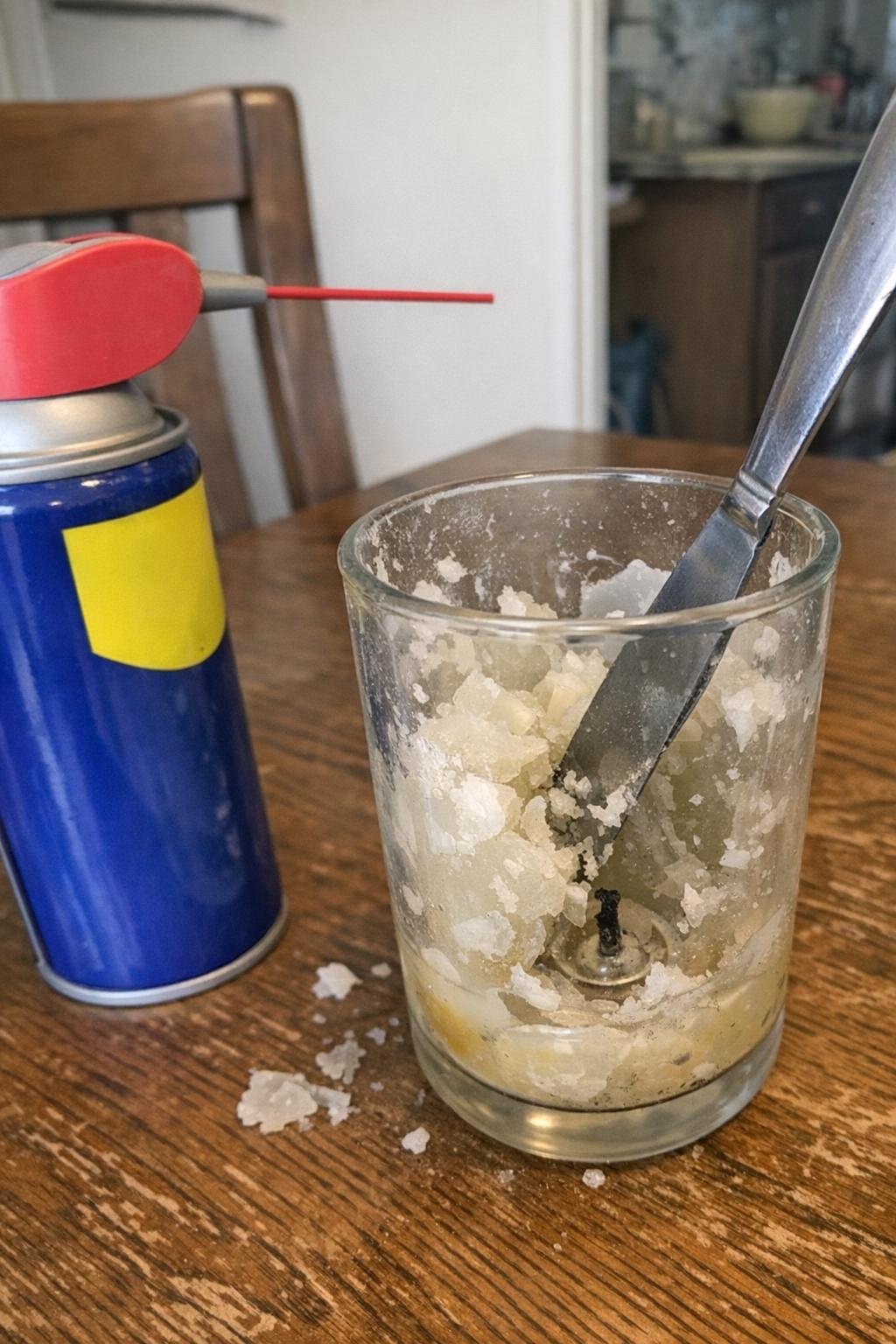
For wax in a candle holder, spray the hardened wax lightly with WD-40, wait 2 to 3 minutes, and slide it out with a plastic spoon or your fingers. For a tablecloth, first lift off any thick wax gently, then spray a small amount onto the remaining spot, wait 1 minute, blot with a paper towel, and wash the fabric with detergent afterward.
WD-40 helps loosen wax from glass and many fabrics because it softens the residue and breaks its grip. I still go slowly on delicate linens and always blot instead of rubbing hard. Test a hidden area first on fabric, ventilate the room, and keep the can far away from lit candles or any heat source.
15. Separate two drinking glasses or nested bowls stuck together
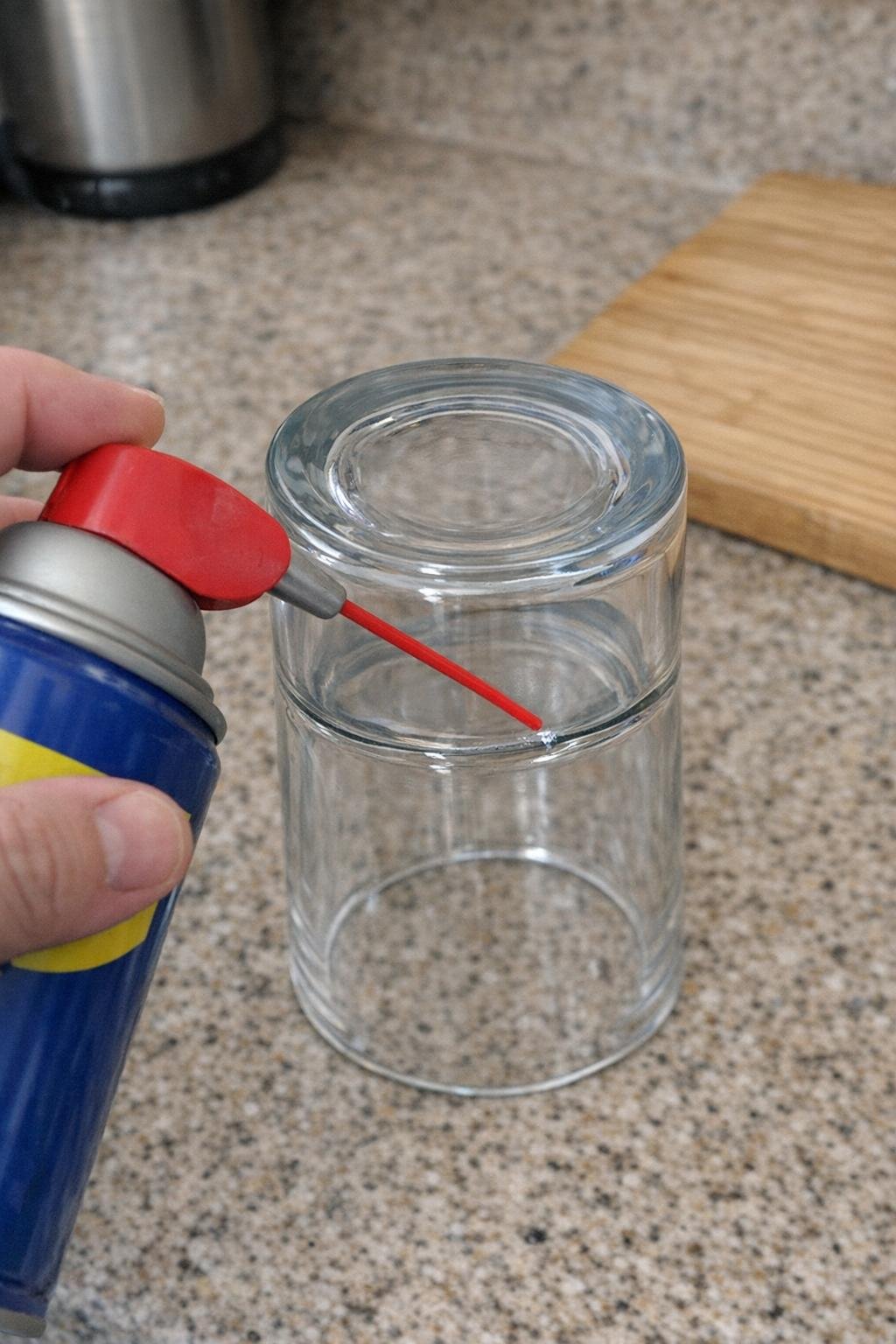
When two glasses or bowls get wedged together, spray a very small amount of WD-40 around the seam where they meet. Let it sit for about 30 seconds, then hold both pieces firmly with a towel and twist gently rather than pulling straight apart. Once separated, wash both pieces thoroughly with hot water and dish soap.
The spray reduces friction and helps the seal between the two surfaces release without chipping the edges. I prefer this to banging them on the counter, which is how things get broken. Because these items touch food and drink, washing well afterward is not optional, and I would skip this on anything porous or cracked.
16. Get tomato sauce and grease stains out of clothes before the wash
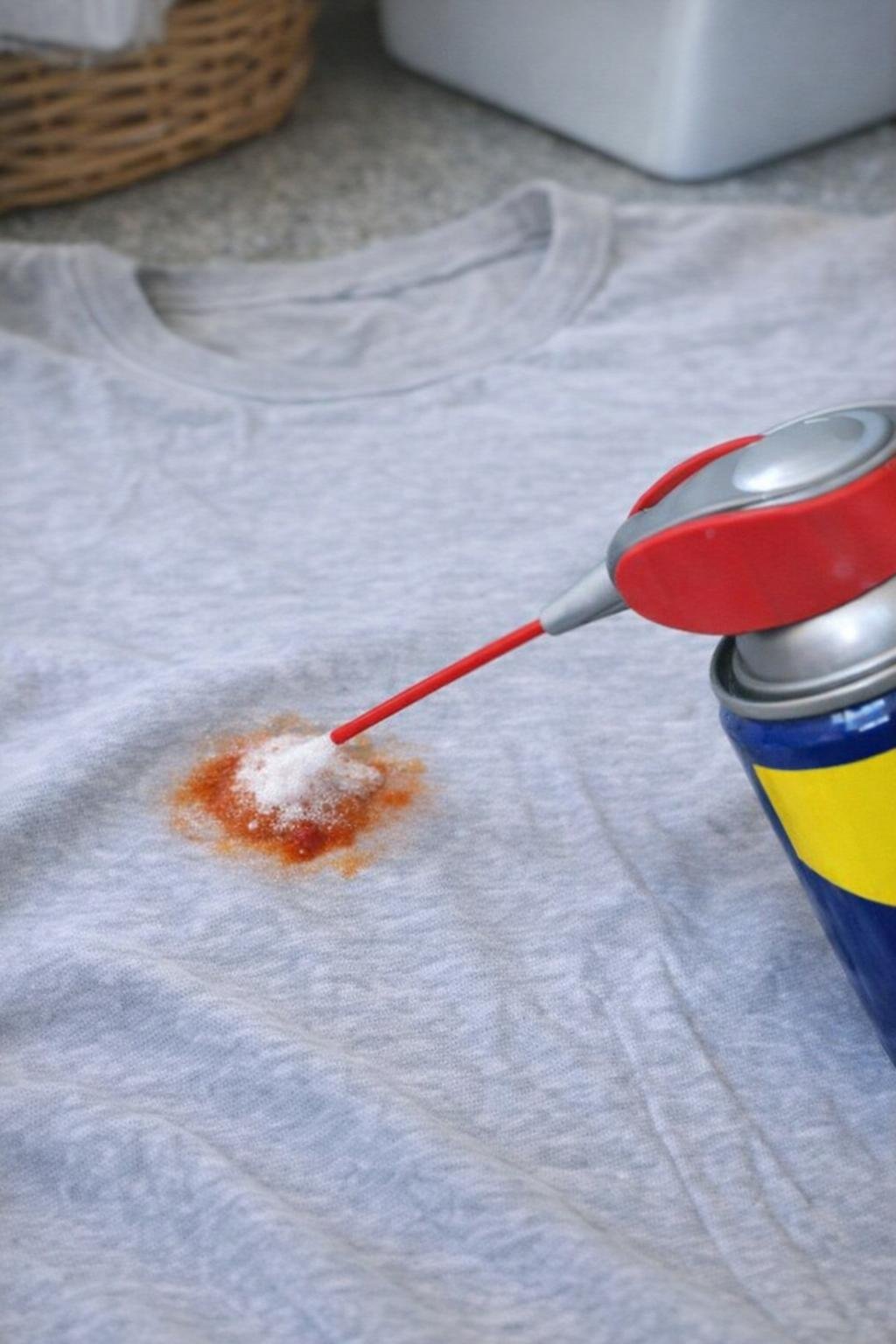
Lay the stained shirt, apron, or kitchen towel flat and place a paper towel underneath the stain. Spray a small amount of WD-40 directly onto the tomato sauce or grease mark, enough to dampen it, then wait 5 minutes. Rub in a few drops of liquid laundry detergent, rinse with warm water, and wash as usual in the warmest water safe for the fabric.
This works because WD-40 helps break down oily, greasy residue so the detergent can lift it more effectively in the wash. I’ve had good luck with spaghetti-night stains this way. Always test a hidden seam first, don’t use it on dry-clean-only items, and keep it away from heat until the garment has been fully washed.
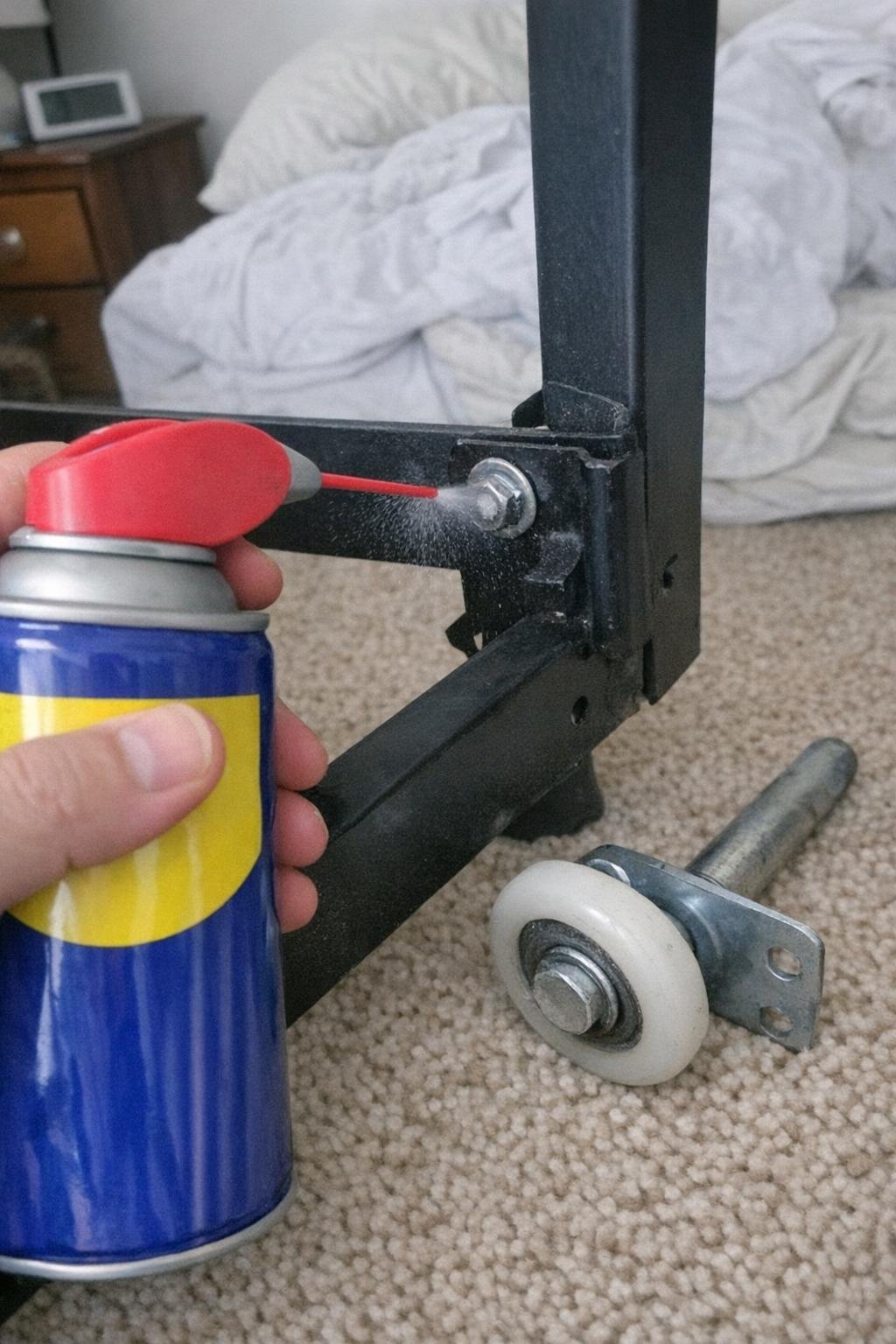
17. Silence a squeaky bed frame and stiff garage door rollers
For a metal bed frame, spray a short burst onto the joints, bolts, and connection points, then wiggle the frame or press on the mattress to work it in. For garage door rollers, spray lightly onto the roller stems and moving metal joints along the track, then open and close the door once or twice. Do not spray the chain or belt.
WD-40 helps loosen rust and grime and reduces friction where metal parts rub and chatter. This is one of those little fixes that makes the whole house feel calmer at night. For the garage, use just enough to coat the moving parts without dripping, and keep the area ventilated since you’re usually working in an enclosed space.
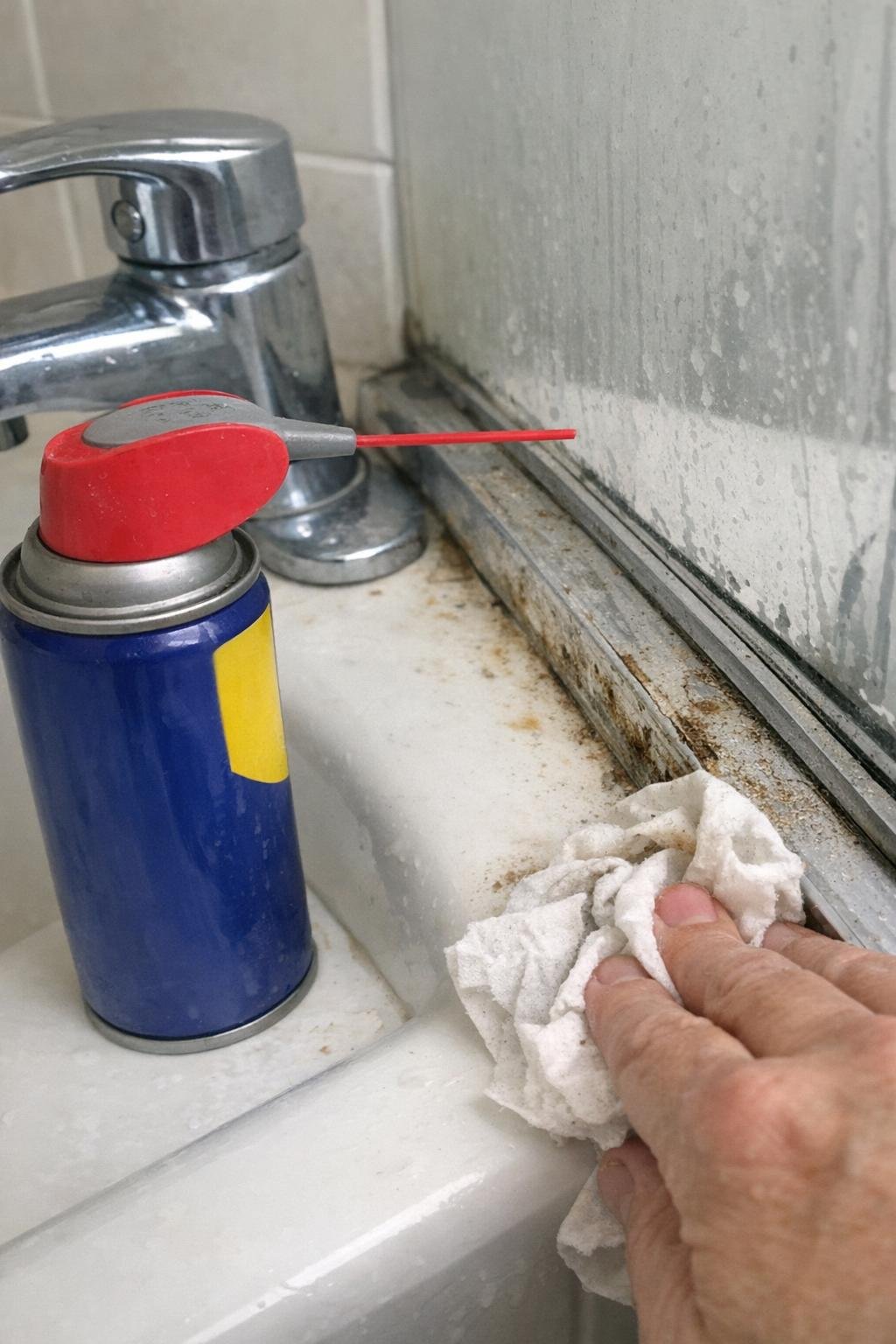
18. Bring the shine back to a rusty chrome faucet and shower door track
Spray WD-40 onto the rusty chrome faucet area or shower door track and let it sit for 3 to 5 minutes. Wipe with a soft cloth, and for stubborn spots use a non-scratch sponge or an old toothbrush. Rinse well with warm water and buff dry with a clean towel.
It helps loosen light rust, soap scum, and mineral residue while leaving a thin protective film that helps water roll off a bit better afterward. I’ve found it especially useful on older bathroom fixtures that start looking dull around the base. Test a hidden spot on specialty finishes like brushed or matte coatings, and don’t use it on surfaces that will be immediately slippery underfoot.
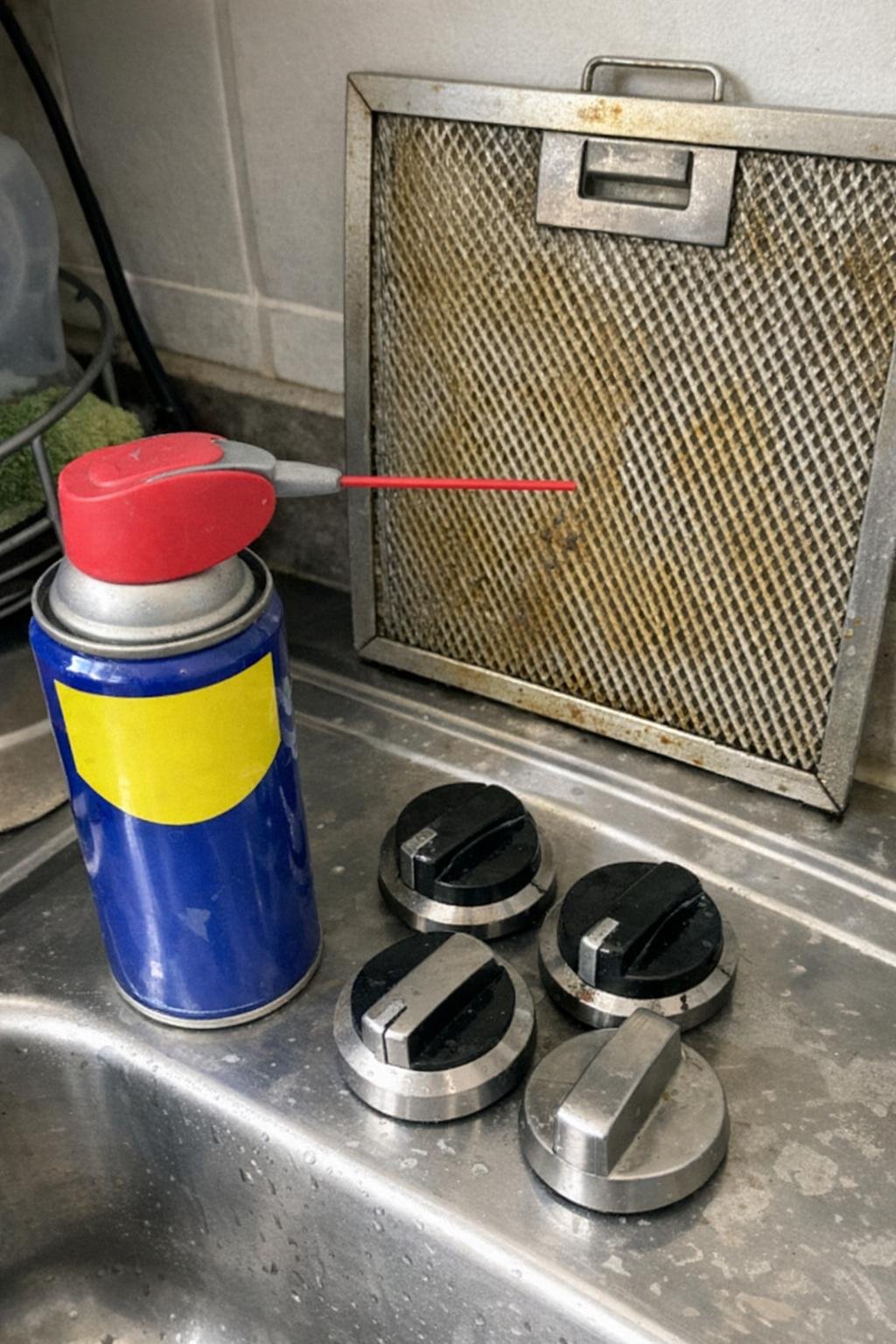
19. Degrease the range hood filter and stovetop knobs
Remove the stovetop knobs if possible and take down the greasy range hood filter. Spray WD-40 onto a cloth and wipe the knobs, then spray the filter lightly or wipe it down with a well-sprayed rag, letting it sit for 3 minutes before scrubbing with warm soapy water. Rinse everything well and dry completely before putting it back.
This works because WD-40 cuts through sticky kitchen grease faster than plain water alone. I use it when the hood filter gets that tacky feeling that seems impossible to wash off. Since these pieces live near food and heat, wash them thoroughly with dish soap afterward, and never spray near an active stove or open flame.
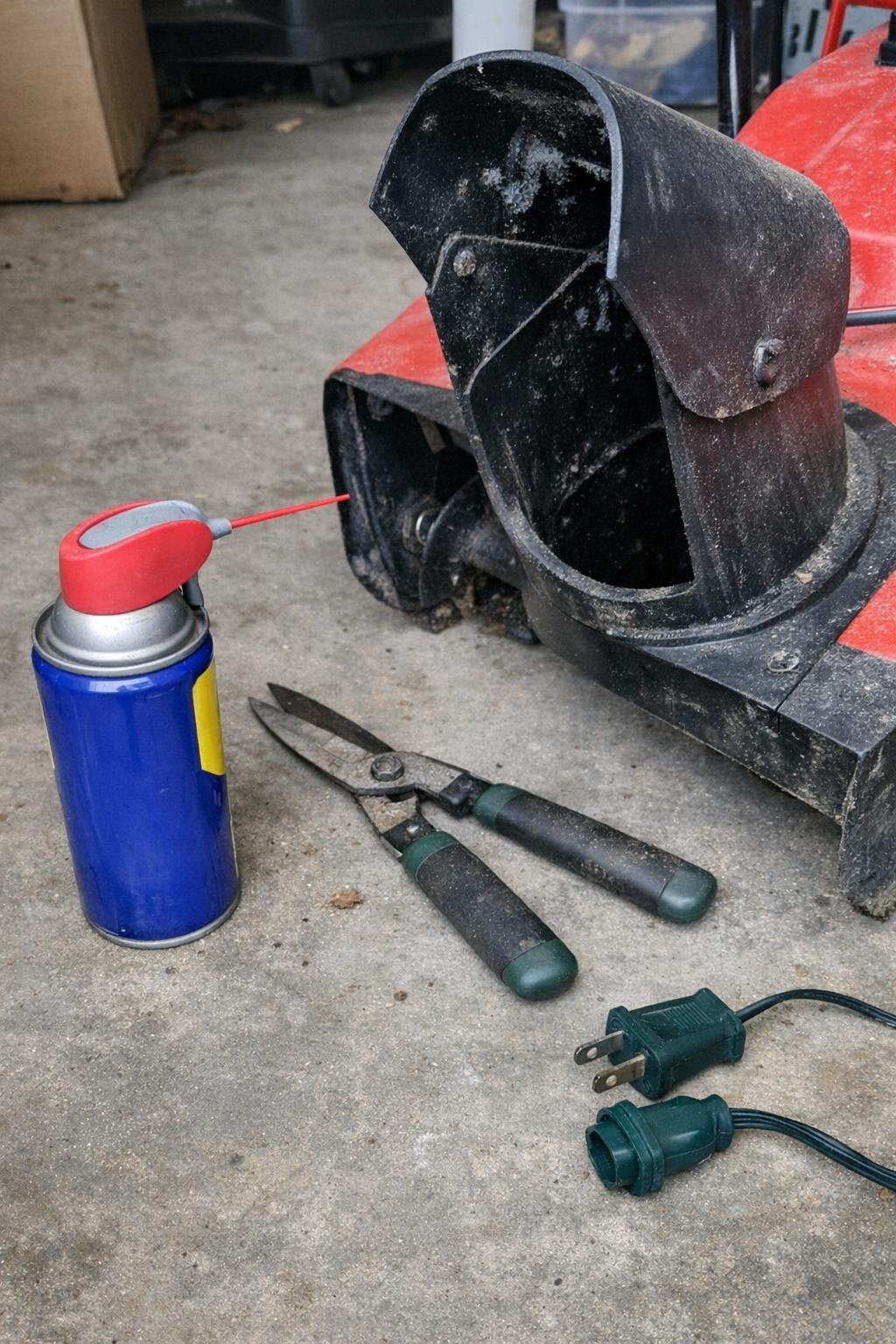
20. Winterize the snow blower chute, shears and outdoor light plugs before storage
At the end of the season, brush off dirt and moisture from the snow blower chute, garden shears, and outdoor light plugs. Spray a light protective coat of WD-40 over the metal chute, the shear blades and pivot, and the outer metal contact areas of the unplugged light connections, then wipe away excess so only a thin film remains before storing them in a dry spot.
This is one of the smartest end-of-season habits because WD-40 displaces leftover moisture, helps prevent rust, and keeps parts from seizing up by spring or next winter. I try to do this the same afternoon I put everything away so I don’t forget. Make sure anything electrical is fully unplugged and dry first, and store treated items away from heat sources.
WD-40 really is one of those humble household helpers that earns its keep when you know where to use it. A little goes a long way, and if you pair it with common sense—good ventilation, careful spot testing, and keeping it away from food surfaces and heat—you can tackle a whole list of annoying jobs with a lot less scrubbing.