
I grew up in a kitchen where we cooled soup on the stove, stuck pizza slices back in the box, and judged leftovers with a quick sniff and a shrug. I did the same in my own house for years. So if you’ve been feeding people for decades and feel a little annoyed when someone half your age tells you you’ve been “doing it wrong,” I get it. I’m not interested in fussy rules for the sake of rules. I’m interested in the handful of habits that actually matter.
These are the 16 leftover rules most people get wrong, and yes, a few of them surprised me when I looked into the real reasons. I’m giving you the hard rule, the reason behind it, and the one honest exception when there is one. Temperatures, days, container depth, all of it. If you’re going to keep food and reheat it safely, this is the practical version.
1. Cooked rice goes in the fridge fast, never on the counter overnight
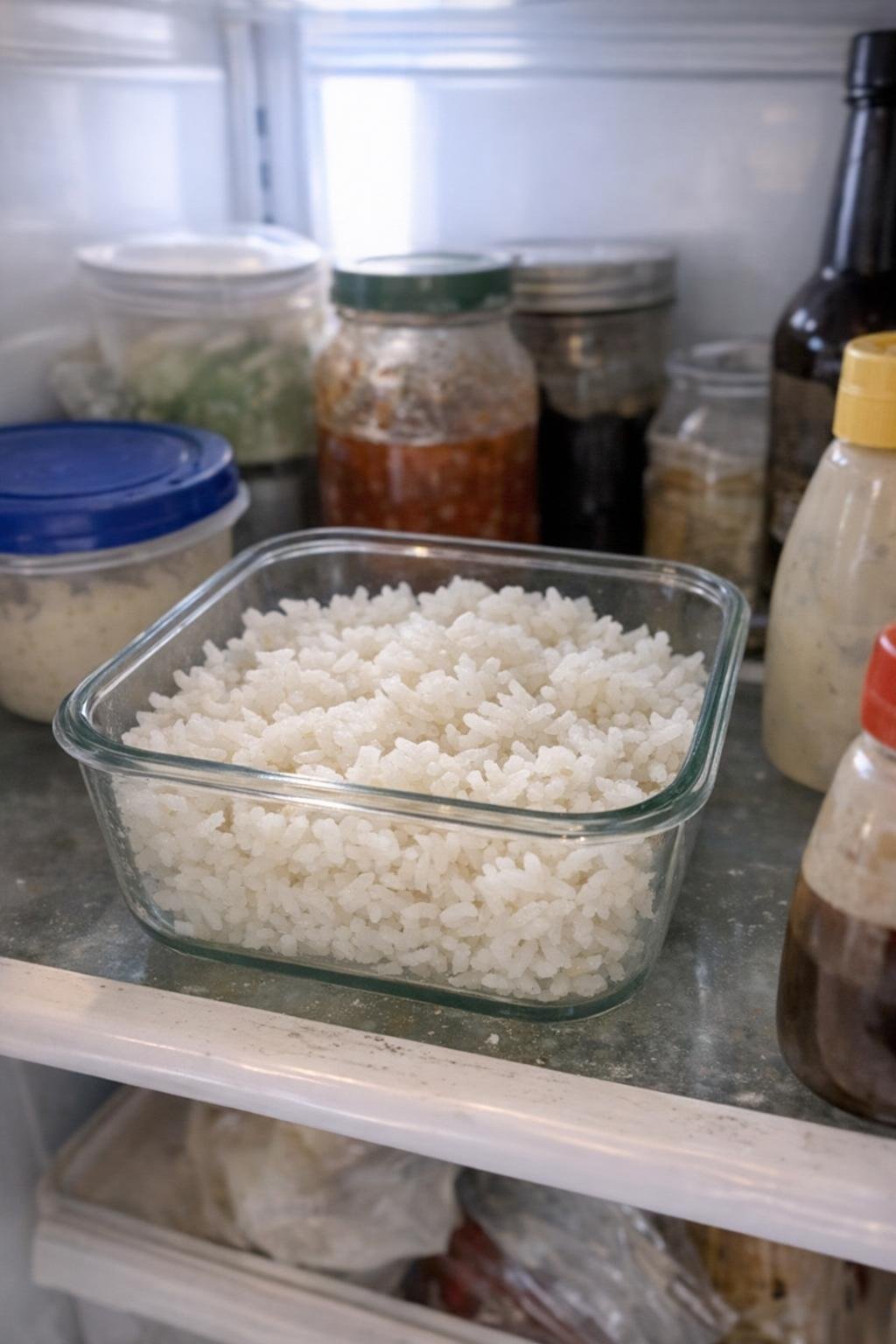
If you cook rice at 6 p.m., it should be cooled and refrigerated within about 1 hour, not left sitting until bedtime. Rice is the classic food people underestimate because Bacillus cereus spores can survive cooking. Once cooked rice sits at room temperature, those spores can wake up, multiply, and produce toxins. The ugly part is that some of those toxins are heat-stable, so reheating the rice tomorrow does not make it safe again.
The rule is simple: portion leftover rice into shallow containers, get it into the fridge promptly, and use it within 3 to 4 days or freeze it. The one honest exception is rice being held properly hot on a warmer or buffet line above 140°F. If it truly stayed above 140°F the whole time, that’s different from rice cooling on the stove or in the cooker on “off.”
2. Hot soup and stew go into the fridge hot, not on the counter to “cool first”
This one goes against what many of us were taught. Modern refrigerators can handle hot leftovers, and letting soup or stew sit on the counter for 2 or 3 hours is exactly how it spends too long in the 40°F to 140°F danger zone. If the soup is done, divide it up and refrigerate it right away rather than waiting for it to feel “cool enough.”
The one honest exception is a huge full stockpot. A deep 8-quart pot can stay hot in the center for far too long, even inside the fridge. In that case, the rule is still not “leave it on the counter for hours.” The exception is to transfer it into several shallow containers, ideally no more than 2 inches deep, so the middle chills quickly and safely.
3. Cooked chicken and meat leftovers do not get a fifth day
For cooked chicken, roast beef, pork, meatloaf, and similar leftovers, 4 days is the outer limit in the refrigerator. Not “around a week,” not “until it smells funny.” If you won’t eat it by day 3, freeze it. That matches USDA guidance and gives you a cushion before quality and safety both slide in the wrong direction.
And no, smell is not a reliable test. Some bacteria that can make you sick do not announce themselves with a bad odor, sour taste, or slimy look. Day-6 chicken may smell perfectly ordinary and still be a poor gamble. The one honest exception is cured, fully smoked ham, which keeps longer than ordinary cooked meat because curing and smoking change the storage picture. For typical cooked meats, 4 days is the rule.
4. Pizza should never live in the delivery box in the fridge
That cardboard box is fine for the ride home and fine if the remaining slices will be eaten within a few hours. It is not a good storage container for overnight refrigeration. Cardboard lets pizza dry out, and it also lets the slices absorb refrigerator odors from onions, leftovers, and whatever else is floating around in there.
The better move is to wrap slices tightly in foil or plastic wrap, or stack them in an airtight container with a sheet of wax paper or parchment between layers. They stay noticeably fresher, the crust doesn’t go leathery as fast, and your pizza won’t taste like last night’s garlic chicken. The one honest exception is same-evening storage for a short stretch, when the box is perfectly fine.
5. Never reheat the same leftovers twice
The safe habit is to reheat only the portion you plan to eat right now. Don’t warm the whole casserole, put half back in the fridge, then warm it all again tomorrow. Every round of cooling and reheating sends food back through the danger zone, giving bacteria more chances to grow if timing slips.
In practical terms, divide leftovers into meal-size portions from the start. If you think someone might want just 1 cup of chili for lunch, freeze or refrigerate it in 1-cup containers instead of one big bowl. That way the untouched portion stays cold and stable, and only the serving you need gets reheated.
6. Gravy and broth-based sauces are a 2-day food, not a 4-day food
People tend to lump gravy in with the roast it came from, but gravy, pan sauce, and broth-heavy sauces spoil faster than the solid meat. The practical rule is 2 days in the refrigerator, then they should be discarded or, better yet, frozen sooner. If you made turkey gravy on Sunday, Wednesday is too late.
Why shorter? Liquid foods with meat juices spread contamination evenly, cool slowly if left in deep containers, and don’t hold as well as a roast or a slice of ham. Freeze gravy in half-cup or 1-cup portions so you can thaw just what you need for mashed potatoes, pot pie filling, or open-faced sandwiches.
7. Reheated leftovers must hit 165°F in the center, not just “look hot”
Steaming around the edges is not the test. Bubbling at one corner is not the test. The rule is 165°F in the center, checked with a food thermometer. That is the point where reheated leftovers are considered safely hot throughout, especially dense foods like lasagna, casseroles, stuffing, and rice dishes.
I know a thermometer can feel like overkill for Tuesday-night meatloaf, but it ends the guesswork. A $10 instant-read thermometer tells you in 5 seconds whether the middle is actually hot enough or still sitting at 120°F while the outside looks ready. For thick leftovers, check the center, not the surface.
8. Microwave leftovers covered and stir halfway, never in one uninterrupted blast
Microwaves heat unevenly. We’ve all had the plate of spaghetti that is scorching on one side and cold in the middle. Those cold spots matter, because bacteria can survive in them if the food doesn’t heat evenly. The rule is to cover the food, heat it in intervals, and stir or rotate halfway through.
A loose microwave-safe lid or vented cover helps trap steam so the center heats better instead of drying out on top. For soup, stir from the bottom after the first minute or two. For a plate meal, spread food in an even layer and pause midway to rearrange it. It takes another 30 seconds, but the result is hotter, safer, and less rubbery.
9. Store leftovers in shallow containers under 2 inches deep
One deep tub of chili or macaroni is convenient, but it cools too slowly. The rule is shallow containers, ideally with food no more than 2 inches deep. That lets cold air reach more surface area and gets the center down to a safe temperature much faster.
This matters especially for dense foods like rice, beans, stew, casseroles, and cooked pasta. Instead of one 8-cup container filled to the top, use two or three flatter containers. They stack just as neatly, thaw faster later, and you’re far less likely to have a warm center lingering for hours.
10. Label leftovers with masking tape and the date, never trust memory
I used to be certain I’d remember when I made the soup or sliced the roast. I was wrong more often than I care to admit. The rule is simple: a strip of masking tape and the date on every leftover container before it goes into the fridge or freezer. Not later, not “I’ll know by looking.”
This is especially useful in busy family refrigerators where three containers of red sauce all look alike after 48 hours. Even a plain “Mon 10/28” is enough. You do not need a fancy system, just something readable at a glance so day 4 doesn’t become day 7 by accident.
11. Transfer takeout to proper containers and never reheat in foil or Styrofoam
Takeout cartons are for transport, not long-term storage and not automatic reheating. Foil containers should not go in the microwave, and Styrofoam is not what you want heating your dinner. The safer, better-tasting move is to transfer leftovers into glass or microwave-safe storage containers as soon as you get home or after the meal.
That also lets food cool faster and more evenly, especially if the original takeout container is deep or tightly packed. If you’re keeping half an order of lo mein or roast chicken, move it to a shallow container with a proper lid. It reheats better, and you’re not guessing whether the original packaging can handle heat.
12. Cooked pasta needs a little oil and a 3- to 5-day limit
Plain cooked pasta clumps, dries, and deteriorates faster than many people expect. If you’re storing it without sauce, toss it lightly with about 1 to 2 teaspoons of oil per 4 cups of pasta so strands or shapes don’t glue themselves into one cold brick. Then refrigerate it promptly and plan to use it within 3 to 5 days.
If it’s already mixed with sauce, store it as-is, but the same general clock applies. By the end of that window, the texture goes downhill even if it still looks passable. For longer storage, freeze portions in airtight containers so you can pull out enough for a quick lunch without wasting the rest.
13. Leftover seafood gets 2 days, no bargaining
Cooked fish, shrimp, scallops, and other seafood should be eaten within 2 days in the refrigerator. Not 4 days like chicken. Seafood is simply less forgiving, both in quality and safety. If you cooked salmon on Friday night, Sunday is your deadline.
If you know you won’t get to it, freeze it the first day while it is still at its best. That is especially true for delicate fish fillets and shellfish dishes. Seafood can go from fine to questionable fast, and once it starts smelling “a little off,” the decision has already made itself.
14. Freeze leftovers flat with the air pressed out
The best way to freeze soups, sauces, taco meat, pulled pork, cooked beans, and similar leftovers is in zip bags laid flat, with as much air pressed out as possible before sealing. Don’t leave a big puff of air at the top. Air encourages freezer burn and wastes space.
Flat bags freeze faster, thaw faster, and file neatly like folders once solid. A 2-cup portion of chili in a flattened freezer bag can thaw in the fridge overnight much faster than a frozen plastic tub. Set the bags on a sheet pan or plate until frozen, then stand them upright in a bin.
15. Thaw in the fridge, never on the counter
Counter thawing is one of those habits many of us learned without thinking twice about it, but it is exactly backward for safety. The outside of the food can warm into the danger zone long before the center finishes thawing. The rule is refrigerator thawing, every time, whether it’s chili, lasagna, cooked chicken, or stew.
Plan ahead with actual timing. A flat frozen bag of soup may thaw overnight in 8 to 12 hours. A dense casserole may need 24 to 36 hours. If you forgot, use the microwave’s defrost setting or thaw under cold running water for immediate cooking or reheating, but don’t set it on the counter at 10 a.m. and hope for the best.
16. When in doubt, throw it out
This is the least glamorous rule and the one that saves the most arguments. If you do not know how long it has been in there, if it sat out too long, if you cannot remember whether it was reheated already, or if the date tape has gone missing, throw it out. The cost of one container of soup or half a pan of enchiladas is still cheaper than a miserable night of food poisoning or a trip to urgent care.
I hate waste, and I know you probably do too. But “I think it’s probably fine” is not a storage system. If the facts are missing, the food is done. That’s the rule.
If you’ve been doing some of these the old way for 30 or 40 years, you’re not alone. I had to change a few habits myself. But once you know which rules actually matter, leftovers get simpler: cool fast, store shallow, date everything, reheat thoroughly, and stop giving suspicious food one more chance.