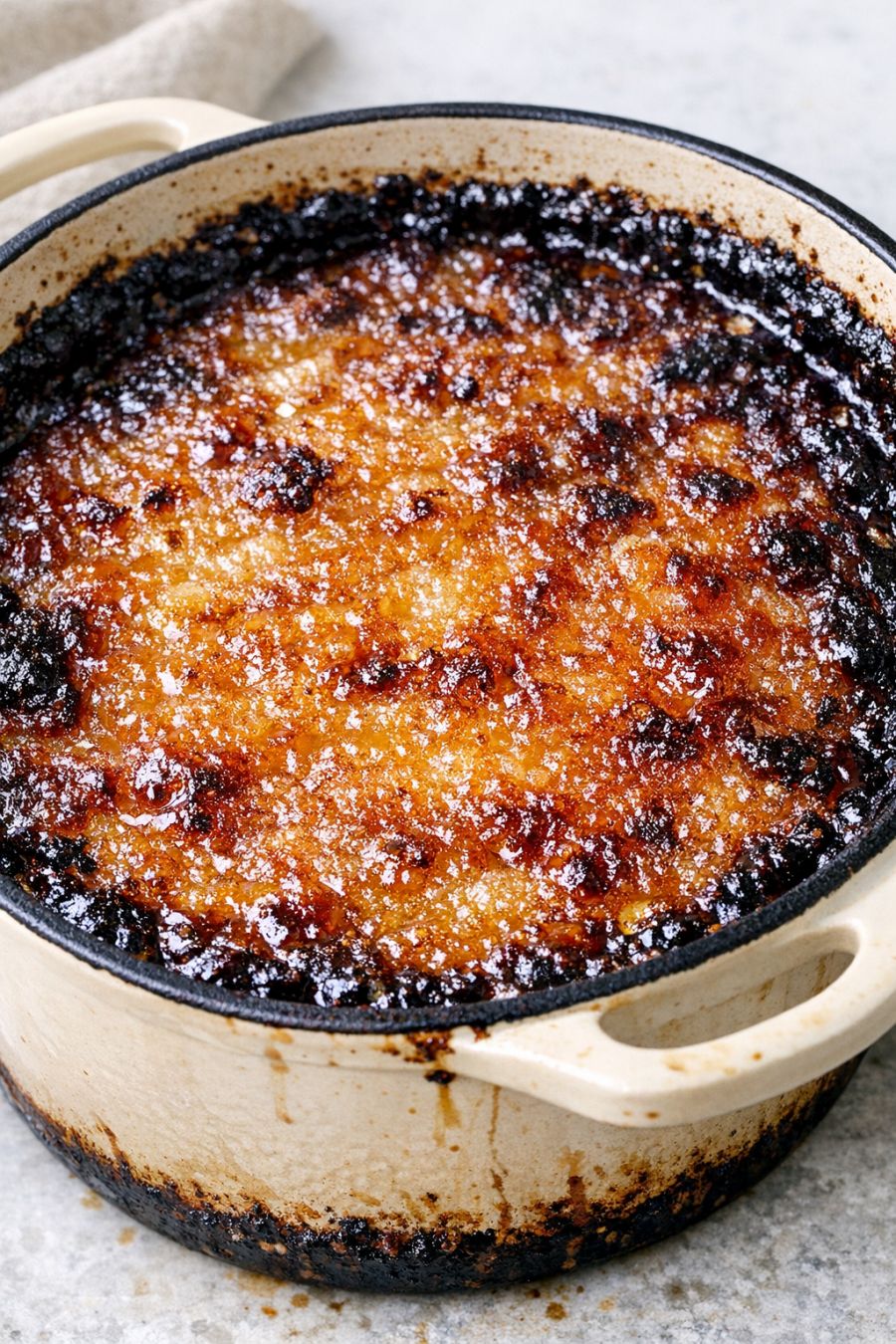
This is my stripped-down, oven-baked comfort dish for gray, rainy evenings: a glistening, caramelized potato bake built from just three pantry staples. It borrows its spirit from Depression-era cooking, when home cooks relied on inexpensive, filling ingredients and slow oven time to do the heavy lifting. Thinly sliced potatoes soak in a simple milk-and-fat mixture, then bake until the edges bubble dark and the top turns glossy and deeply browned. It’s the kind of supper you can slide into the oven and mostly forget about while the house slowly fills with that cozy, toasty aroma.
Serve this potato bake straight from the enameled cast iron dish with a big spoon, letting everyone scoop up some of the caramelized edges and the tender center. I like it alongside a crisp green salad with a sharp vinaigrette to cut the richness, or with simply cooked vegetables like green beans or roasted carrots. For more protein, pair it with roasted chicken thighs, pan-seared sausages, or a fried egg on top. A little tangy condiment—like mustard, pickles, or a spoonful of sauerkraut—balances the creamy, starchy comfort nicely.
3-Ingredient Glistening Potato BakeServings: 4
Ingredients
2 pounds russet or Yukon Gold potatoes, peeled if desired and very thinly sliced
2 cups whole milk (or evaporated milk for a more old-fashioned feel)
4 tablespoons unsalted butter, plus a little extra for greasing the dish
1 teaspoon kosher salt (optional but recommended, does not count toward the 3 core ingredients)
Freshly ground black pepper, to taste (optional, does not count toward the 3 core ingredients)
Directions
Preheat your oven to 375°F (190°C). Lightly butter an enameled cast iron casserole dish (about 2-quart capacity). The butter helps keep the potatoes from sticking and encourages that dark, bubbling rim.
Prepare the potatoes: Scrub and peel them if you like a smoother texture, or leave the skins on for a more rustic feel. Using a sharp knife or mandoline, slice the potatoes as thinly and evenly as you can, about 1/8 inch thick. The thin slices are key to getting a tender, almost melting texture.
Layer the potatoes: Spread a loose, even layer of sliced potatoes over the bottom of the buttered dish. Sprinkle lightly with some of the salt and pepper if using. Continue layering potatoes in overlapping shingle-like rows, seasoning lightly between a few layers, until all the potatoes are in the dish and reach just below the rim.
Warm the milk and butter: In a small saucepan over low heat, combine the milk and 4 tablespoons butter. Heat gently, stirring occasionally, just until the butter is melted and the mixture is warm to the touch. Do not let it boil; you just want it fluid and homogenous so it soaks into the potatoes evenly.
Pour and settle: Slowly pour the warm milk-and-butter mixture over the layered potatoes, tilting the dish slightly so the liquid flows into all the nooks and crannies. The liquid should come just to the top layer of potatoes or barely below. If it seems a bit short, you can add a splash more milk.
Bake uncovered: Place the casserole dish on a rimmed baking sheet to catch any drips. Slide into the preheated oven and bake, uncovered, for about 60 to 75 minutes. The milk will bubble up, reduce, and begin to caramelize around the edges, and the top layer of potatoes will turn glossy and golden.
Check for doneness: Around the 60-minute mark, test the center of the dish by inserting a knife or fork straight down through the middle. The potatoes should offer almost no resistance and feel very tender. If the top is browning too quickly before the potatoes are soft, loosely tent the dish with foil and continue baking until fully tender.
Finish to a glistening, caramelized top: For a deeper, darker finish that matches that classic, glistening oven-bake look, remove any foil for the last 10 minutes and increase the oven temperature to 400°F (200°C). Let the top and edges caramelize until you see a bubbling, dark rim and a shiny, richly browned surface.
Rest and serve: Remove the dish from the oven and let it rest for at least 10 minutes before serving. This short rest helps the potatoes settle and the creamy base thicken slightly so it spoons out in tender, cohesive scoops with plenty of those caramelized, glistening edges.
Variations & Tips
To stay true to the Depression-era spirit, think in terms of using what you have rather than shopping for special ingredients. You can swap the potatoes for other tender starches like thinly sliced sweet potatoes or parsnips, or even a mix, keeping the same technique and proportions. If you only have evaporated milk, use that in place of fresh milk for a slightly richer, more old-fashioned flavor; dilute with a little water if it seems too thick. If butter is scarce, you can replace part of it with a neutral oil or even rendered bacon fat, though butter gives the cleanest, creamiest flavor. For a slightly firmer, more gratin-like texture, reduce the milk to 1 1/2 cups and pack the potatoes a bit tighter. To stretch the dish into a full meal, tuck in thin slices of onion between the potato layers or scatter a handful of leftover cooked beans or lentils in the middle. A bit of grated cheese on top in the last 15 minutes is lovely if you have it, but it is absolutely optional and not part of the base recipe. Food safety tips: Keep the milk refrigerated until you are ready to warm it, and do not leave the assembled but unbaked casserole at room temperature for more than 30 minutes before baking, especially in warm weather. Bake until the center is piping hot and the milk has clearly come to a simmer throughout; underbaking can leave the interior lukewarm and not fully safe. Once baked, refrigerate leftovers within 2 hours, covered, and reheat thoroughly in the oven or microwave until steaming before serving again. If the dish has been left out at room temperature longer than 2 hours (or 1 hour in very warm conditions), it is safer to discard the remainder rather than risk illness.