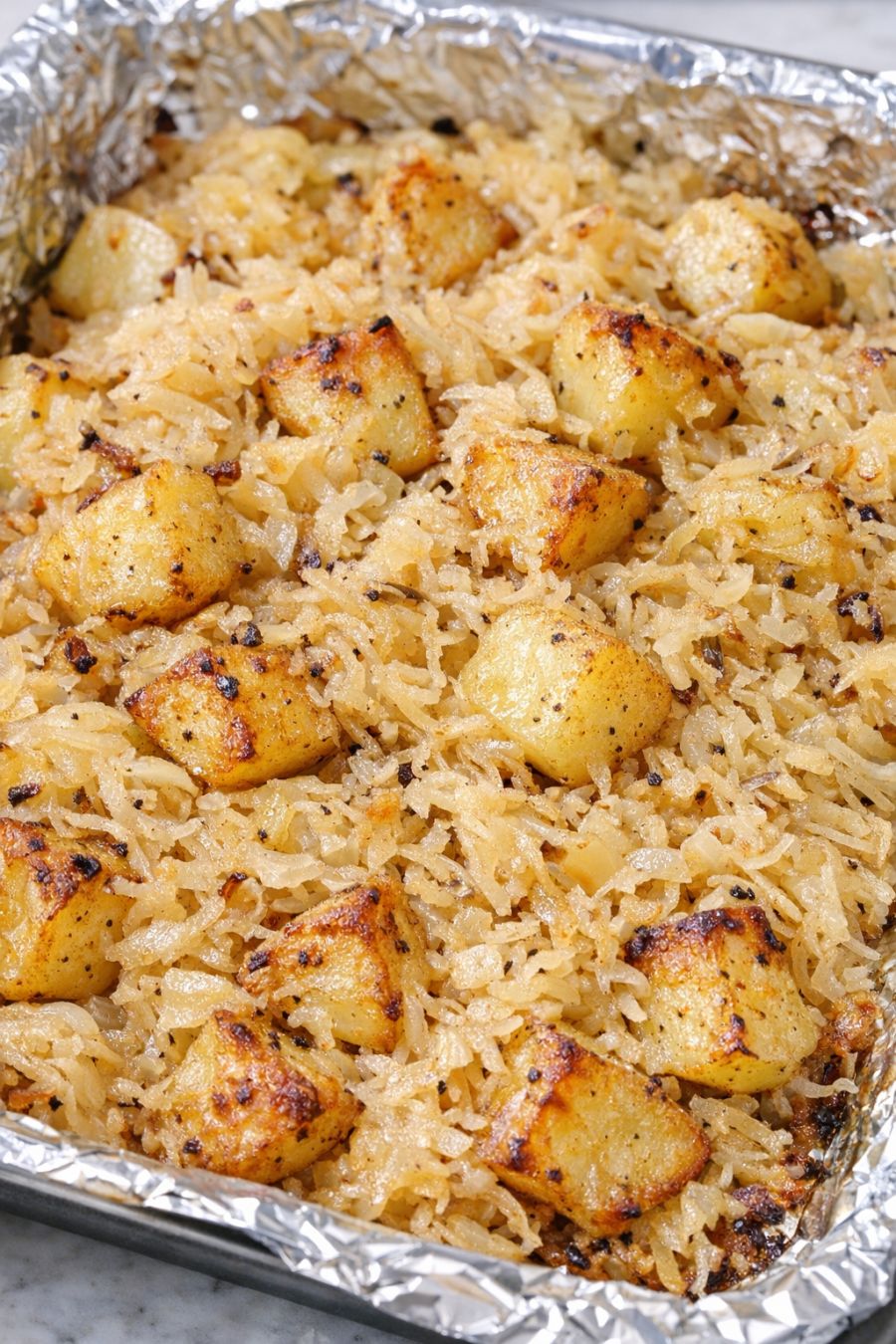
This oven baked 3-ingredient sauerkraut and potato casserole is the kind of humble Sunday supper dish that quietly steals the show. It’s inspired by the hearty, resourceful cooking you still find in pockets of the Midwest with strong German and Eastern European roots—where potatoes and fermented cabbage are pantry staples. The magic here is in the long, slow bake: sliced potatoes and jarred sauerkraut melt together into something incredibly fork tender, with golden, caramelized edges and a deep, tangy savoriness that tastes far more complex than its short ingredient list would suggest. It’s the sort of recipe a busy aunt or grandmother would rely on: minimal effort, minimal cleanup, but everyone asks for seconds.
Serve this casserole straight from the foil-lined baking sheet with simple, comforting sides: grilled or pan-seared sausages, pork chops, or roast chicken all love the tang and starchiness here. A crisp green salad with a mustardy vinaigrette or a tray of roasted carrots and onions balances the richness and adds color to the plate. For a heartier spread, offer rye bread or crusty rolls to soak up the flavorful juices. A cold beer, hard cider, or a dry white wine (like Riesling or Grüner Veltliner) pairs especially well with the sauerkraut’s gentle acidity.
Oven Baked 3-Ingredient Sauerkraut and Potato CasseroleServings: 4
Ingredients
2 1/2 pounds russet or Yukon Gold potatoes, peeled and thinly sliced (about 1/4 inch)
4 cups sauerkraut with its brine, drained lightly but not rinsed
4 tablespoons unsalted butter, cut into small pieces, plus more for greasing the foil
Directions
Preheat your oven to 375°F (190°C). Line a rimmed baking sheet or shallow roasting pan with heavy-duty aluminum foil, leaving some overhang on all sides so you can fold it up slightly to catch any juices. Lightly grease the foil with a bit of butter to help prevent sticking.
Prep the potatoes by peeling them and slicing them into roughly 1/4-inch rounds. Try to keep the slices fairly even so they cook at the same rate. If you work slowly, you can keep the sliced potatoes in a bowl of cold water to prevent browning, then drain and pat them dry before layering.
Lightly drain the sauerkraut in a sieve or colander, pressing very gently with the back of a spoon. You want it damp and tangy, not dry—some brine is important for flavor and moisture, but too much can make the casserole watery.
On the prepared, buttered foil-lined baking sheet, spread half of the sliced potatoes in an even, slightly overlapping layer. Sprinkle lightly with salt and freshly ground black pepper if you like (optional seasoning, not counted as an ingredient), keeping in mind that the sauerkraut is already salty.
Scatter half of the sauerkraut evenly over the potatoes, using your fingers to separate any clumps so you get good coverage. Dot with about half of the butter pieces, distributing them across the surface so they’ll melt down into the layers.
Repeat with the remaining potatoes, arranging them in an even layer over the sauerkraut. Top with the remaining sauerkraut and dot with the rest of the butter pieces. Gently press down with your hands or the back of a spatula to compact the layers slightly; this helps everything cook evenly and meld together.
Cover the entire baking sheet tightly with a second sheet of foil, crimping the edges all the way around to seal in steam. This covered phase is what makes the potatoes and sauerkraut turn exceptionally fork tender.
Bake covered in the preheated oven for 60 minutes. After an hour, carefully remove the top foil—open it away from you to avoid a burst of hot steam. Check a potato slice with the tip of a knife; it should be mostly tender at this stage.
Return the uncovered casserole to the oven and continue baking for 25 to 35 minutes, or until the potatoes are fully tender, the sauerkraut on top is lightly golden, and you see some caramelized, browned edges where the potatoes meet the pan. If you like a deeper golden color, you can move the pan to a higher rack for the last 5 to 10 minutes.
Let the casserole rest on the counter for about 10 minutes before serving. This short rest allows the bubbling juices to settle and makes it easier to scoop out generous portions. Serve warm, straight from the foil-lined sheet, making sure each serving has some of the golden top and the soft, saucy bottom layer.
Variations & Tips
You can keep the spirit of this 3-ingredient casserole while tailoring it to your pantry and preferences. For a slightly richer version, use Yukon Gold potatoes, which hold their shape and have a naturally buttery flavor. If your sauerkraut is very sharp or salty, you can briefly rinse it and then squeeze out the excess water, but note that this will mellow the tang; I usually just drain lightly to preserve flavor. If you want a crispier top, remove the foil a bit earlier and bake uncovered for closer to 40 minutes, watching to prevent burning. For a heartier main dish that still feels classic, you can tuck a few pre-cooked sausages between the layers of potatoes and sauerkraut before baking, or scatter leftover shredded roast pork on top during the last 15 minutes of cooking. If you prefer less fat, reduce the butter to 3 tablespoons and add a splash (2 to 3 tablespoons) of water or low-sodium broth over the top before sealing with foil to keep everything moist. Food safety tips: Always keep sauerkraut refrigerated before use and check that it smells cleanly sour, not off or yeasty. Use clean utensils when handling it to avoid cross-contamination. When baking, make sure the casserole is heated through so the potatoes are fully tender and piping hot in the center; leftovers should be cooled promptly and stored in the refrigerator within 2 hours, then reheated until steaming hot before serving again.