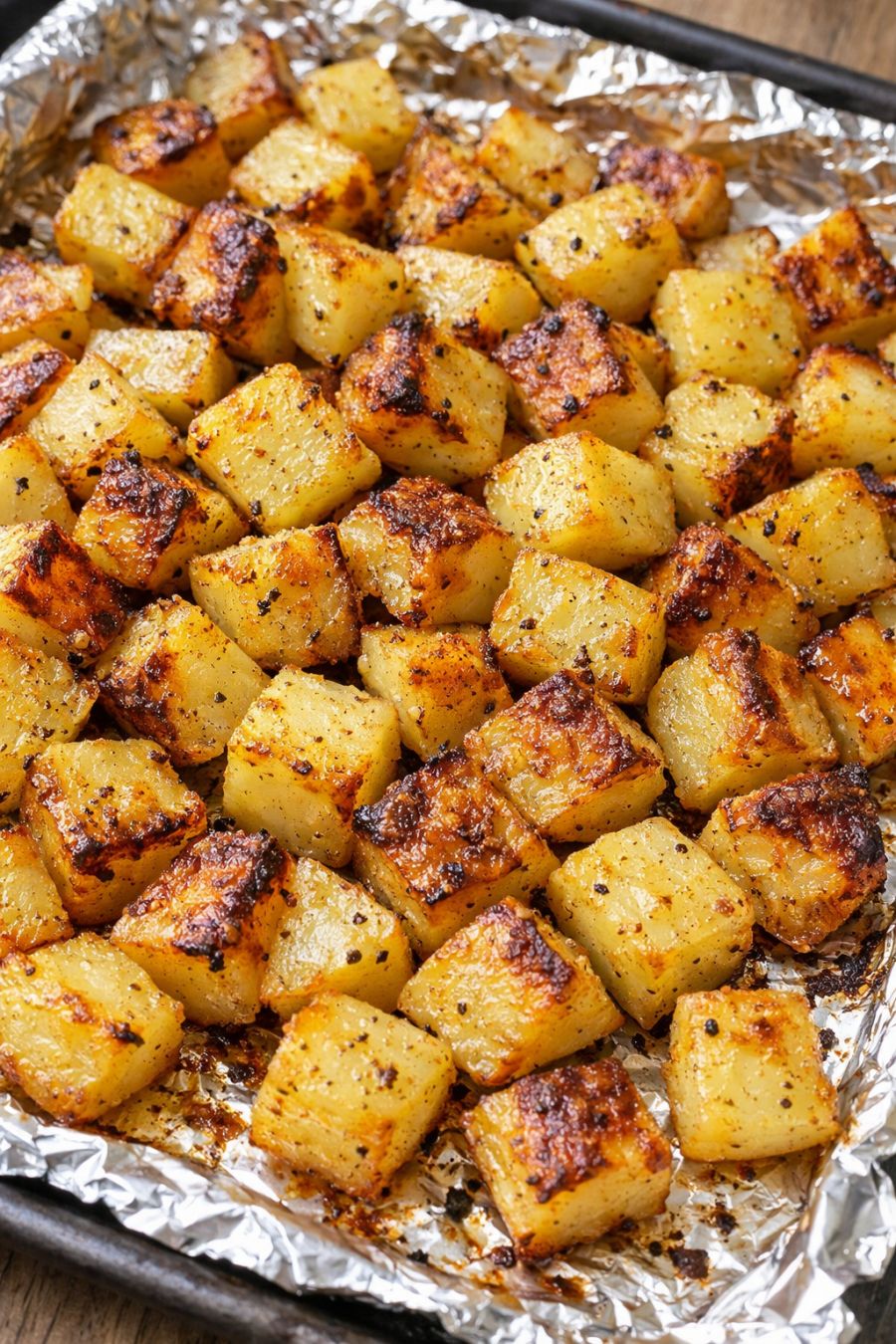
Dad used to make these cottage potatoes every Saturday morning, using whatever boiled or baked potatoes were left from the week. It was simple farm food: three ingredients, a hot oven, and a sheet pan. The potatoes came out golden and crisp on the edges, soft in the middle, and filled the kitchen with that toasty, buttery smell that meant you could slow down and enjoy the morning. This is the kind of practical Midwestern cooking that stretches leftovers, wastes nothing, and still feels like a small celebration around the table.
Serve these cottage potatoes hot right off the pan with fried or scrambled eggs, a few breakfast sausages or bacon, and a side of toast or buttered biscuits. They’re also lovely alongside a simple pan-fried ham steak. For supper, pair them with meatloaf, roast chicken, or pork chops and a green vegetable like peas or green beans. A little ketchup or hot sauce on the side suits them just fine, and a sprinkle of fresh parsley, if you have it, dresses them up without changing their down-home character.
Oven Baked 3-Ingredient Cottage PotatoesServings: 4
Ingredients
4 cups cooked leftover potatoes, cooled and cut into chunky dice
3 tablespoons salted butter, melted (plus a little extra for greasing the foil)
1 teaspoon kosher salt (or to taste)
Directions
Preheat your oven to 425°F (220°C). Line a large baking sheet with aluminum foil for easy cleanup, and lightly grease the foil with a bit of butter so the potatoes don’t stick.
Take your cold leftover potatoes (boiled, baked, or even from last night’s potato bar) and cut them into chunky dice, about 3/4-inch pieces. Try to keep them roughly the same size so they cook evenly.
In a large bowl, drizzle the melted butter over the diced potatoes. Sprinkle the salt over the top. Gently toss with your hands or a big spoon until every piece is lightly coated in butter and seasoning. Don’t overwork them; a few rough edges are what get nice and crispy.
Spread the potatoes out in a single, even layer on the prepared baking sheet. Make sure they aren’t piled on top of each other; crowding will steam them instead of crisping. If your sheet looks too full, use a second pan.
Place the baking sheet on the middle rack of the preheated oven. Bake for 20 minutes without stirring, letting the bottoms get good and browned.
After 20 minutes, carefully pull the pan out and use a spatula to turn the potatoes, scraping up any browned bits from the foil. Spread them back into a single layer. Return the pan to the oven and bake for another 10 to 15 minutes, or until the potatoes are deep golden with crispy edges and tender centers.
Taste a piece and add a pinch more salt if needed. Serve the cottage potatoes straight from the pan while they’re hot and crackly on the edges, just the way Dad used to bring them to the table on a slow Saturday morning.
Variations & Tips
You can dress these cottage potatoes up a bit while keeping the spirit of the original. If you like a little extra richness, add another tablespoon of melted butter or a drizzle of neutral oil along with the butter. For a heartier breakfast, scatter a handful of finely chopped onion over the potatoes before baking; it will sweeten and brown right alongside them. A light sprinkle of black pepper or paprika is traditional in many Midwestern kitchens and won’t take them far from their roots. If you have leftover baked potatoes with skins, leave the skins on for extra texture. To keep the potatoes crisp, be sure they go into the oven cold and fairly dry; if they’re very wet from the fridge, pat them with a paper towel before tossing with butter. For food safety, always refrigerate leftover cooked potatoes within 2 hours of cooking, store them in a covered container, and use them within 3 to 4 days. Reheat the potatoes thoroughly until steaming hot all the way through. Avoid using leftover potatoes that have an off smell, slimy texture, or visible mold. If you need to make this dairy-free, use a neutral cooking oil in place of butter and salt as usual; the edges will still crisp nicely, though the flavor will be a bit different from the classic version.