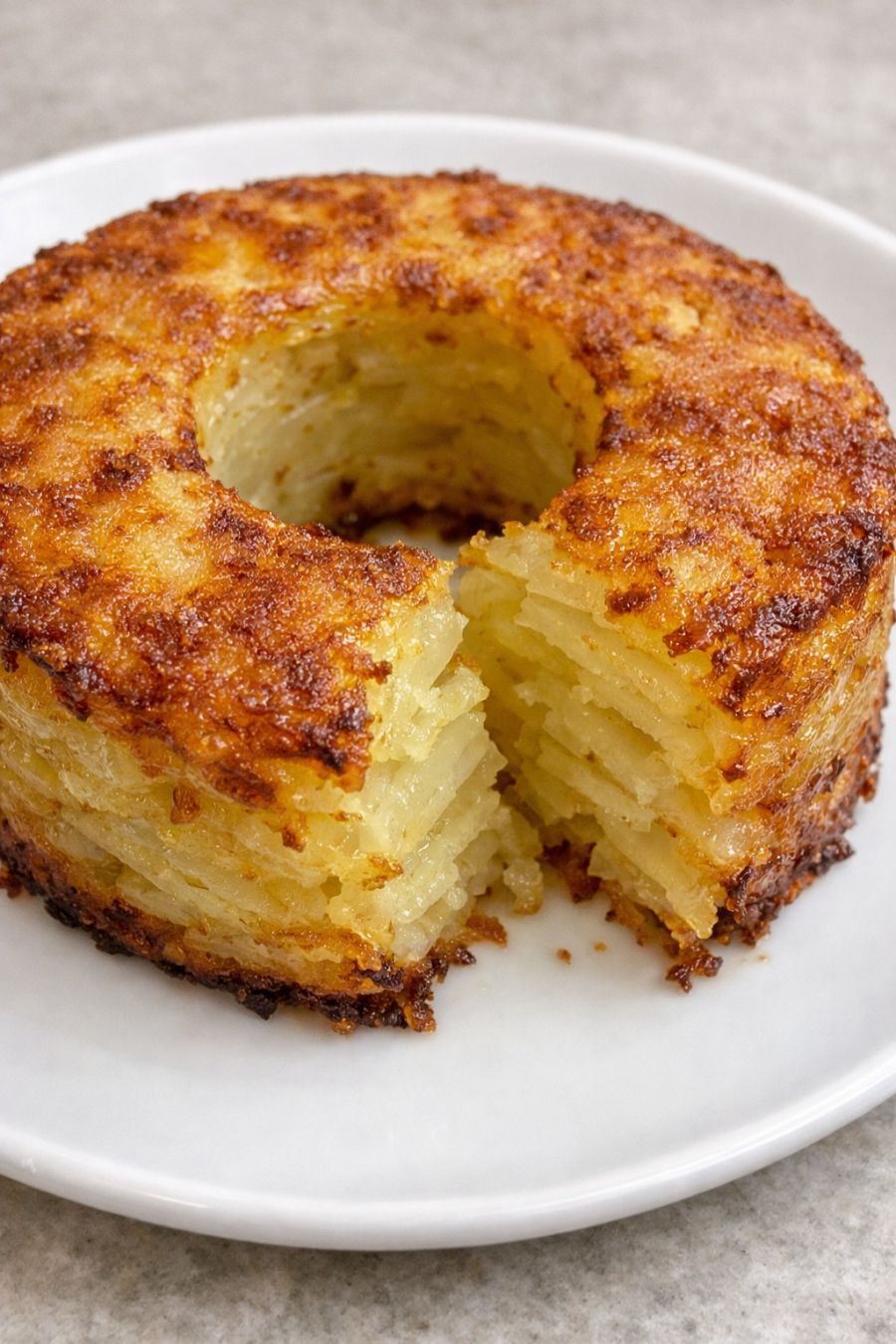
This oven baked 3-ingredients potato ring mold is the kind of dish that makes people pause when it hits the table. My mother-in-law brought it out every Easter, gleaming and golden on a white platter, and there was always a little gasp before anyone picked up a knife. It looks far more elaborate than it is: just potatoes, butter, and cream, layered into a ring mold and baked until the exterior turns crisp and bronzed while the inside stays tender and almost custardy. The idea traces back to classic French molded potato dishes, but this version is streamlined for a home cook who wants drama without fuss.
Serve the potato ring hot, sliced into neat wedges like a cake. It’s wonderful alongside roasted or glazed ham, lamb, or a simple roast chicken. A bright, acidic side—such as a lemony green salad, steamed green beans with a squeeze of lemon, or roasted asparagus—helps cut through the richness. If you’re serving it for a holiday meal, it pairs nicely with other make-ahead dishes, since you can bake it, let it rest for 10–15 minutes, then unmold right before bringing it to the table.
Oven-Baked 3-Ingredient Potato Ring MoldServings: 8
Ingredients
3 pounds russet or Yukon Gold potatoes, peeled
6 tablespoons unsalted butter, melted, plus extra for greasing the mold
1 1/2 cups heavy cream
1 1/2 teaspoons kosher salt
1/2 teaspoon freshly ground black pepper (optional, but recommended)
Butter or neutral oil, for greasing the ring mold
Directions
Preheat your oven to 375°F (190°C). Place a rack in the middle of the oven. Generously grease a ring mold or Bundt pan (10- to 12-cup capacity) with butter or neutral oil, making sure to get into all the crevices so the potato ring will release cleanly and develop an even golden crust.
Peel the potatoes and keep them in a bowl of cold water as you work to prevent browning. Using a mandoline or a very sharp knife, slice the potatoes into thin, even rounds about 1/8 inch thick. Try to keep the slices uniform so they cook at the same rate and stack neatly in the mold.
In a large mixing bowl, whisk together the melted butter, heavy cream, kosher salt, and black pepper (if using). Pat the potato slices dry with a clean kitchen towel, then add them to the bowl. Toss gently with your hands or a large spoon until every slice is lightly coated in the buttery cream mixture.
Arrange a first, slightly overlapping layer of potato slices in the bottom of the prepared ring mold, taking a moment to fan them in a circular pattern. This first layer will become the visible top once the ring is unmolded, so spend a little extra time making it tidy and attractive.
Continue layering the potatoes, overlapping the slices and lightly pressing them down as you go to eliminate air pockets. Spoon a bit of the remaining cream mixture over every couple of layers to keep everything evenly moistened. Use all of the potatoes and liquid, finishing with a fairly even top surface so the ring bakes uniformly.
Cover the mold tightly with foil and place it on a rimmed baking sheet to catch any drips. Bake covered for 45 minutes, then carefully remove the foil. Continue baking uncovered for another 30–40 minutes, or until the potatoes are very tender when pierced with a knife and the exposed edges are deep golden and crispy.
Once baked, remove the mold from the oven and let it rest on a cooling rack for 10–15 minutes. This resting time allows the starches and cream to set slightly, which helps the ring hold its shape when unmolded while still staying soft inside.
To unmold, run a thin knife or flexible spatula gently around the inner and outer edges of the ring to loosen any stuck bits. Place a warm serving plate (preferably white for contrast) upside down over the mold. Using oven mitts, firmly hold the plate and mold together and invert in one confident motion. Lift the mold straight up; the golden potato ring should release onto the plate.
If desired, dab away any excess butter or cream that may pool around the base with a paper towel for a cleaner presentation. Slice the ring into wedges using a sharp knife with a gentle sawing motion, and serve immediately while the exterior is still crisp and the interior is tender and layered.
Variations & Tips
For a subtly different character, you can swap Yukon Gold potatoes for russets: Yukons give a slightly creamier, more buttery interior, whereas russets create a fluffier, almost soufflé-like texture inside the crisp shell. If you want a more pronounced crust, bake the ring for the last 10 minutes at 400°F (200°C), watching closely so the edges don’t over-brown. A small pinch of freshly grated nutmeg in the cream mixture adds a classic French note without introducing extra ingredients beyond basic pantry spices. For a make-ahead option, you can bake the ring up to a day in advance, cool completely, cover, and refrigerate; reheat in the mold, covered with foil, at 325°F (165°C) until warmed through, then unmold right before serving. Always handle the hot mold and baking sheet with thick oven mitts to avoid burns, and be cautious when removing the foil, as steam will escape. If using a mandoline for slicing, use the hand guard or a cut-resistant glove to protect your fingers. Leftovers should be cooled promptly, covered, and refrigerated within two hours; reheat thoroughly until steaming hot before serving again.