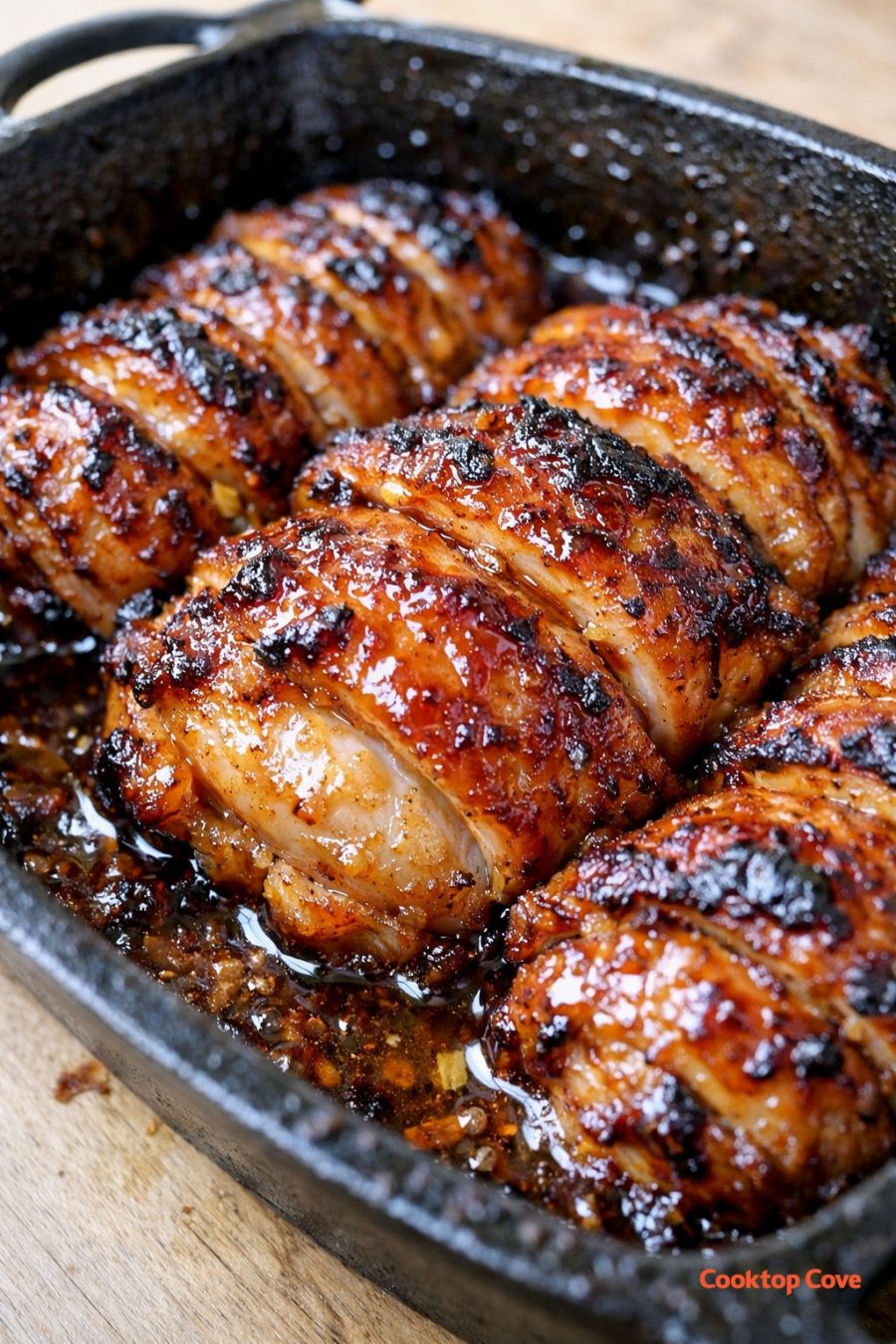
This late spring supper is my answer to those evenings when I’d rather be on the porch than hovering over the stove. It leans on four ingredients and a hot oven to create a deeply caramelized crust with a glossy, succulent center—very much in the spirit of simple French farmhouse cooking, but with Midwest practicality. Everything is assembled earlier in the day in a cast iron baking dish; by dinnertime, the oven does the heavy lifting while you unwind. The result looks impressive, tastes rich and seasonal, and requires almost no active work.
Serve this straight from the cast iron dish with a big green salad—think peppery arugula or mixed lettuces with a lemony vinaigrette—to cut through the richness. Crusty bread or warm baguette is ideal for soaking up the pan juices, though boiled or roasted new potatoes work beautifully if you’d like something heartier. A chilled dry rosé or a light, minerally white wine pairs nicely, but unsweetened iced tea with lemon is just as refreshing on a warm late spring evening.
4-Ingredient Late Spring Oven SupperServings: 4
Ingredients
8 bone-in, skin-on chicken thighs (about 2 1/2 to 3 pounds), patted very dry
1 pound small late-spring potatoes, halved (baby Yukon Golds or fingerlings work well)
1 large bunch asparagus (about 1 pound), woody ends snapped off and spears left whole
3 tablespoons olive oil, plus more for the pan, divided, kosher salt and freshly ground black pepper to taste
Directions
Lightly oil a 10- to 12-inch cast iron skillet or similar baking dish. This helps the potatoes and chicken develop that deep roasted, caramelized crust instead of sticking.
Pat the chicken thighs very dry with paper towels. This is key for browning: excess surface moisture will steam instead of roast. Season the chicken all over with kosher salt and freshly ground black pepper, using your hands to press the seasoning into the skin and meat.
In a large bowl, toss the halved potatoes with 1 1/2 tablespoons of the olive oil, a generous pinch of salt, and several grinds of black pepper until evenly coated.
Scatter the seasoned potatoes in an even layer over the bottom of the cast iron skillet. Nestle the chicken thighs on top of the potatoes, skin side up, spacing them so the skin is exposed and not crowded. Drizzle the chicken skins with another 1 1/2 tablespoons olive oil to encourage a deeply caramelized, crisp crust.
Cover the skillet tightly with foil and refrigerate for up to 6 hours if assembling early. This makes it ideal for prepping in the afternoon so you can relax later. If you’re baking right away, you can skip the chilling step.
When ready to cook, remove the skillet from the refrigerator while you preheat the oven to 425°F (220°C). Giving the dish a little time out of the fridge helps it roast more evenly.
Place the skillet on the middle rack and roast, still covered, for 25 minutes. This jump-starts the cooking and keeps the chicken juicy while the potatoes begin to soften.
Carefully remove the foil (watch for steam), then continue roasting uncovered for 20 to 25 minutes more, or until the chicken skin is deeply browned and crisp and the potatoes are tender. The juices will be bubbling and glossy, and the edges of the potatoes will be caramelized where they touch the pan.
While the chicken and potatoes finish roasting, toss the asparagus spears with a light drizzle of olive oil, a pinch of salt, and pepper on a plate or tray.
When the chicken is nearly done, slide the skillet out, quickly tuck the asparagus around and between the chicken and potatoes, and return the pan to the oven. Roast for another 8 to 10 minutes, just until the asparagus is tender-crisp and bright green but not shriveled.
Check for doneness: the thickest part of the chicken thighs should reach an internal temperature of 165°F (74°C), and the juices should run clear. If needed, roast a few minutes longer. The top should have a roasted, caramelized crust while the center of the dish stays glossy with flavorful juices.
Let the skillet rest on a trivet for 5 to 10 minutes before serving. This short rest allows the juices to settle slightly so they coat the potatoes and asparagus instead of running everywhere when you serve. Bring the cast iron dish straight to the table and spoon the chicken, vegetables, and pan juices onto warm plates.
Variations & Tips
For a different vegetable profile, you can swap the asparagus for late-spring green beans or snap peas; add them at the same point in the recipe and roast just until crisp-tender. If you prefer dark leafy greens, scatter torn kale or chard leaves around the chicken for the last 10 minutes of roasting—these will wilt into the pan juices instead of remaining crisp. For slightly smokier flavor, rub the chicken skin with a pinch of smoked paprika along with the salt and pepper before roasting (this doesn’t add to the ingredient count if you treat it as part of your pantry basics). To lean more Mediterranean, tuck a few lemon wedges under the chicken before roasting; they’ll caramelize and perfume the juices. Food safety notes: Always wash your hands, cutting board, and any utensils thoroughly after handling raw chicken. Keep the raw chicken separate from the vegetables until you’re ready to assemble in the pan to avoid cross-contamination on the counter. Use a food thermometer to ensure the chicken reaches 165°F (74°C) at its thickest point. Don’t leave the assembled raw dish at room temperature for more than 1 hour; if you prep early, keep it covered in the refrigerator and bake within about 6 hours. Refrigerate leftovers within 2 hours of cooking, and reheat until steaming hot before eating.