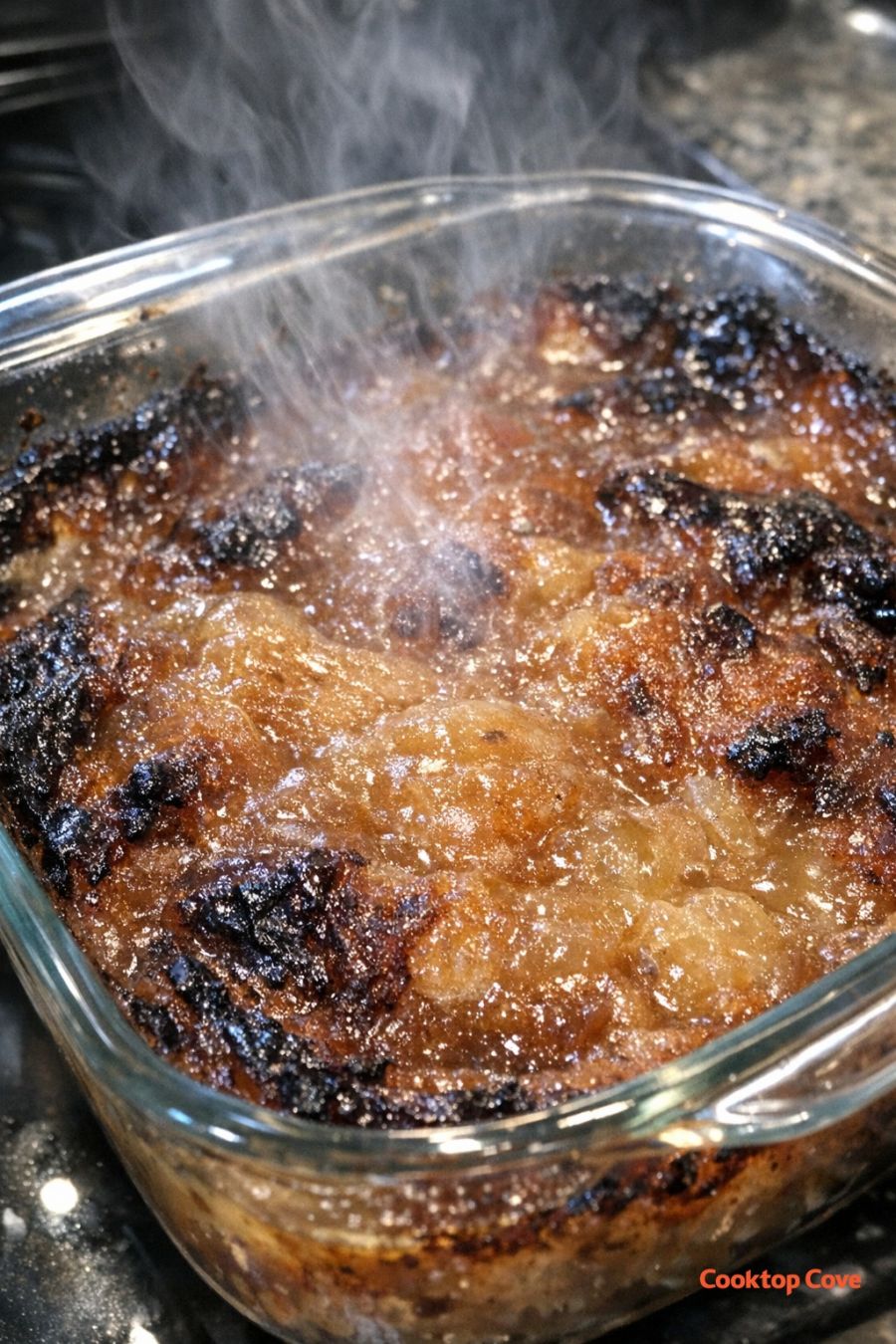
This four-ingredient bake is my unofficial start-to-summer ritual when I’m hosting a backyard barbecue but want dinner handled hours ahead. It’s essentially slow-roasted barbecue chicken thighs glazed in a sweet-tangy sauce that bakes down into a gelatinous, spoonable layer with dark amber, glossy edges. Think of it as a Midwestern potluck classic meets weeknight practicality: everything goes into one glass casserole dish, then the oven does the work while you prep sides, clean up, or sit on the patio with a drink. The long, steady bake renders the chicken tender and juicy, and the sugars in the sauce caramelize and char just enough around the edges to give that irresistible smoky-sweet bite you see in those close-up, steamy casserole photos.
Serve these sticky, amber-edged chicken thighs straight from the glass casserole dish with classic cookout sides: potato salad, coleslaw, grilled corn, or a simple green salad. The rich, gelatinous sauce is fantastic spooned over rice, buttered noodles, or toasted buns to catch every bit of flavor. A crisp lager, iced tea with lemon, or a dry rosé balances the sweetness nicely. For a full backyard spread, pair with grilled vegetables or a platter of sliced tomatoes and cucumbers dressed with olive oil, vinegar, and plenty of salt.
4-Ingredient Summer-Start Barbecue Chicken BakeServings: 6
Ingredients
3 pounds bone-in, skin-on chicken thighs (about 6–8 pieces)
1 1/2 cups thick barbecue sauce (your favorite, not too thin)
1/3 cup packed brown sugar (light or dark)
1 tablespoon neutral oil (such as canola or vegetable), plus extra for greasing the dish
Directions
Lightly grease a 9x13-inch glass casserole dish with a little of the neutral oil. This helps prevent sticking and encourages those dark amber, glossy edges where the sauce caramelizes.
Pat the chicken thighs dry with paper towels and trim any large excess flaps of skin or fat. Place the thighs in the prepared glass dish in a single layer, skin side up, leaving a bit of space between pieces so the sauce can bubble and reduce.
In a medium bowl, whisk together the barbecue sauce, brown sugar, and the remaining neutral oil until the sugar is mostly dissolved and the mixture looks glossy and smooth. The oil helps the sauce cling and promotes a shiny, lacquered finish as it bakes.
Pour the sauce mixture evenly over the chicken thighs, lifting pieces slightly with a spoon or tongs so the sauce can slide underneath. Spoon extra sauce over the top so every piece is well coated. Use the back of the spoon to nudge sauce into the corners of the dish; those corners will develop the darkest, most flavorful caramelized bits.
Cover the dish tightly with foil and refrigerate for at least 1 hour and up to 8 hours if you want to get dinner handled ahead of the barbecue. This short rest lets the sauce start to season the chicken, but it’s forgiving—if you’re pressed for time, you can go straight to the oven.
When you’re ready to bake, remove the dish from the refrigerator and let it sit at room temperature while you preheat the oven to 350°F (175°C). Starting the chicken a bit closer to room temperature helps it cook more evenly and reduces the risk of the glass dish cracking from a sudden temperature change.
Bake the chicken, covered with foil, on the center rack for 45 minutes. This covered stage gently cooks the thighs through and keeps the sauce from reducing too quickly. You should see some bubbling around the edges when you peek under the foil.
Remove the foil and increase the oven temperature to 400°F (200°C). Continue baking, uncovered, for 25–35 minutes, basting the tops with the bubbling sauce once or twice. During this time, the sauce will thicken into a gelatinous layer, and the edges will turn dark amber, glossy, and lightly charred. Rotate the dish once if your oven has hot spots to encourage even caramelization.
Check for doneness: the chicken should register at least 175°F (80°C) in the thickest part of the thigh (dark meat is best when it goes beyond the minimum 165°F; it becomes more tender and succulent). The sauce should be thick, sticky, and bubbling, with deeply colored edges clinging to the glass.
Let the chicken rest in the hot sauce for 10–15 minutes before serving. This brief rest allows the juices to redistribute and the sauce to thicken slightly more, giving you that spoonable, glossy finish you see in close-up casserole photos. Serve straight from the glass dish, making sure to scrape up the dark, caramelized corners for anyone who loves those concentrated, smoky-sweet bites.
Variations & Tips
For a spicier version, stir 1–2 teaspoons of crushed red pepper flakes or your favorite hot sauce into the barbecue mixture before pouring it over the chicken (this keeps you at four ingredients if you choose a spicy barbecue sauce to begin with, rather than adding a fifth). To emphasize smokiness, use a hickory- or mesquite-style barbecue sauce and dark brown sugar, which deepens the molasses notes and encourages even darker amber edges. If you prefer slightly less sweetness, reduce the brown sugar to 3 tablespoons and choose a more tangy, vinegar-forward barbecue sauce. For a lighter take, you can use bone-in, skin-on chicken drumsticks instead of thighs; they’ll cook in roughly the same time but may brown a bit faster—start checking them 5–10 minutes earlier once the foil is removed. If you want to prep even further ahead, you can assemble the dish in the morning, refrigerate all day, and then bake right before guests arrive; just add 5–10 minutes to the covered bake if the dish is very cold. Food safety tips: Always thaw chicken completely in the refrigerator, never on the counter, and keep it refrigerated until you’re ready to marinate or bake. Use separate cutting boards and knives for raw poultry, and wash hands, utensils, and surfaces thoroughly with hot, soapy water after contact. When marinating in the same glass casserole dish you’ll bake in, keep the dish covered and chilled, and never reuse leftover marinade as a sauce unless it has been boiled for at least 1 minute. Confirm the internal temperature of the thickest piece of chicken with an instant-read thermometer, aiming for at least 175°F (80°C) for dark meat, and refrigerate leftovers within 2 hours, storing them in a shallow container so they cool quickly.