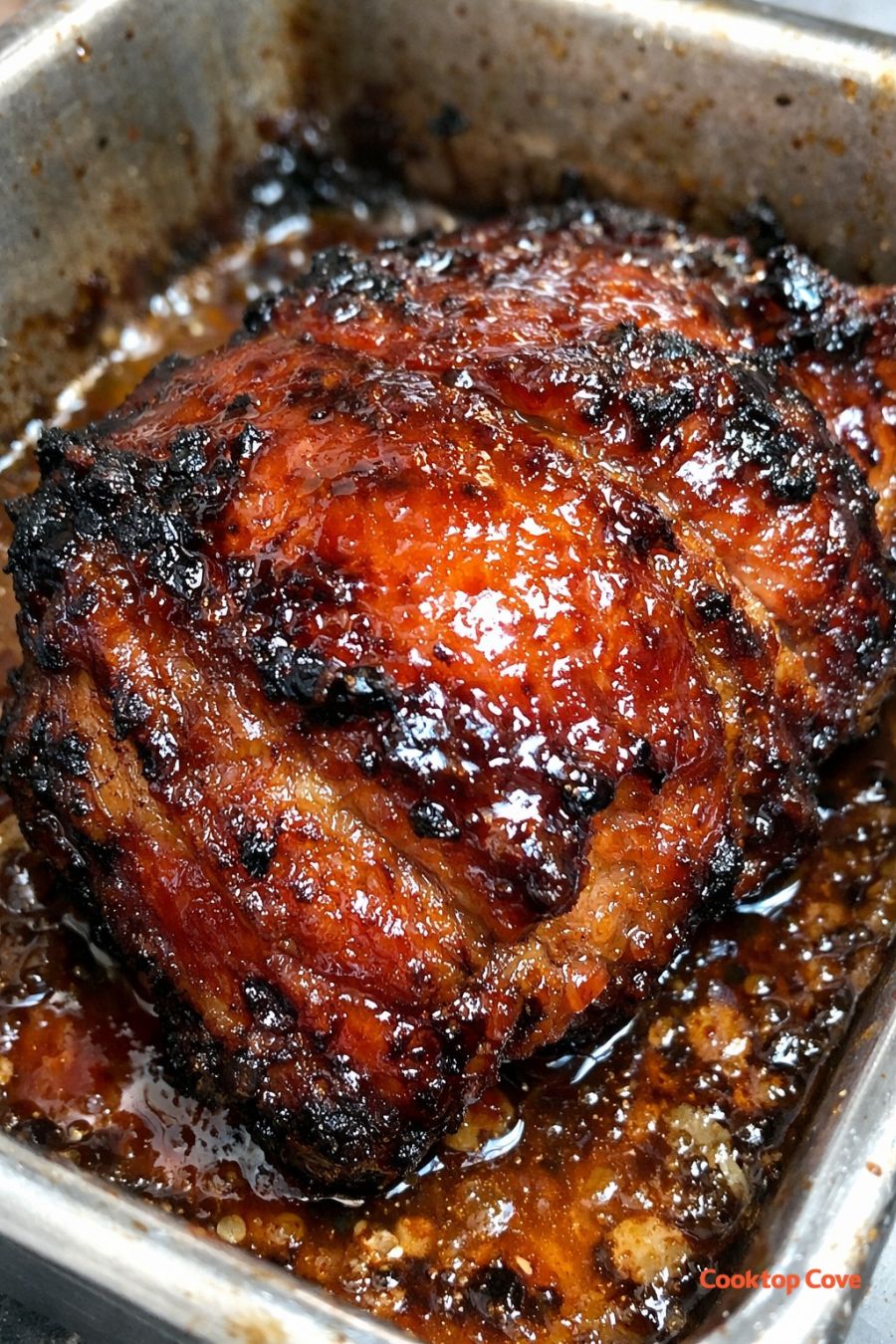
This 4-ingredient oven beef is my answer to wanting that cookout, sticky-glaze vibe on a busy Memorial Day when the weather (or my schedule) doesn’t cooperate. Instead of hovering over the grill, everything happens in the oven hours ahead, leaving you with tender, deeply caramelized beef in a dark amber glaze that clings to every edge. It borrows the spirit of classic American cookout flavors—sweet, smoky, and a little tangy—but streamlines the process so you can focus on guests, not the grill.
I like to slice or shred the glazed beef and pile it onto soft potato rolls with a crunchy slaw—something vinegary to balance the sticky sweetness. Corn on the cob (even oven-roasted), a simple green salad, or baked beans all echo the cookout theme without needing a grill. For a more plated dinner, serve thick slices over mashed potatoes or buttered egg noodles, spooning extra pan sauce over the top. A cold, crisp beer or iced tea cuts through the richness nicely.
4-Ingredient Dark Amber Sticky Oven BeefServings: 6
Ingredients
3 pounds beef chuck roast, boneless
1 1/2 teaspoons kosher salt
1 cup thick barbecue sauce (preferably smoky and molasses-forward)
1/4 cup dark brown sugar, packed
Directions
Preheat your oven to 300°F (150°C). Place a rack in the middle position. Choose a metal baking pan or roasting pan just large enough to hold the beef with a little space around it; metal helps the glaze caramelize and brown nicely.
Pat the beef chuck roast dry with paper towels. This helps it brown and allows the glaze to cling better. Sprinkle all sides evenly with the kosher salt, pressing it in lightly. Place the roast in the center of the pan.
In a small bowl, whisk together the barbecue sauce and dark brown sugar until the sugar is mostly dissolved and the mixture looks glossy and thick. You’re aiming for a dark amber, syrupy sauce that will reduce and cling as it cooks.
Pour about half of the sauce mixture over the beef, turning the roast with tongs to coat all sides. Leave the fat cap (if there is one) facing up. Reserve the remaining half of the sauce in the bowl for glazing later.
Cover the pan tightly with heavy-duty aluminum foil, crimping the edges to seal in moisture. Transfer to the preheated oven and bake for 2 hours without uncovering. This slow, covered phase tenderizes the beef while it gently absorbs flavor.
After 2 hours, carefully remove the pan from the oven and peel back the foil away from you to avoid steam. The beef should be starting to soften and release juices into the pan. Spoon some of the pan juices over the top of the roast.
Brush or spoon half of the reserved sauce over the top and sides of the beef, letting it mingle with the pan juices. Increase the oven temperature to 350°F (175°C). Return the pan to the oven, this time uncovered, and bake for 30 minutes.
Remove the pan again and brush on the remaining sauce, concentrating on the top and edges where it can caramelize. Spoon more of the thickening pan juices over any exposed areas. Return the pan to the oven, still uncovered, and bake for another 20–30 minutes, or until the glaze is dark amber, sticky, and bubbling at the edges and the beef is very tender when pierced with a fork.
For a more caramelized finish that mimics grilled edges, switch the oven to broil on high for 2–4 minutes, watching closely. The glaze should darken in spots and form tiny charred edges but not burn. Rotate the pan if needed for even color.
Remove the pan from the oven and let the beef rest in the glaze for at least 15 minutes. This rest helps the juices redistribute and the glaze thicken further. Transfer the roast to a cutting board, slice against the grain or gently pull into large chunks, then return the meat to the pan and toss in the sticky sauce so every piece is well coated. Serve directly from the metal pan for that casual cookout feel.
Variations & Tips
You can adjust this recipe to fit your pantry and preferences without losing the 4-ingredient simplicity. For a spicier version, choose a hot or chipotle-style barbecue sauce, or add a pinch of cayenne to the sauce-sugar mixture (this technically adds an ingredient, but a small spice addition won’t change the core formula). If you prefer less sweetness, reduce the dark brown sugar to 2 tablespoons; the glaze will be looser but still flavorful. For a more pronounced smoky note, use a very smoky barbecue sauce or one with extra molasses, which will deepen that dark amber color as it caramelizes. This method also works with other well-marbled beef cuts like beef short ribs or blade roast; just keep the pieces fairly thick and adjust cooking time until they are very tender. To keep the cookout theme but lighten things up, slice the beef thinner and serve over a big platter of dressed greens instead of bread. Food safety tips: Always start with fresh, properly refrigerated beef and keep it chilled until you’re ready to cook. Wash your hands, cutting board, and any utensils that touch raw beef with hot, soapy water before using them on cooked meat or other ingredients. Use an oven-safe thermometer if you like; for pulled or very tender roast beef, the internal temperature will typically be well above 190°F by the time it is fork-tender. Refrigerate leftovers within 2 hours of cooking in shallow containers so they cool quickly, and reheat thoroughly until steaming hot before serving again.