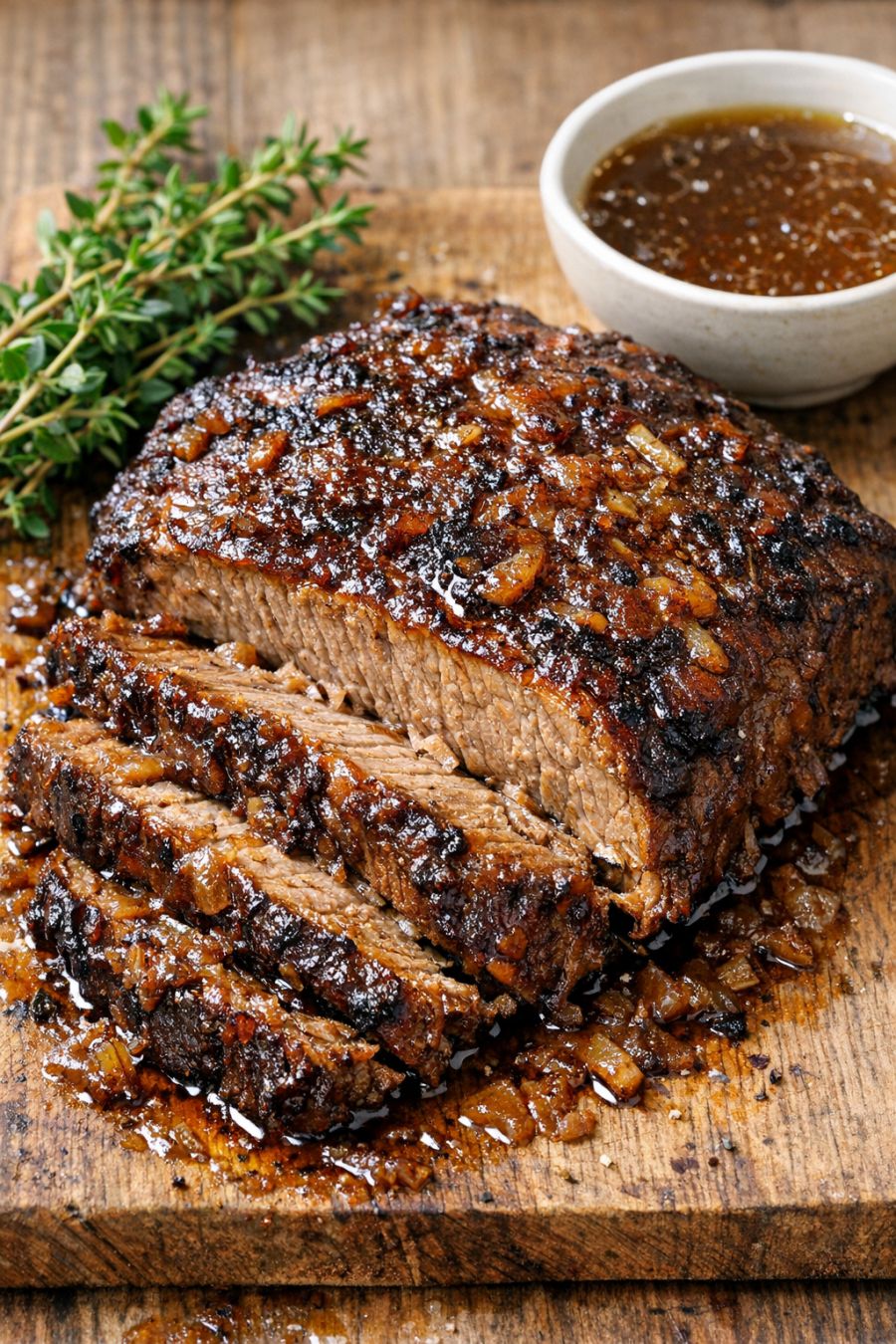
This oven baked 4-ingredient onion soup beef brisket is one of those set-it-and-forget-it dinners that feels way fancier than the effort it takes. On busy workdays, I love recipes where I can literally rub a few pantry staples over a raw brisket, pop it into my Dutch oven, and let the oven do the rest. The dry onion soup mix gives you that classic, cozy pot-roast flavor with almost no chopping, and the simple combo of beef broth and a touch of soy sauce keeps the meat incredibly tender and savory. It’s perfect for Sunday dinner, but easy enough for a weeknight when you want leftovers that taste even better the next day.
Serve this tender onion soup brisket sliced or shredded with its juices spooned over the top. It’s great over mashed potatoes, egg noodles, or rice to soak up all that savory sauce. Add a simple green salad, roasted carrots, or steamed green beans on the side to round out the meal. Leftovers make amazing sandwiches on crusty rolls with a slice of provolone or a smear of horseradish sauce, and the extra juices can double as a dipping au jus.
4-Ingredient Onion Soup Dutch Oven BrisketServings: 6
Ingredients
3–4 pounds beef brisket, trimmed of excess hard fat
1 (1-ounce) packet dry onion soup mix
1 cup low-sodium beef broth
2 tablespoons soy sauce
Directions
Preheat your oven to 300°F (150°C). Place a large Dutch oven on the counter and make sure the brisket fits inside with the lid on.
Pat the beef brisket dry with paper towels. This helps the dry onion soup mix stick and gives better browning as it cooks.
Place the raw brisket directly into the Dutch oven, fat side up if there’s a thicker fat layer on one side.
Sprinkle the dry onion soup mix evenly over the top and sides of the brisket. Use your hands to rub the mix all over the meat, pressing it into the surface so it coats as much of the brisket as possible. This should look like a thick, grainy seasoning layer on the raw beef in the Dutch oven.
In a small bowl or measuring cup, stir together the beef broth and soy sauce. Carefully pour the mixture around the sides of the brisket in the Dutch oven, trying not to wash off too much of the onion soup mix from the top.
Cover the Dutch oven tightly with its lid. Place it on the middle rack of the preheated oven.
Bake for 3 to 3 1/2 hours, or until the brisket is very tender and easily pulls apart with a fork. The exact time will depend on the size and thickness of your brisket.
Once tender, remove the Dutch oven from the oven and let the brisket rest, covered, for 15–20 minutes. This helps the juices settle so the meat slices more cleanly.
Transfer the brisket to a cutting board. Slice against the grain into thin slices, or shred with two forks if you prefer. Skim excess fat from the cooking liquid in the Dutch oven, then spoon the flavorful onion-beef juices over the sliced or shredded brisket before serving.
Variations & Tips
For a slightly sweeter flavor, you can add 1/4 cup of cola or apple juice to the beef broth and soy sauce mixture without changing the basic 4-ingredient concept too much. If you like a bit of heat, sprinkle a pinch of black pepper or red pepper flakes over the brisket along with the onion soup mix. To make this more of a full one-pot meal, tuck a few large chunks of carrots and potatoes around the brisket before baking (this will technically add more ingredients, but it’s very convenient for busy nights). If your brisket is very lean, you can add an extra 1/4 cup beef broth to keep it moist. For food safety, always start with a fully thawed brisket and keep it refrigerated until you’re ready to cook. Avoid leaving raw beef at room temperature for more than 2 hours (or 1 hour if your kitchen is very warm). Use clean hands when rubbing the onion soup mix over the raw meat, and wash your hands, cutting board, and any utensils that touched the raw beef with hot, soapy water. The brisket is safe to eat when it reaches at least 190°F internally for that fall-apart texture, though it will usually be well above the minimum 145°F by the time it’s tender. Refrigerate leftovers within 2 hours and use within 3–4 days, reheating until steaming hot before serving.