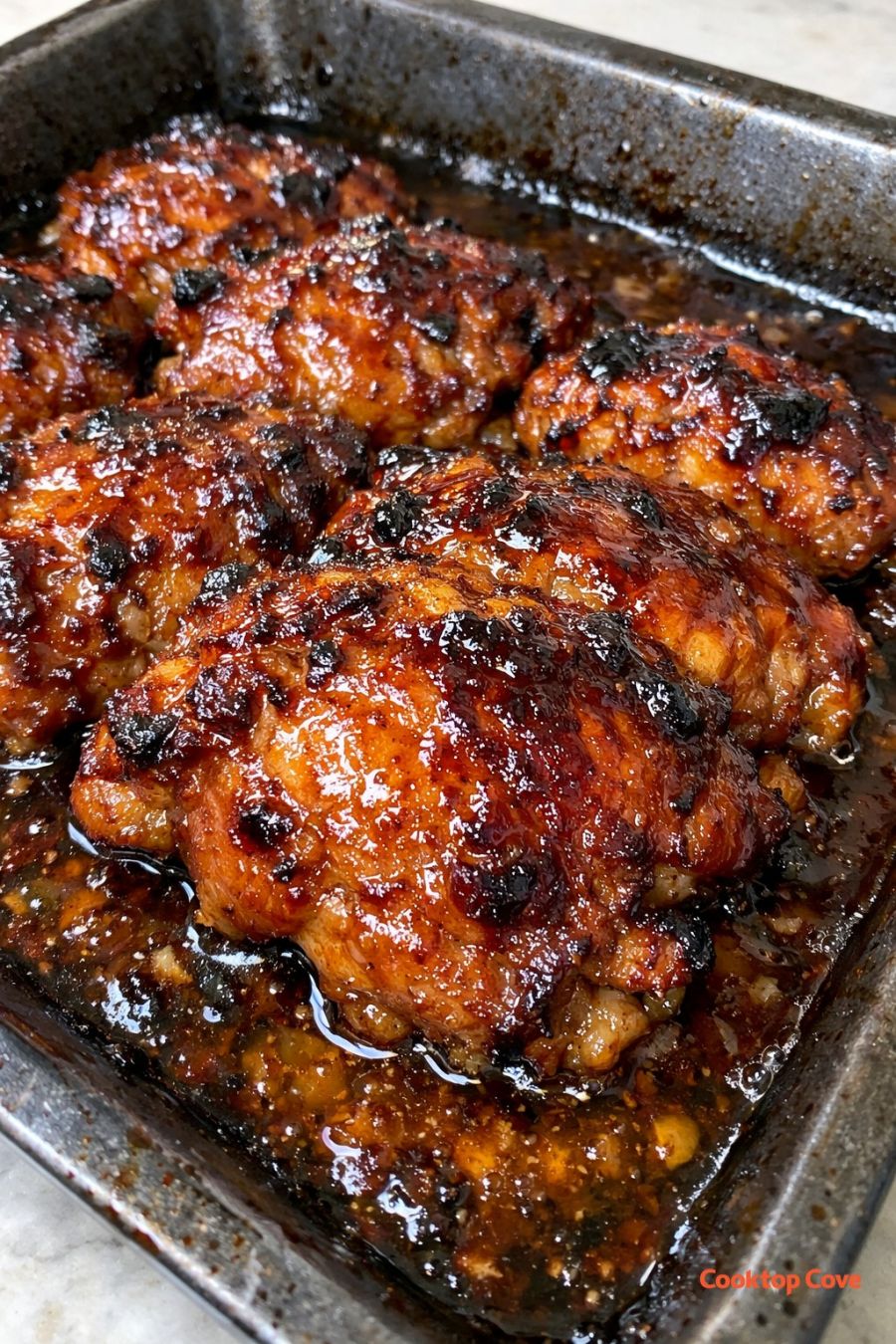
This 3-ingredient patio party platter is my weeknight and weekend secret when I want dinner totally handled hours ahead, but still feel a little fancy about it. It’s basically a big caramelized protein mass—think deeply roasted, sticky, bronzed chicken thighs—that cooks low and slow on one sheet pan until they’re fall-apart tender and glistening with amber juices. The idea came from needing something I could throw in the oven during naptime or between meetings, then forget about until guests show up. No marinating, no extra pans, just three ingredients and a dark baking sheet that makes everything look and taste extra caramelized.
I like to serve this platter family-style right on the patio: pile the caramelized chicken on a big board or leave it in the dark metal baking sheet and surround it with store-bought sides like a green salad kit, crusty bread or rolls, and a bowl of coleslaw or potato salad. It’s also great with grilled or roasted veggies, corn on the cob, or a simple rice pilaf. For drinks, anything cold and crisp works—sparkling water with lime, iced tea, or a light beer. If you’re feeding a crowd, add a quick snack board with chips and dip so people can nibble while the chicken rests.
3-Ingredient Patio Party PlatterServings: 6
Ingredients
3 lb boneless skinless chicken thighs
1 cup thick barbecue sauce (your favorite brand)
2 tbsp neutral oil (such as canola or vegetable oil)
Directions
Preheat your oven to 300°F (150°C). Grab a dark metal rimmed baking sheet; this helps the chicken really caramelize and gives you that glistening, amber look.
Pat the chicken thighs dry with paper towels and trim any large pieces of excess fat if needed. This helps them brown instead of steam.
Drizzle the neutral oil directly onto the baking sheet and use your hands or a spatula to spread it into a thin, even layer to prevent sticking.
Lay the chicken thighs on the oiled baking sheet in a single snug layer, edges touching but not stacked. This close contact helps them cook into one caramelized mass instead of individual pieces drying out.
Spoon about half of the barbecue sauce over the chicken and use the back of the spoon (or clean hands) to coat all sides evenly. Save the remaining sauce for later in the cook.
Cover the baking sheet tightly with foil, sealing the edges so steam stays in. This slow, covered bake is what makes the chicken super tender and juicy.
Bake the covered chicken at 300°F (150°C) for 1 hour 15 minutes. During this time you don’t need to touch it—this is the hands-off part where dinner is basically handling itself.
After 1 hour 15 minutes, carefully remove the foil (watch for hot steam). Spoon any juices from the pan over the chicken, then brush or spoon on the remaining barbecue sauce, coating the tops generously.
Increase the oven temperature to 400°F (200°C). Return the uncovered pan to the oven and bake for 20–30 minutes, or until the sauce has thickened, darkened in spots, and the chicken is deeply caramelized and slightly sticky. The pieces will be nestled together in one glossy, bubbling mass.
Check that the chicken is cooked through: an instant-read thermometer inserted into the thickest part of a thigh should read at least 165°F (74°C). If it’s not there yet, continue baking in 5–10 minute increments.
Once done, let the chicken rest on the baking sheet for 10–15 minutes. As it cools slightly, the juices thicken and the pieces settle into a succulent caramelized mound that’s perfect for pulling apart at the table.
To serve, either bring the dark baking sheet straight to the patio table for a rustic, casual vibe, or transfer the caramelized chicken mass to a platter, spooning all the amber pan juices over the top. Guests can pull off pieces with tongs or forks.
Variations & Tips
You can swap the protein as long as you keep the same simple, three-ingredient idea. Try boneless pork shoulder cut into chunks (increase the covered bake time by 30–45 minutes until very tender), or boneless skinless chicken breasts (reduce the covered bake time by about 15–20 minutes so they don’t dry out). If you prefer a different flavor profile, use a thick teriyaki sauce or honey-garlic sauce in place of barbecue, keeping the oil as your second ingredient. For a slightly leaner option, use bone-in, skin-on chicken thighs, but expect more rendered fat on the pan and a bit more time to reach that deep caramelization. To prep ahead, you can assemble the oiled pan and sauced chicken up to 12 hours in advance, cover tightly, and refrigerate; pull it out while the oven preheats so it’s not ice cold going in. Food safety tips: Always wash your hands and any surfaces that touch raw chicken with hot, soapy water. Use a separate cutting board for raw meat if you can. Make sure the internal temperature of the thickest piece reaches at least 165°F (74°C) before serving. Do not leave the cooked chicken at room temperature for more than 2 hours (or 1 hour if it’s very hot outside); refrigerate leftovers promptly in shallow containers and eat within 3–4 days, reheating until hot and steamy all the way through.