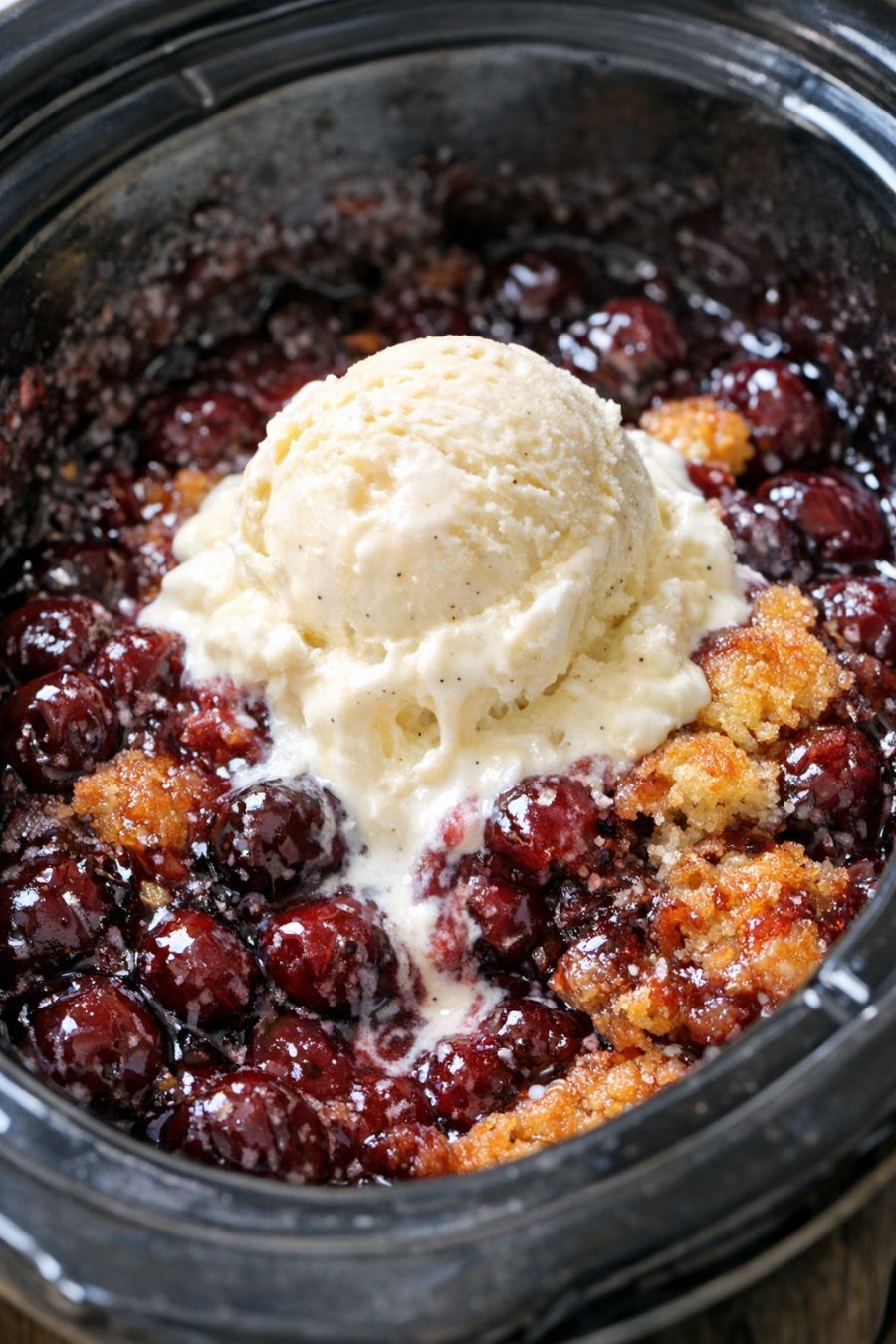
This 3-ingredient slow cooker cherry dessert is one of those back-pocket recipes I reach for when I need something sweet with almost no effort. Canned pitted dark cherries do all the heavy lifting here, slowly simmering into a glossy, spoonable dessert that tastes far more indulgent than the ingredient list suggests. While it doesn’t trace back to a single classic dish, it’s loosely inspired by old-fashioned Midwestern fruit cobblers and dump cakes, streamlined for busy weeknights or casual get-togethers. Everything happens right in the slow cooker: you throw in the cherries, add a little sugar and vanilla, and a few hours later you have a rich cherry treat that your friends will absolutely ask you to make again.
Serve this warm cherry dessert in small bowls or ramekins, spooning plenty of the thick cherry syrup over the fruit. It pairs beautifully with a scoop of vanilla ice cream, lightly sweetened whipped cream, or a spoonful of plain Greek yogurt if you want a tangier contrast. For a little texture, sprinkle with crushed shortbread cookies, granola, or toasted sliced almonds just before serving. A cup of coffee, black tea, or a small glass of dessert wine like ruby port will complement the deep flavor of the dark cherries.
3-Ingredient Slow Cooker Cherry DessertServings: 6
Ingredients
2 cans (15–16 ounces each) pitted dark sweet cherries in syrup, undrained
1/3 cup granulated sugar
1 teaspoon pure vanilla extract
Directions
Prepare the slow cooker by lightly greasing the bottom and lower sides with a little neutral oil or nonstick spray to help prevent sticking and make cleanup easier.
Pour the canned pitted dark cherries with all of their syrup into the bottom of the slow cooker, spreading them into an even layer so the surface is mostly covered with fruit and juices.
Sprinkle the granulated sugar evenly over the cherries, then drizzle the vanilla extract over the top so it disperses as the mixture heats.
Gently stir everything together right in the slow cooker until the cherries, sugar, and vanilla are well combined and the sugar begins to dissolve into the syrup.
Cover the slow cooker with the lid and cook on LOW for 3 to 4 hours, or on HIGH for about 1 1/2 to 2 hours, until the cherries are very soft, the syrup is glossy, and the liquid has thickened slightly. Avoid lifting the lid frequently, as that releases heat and can lengthen the cooking time.
Once the cherries are tender and the mixture looks thick and shiny, turn off the slow cooker and let the dessert sit, covered, for 10 to 15 minutes. This brief rest helps the syrup thicken a bit more as it cools slightly.
Stir the cherries gently, then spoon the warm cherry dessert into bowls. Serve as-is for a simple sweet treat, or top with ice cream, whipped cream, or yogurt. Store any leftovers in a covered container in the refrigerator and use within 3 to 4 days.
Variations & Tips
For a richer flavor, replace 2 tablespoons of the cherry syrup with 2 tablespoons of brandy, bourbon, or cherry liqueur before cooking; the alcohol will mostly cook off, leaving a subtle warmth. If you prefer a tarter dessert, stir in 1 to 2 teaspoons of fresh lemon juice at the end of cooking to brighten the sweetness. To turn this into more of a cobbler-style treat, spoon the hot cherries over store-bought pound cake, angel food cake, or buttered toast. For a lighter option, serve the cherries over cottage cheese or thick Greek yogurt for a not-too-sweet dessert or breakfast. You can also add gentle spices: a small pinch of ground cinnamon or cardamom stirred in before cooking will complement the dark cherries without overwhelming them. Food safety notes: Use canned cherries that are well within their expiration date and whose cans are not bulging, rusted, or badly dented. Once opened, do not leave the cherries or finished dessert at room temperature for more than 2 hours; refrigerate leftovers promptly in a shallow container so they cool evenly. Reheat leftovers gently on the stovetop or in the microwave until steaming hot, and avoid reheating more than once to maintain quality and reduce food safety risk.